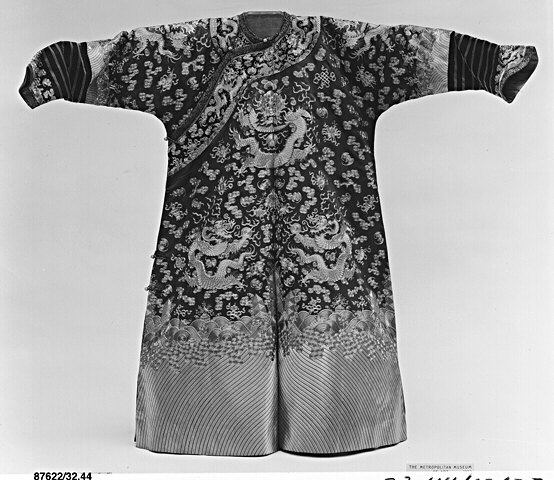
The Imperial Court Robe: A Study in Silk, Sovereignty, and Symbolism
Within the hallowed archives of global couture, few garments command the same intellectual and aesthetic reverence as the Chinese Imperial Court Robe. At Katherine Fashion Lab, we approach this artifact not merely as a historical relic but as a seminal case study in the confluence of material mastery, political semiotics, and artisanal precision. This standalone analysis deconstructs the robe’s construction, its use of silk and metallic thread, and its role as a wearable declaration of imperial authority. By dissecting its technical and symbolic layers, we illuminate why this garment remains an unparalleled benchmark for luxury craftsmanship and narrative design.
Materiality as Power: The Role of Silk and Metallic Thread
The choice of silk as the primary substrate is not incidental; it is a deliberate assertion of economic and ecological dominance. Sericulture, the cultivation of silk, was a closely guarded imperial secret for millennia, and the fabric itself became a currency of diplomacy and a marker of status. In the context of the Imperial Court Robe, silk offers more than tactile luxury. Its natural luster, drape, and ability to absorb vibrant dyes—often derived from rare minerals and plants—transformed the garment into a canvas for political messaging. The weight of the silk, typically a heavy satin or damask, provided a structured silhouette that commanded presence, while its breathability ensured comfort during lengthy court ceremonies.
Equally critical is the use of metallic thread, which elevates the robe from apparel to artifact. Historically, this thread was crafted by wrapping silk filaments with thin strips of gilded paper or gold leaf, a process requiring extraordinary dexterity. The metallic thread served dual purposes: it reflected light to create an aura of divine radiance around the emperor, and it signified the wealth of the state. In terms of structural integrity, the thread’s weight and stiffness required a specialized embroidery technique known as kesi (slit tapestry) or couching, where the metallic strands are anchored to the silk ground with fine silk stitches. This method not only prevented fraying but also allowed for intricate, three-dimensional motifs that would withstand the rigors of ceremonial use. The interplay between the soft, yielding silk and the rigid, luminous metallic thread creates a textural dialectic—a tension between the organic and the opulent—that defines the robe’s aesthetic power.
Iconography and Imperial Semiotics
Beyond materiality, the robe’s design functions as a complex semiotic system. Every motif is a coded message reinforcing the emperor’s mandate from heaven. The most prominent symbol is the five-clawed dragon (long), which exclusively represented the emperor. Unlike the four-clawed dragons of princes, the five-clawed dragon was a visual monopoly on supreme authority. In the robes we study, the dragon is often depicted chasing the flaming pearl, a motif symbolizing wisdom, spiritual energy, and the pursuit of cosmic harmony. The dragon’s sinuous body, rendered in metallic thread, appears to undulate across the silk, creating a dynamic sense of movement that suggests the emperor’s control over nature and fate.
Other motifs include the twelve symbols of imperial authority, such as the sun, moon, stars, mountains, and dragons. These were not decorative but were prescribed by Confucian ritual texts. For instance, the mountain represented stability and the emperor’s role as the pillar of the realm; the sun and moon symbolized the cosmic balance he maintained. The placement of these symbols followed strict hierarchical rules: the sun and moon typically appeared on the left and right shoulders, respectively, aligning the emperor’s body with the celestial order. The metallic thread used for these symbols was often of a higher karat—sometimes pure gold—ensuring that the emperor’s radiance was literally and metaphorically unmatched. This iconographic rigor transforms the robe into a wearable constitution, where each thread and stitch upholds the ideological fabric of the empire.
Construction and the Art of Invisible Precision
The technical execution of the Imperial Court Robe reveals a level of craftsmanship that modern couture can only aspire to replicate. The garment’s construction begins with the silhouette: a cross-collared, right-over-left closure (jiaoling youren), which was a hallmark of Han Chinese dress. The robe is typically cut with a full, sweeping skirt and wide sleeves that end in horse-hoof cuffs, a design element from the Qing dynasty that allowed the emperor to move with dignity while keeping his hands covered. The seams are meticulously hand-finished, often with a hidden stitch that ensures the garment appears seamless from the exterior—a testament to the precision of the tailor’s hand.
Embroidery, however, is where the robe achieves its pinnacle of technical mastery. The use of metallic thread in couching requires the embroiderer to lay the thread along the surface of the silk and secure it with tiny, nearly invisible silk stitches. This technique demands immense skill: if the tension is too tight, the metallic thread snaps; too loose, and the design loses its crispness. The density of embroidery on a single robe could take a team of artisans up to two years to complete, working under natural light to ensure color consistency. The result is a surface that is both rigid and fluid, where the metallic elements catch light from every angle, creating a shimmering, almost holographic effect. This is not decoration; it is a controlled manipulation of perception, designed to awe the viewer into recognizing the emperor’s superhuman status.
Preservation and the Legacy for Modern Couture
For Katherine Fashion Lab, the Imperial Court Robe offers enduring lessons for contemporary luxury design. The garment’s emphasis on material integrity—using silk and metallic thread not as embellishments but as foundational elements—challenges modern couture to prioritize substance over trend. The robe’s iconographic discipline reminds us that true luxury is narrative-driven; every element must serve a conceptual purpose. Furthermore, the robe’s construction techniques, particularly the couching of metallic threads, inspire innovations in sustainable luxury. By studying how artisans maximized the durability of precious materials through meticulous handwork, we can develop methods to reduce waste while preserving artisanal heritage.
In conclusion, the Chinese Imperial Court Robe is far more than a garment; it is a masterclass in the synthesis of material science, political philosophy, and artistic virtuosity. Its use of silk and metallic thread transcends mere decoration, becoming a medium for imperial power and cosmic order. As we continue to explore the boundaries of couture at Katherine Fashion Lab, we look to this robe as a benchmark for how clothing can embody authority, beauty, and meaning—a standard that remains as relevant today as it was in the courts of ancient China.