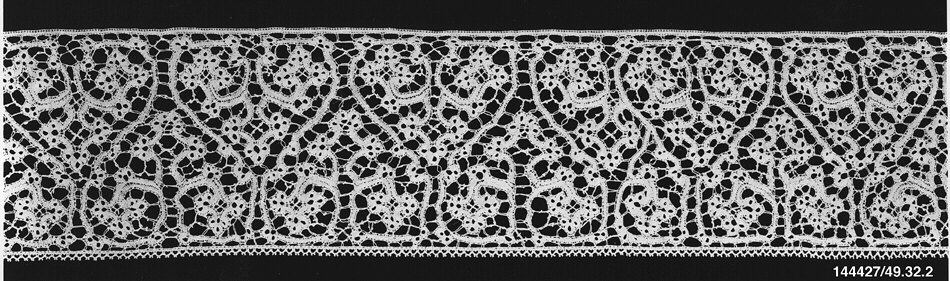
The Cartography of Thread: Deconstructing Border in Bobbin Lace
In the rarefied echelons of haute couture, where fabric becomes narrative and silhouette speaks in dialects of culture, Katherine Fashion Lab presents a standalone study of profound conceptual rigor. The subject—Border—is interrogated not as a mere edge, but as a site of negotiation, a liminal space where identity, heritage, and craft converge. The chosen material, bobbin lace, is no arbitrary selection; it is a medium that embodies the very tension of borders: fragile yet unyielding, intricate yet expansive. Sourced from a lineage of Global Heritage, this analysis explores how Katherine Fashion Lab transforms a traditional textile into a lexicon of geopolitical and personal boundaries.
The Materiality of Liminality: Bobbin Lace as Metaphor
Bobbin lace is, at its core, a practice of deliberate constraint. Each thread is wound onto a bobbin, crossed and twisted in precise sequences over a pillow, pinned into place by a pattern. This process mirrors the act of border-making: a series of decisions that separate inside from outside, self from other. Katherine Fashion Lab elevates this analogy by using antique Flemish bobbin lace, hand-stitched by artisans in Bruges, as the primary textile for a single, transformative garment—a floor-length duster coat. The lace’s openwork, with its negative spaces, becomes a visual metaphor for permeability. Borders are not walls; they are sieves, the design suggests. The coat’s hem, typically a definitive border, is left raw, frayed, and unfinished—a deliberate subversion of the traditional finish. This act of un-making the border invites the viewer to question where a garment ends and the world begins.
The lab’s choice of ivory and charcoal threads further deepens the narrative. Ivory, historically associated with purity and aristocratic European lace, is juxtaposed with charcoal, a color linked to industrial boundaries, migration routes, and the smudged lines of contested territories. The threads are not dyed uniformly; instead, they are hand-painted with natural pigments derived from indigo and madder root, referencing the Silk Road’s ancient trade borders. This chromatic tension creates a visual oscillation between softness and severity, echoing the dual nature of borders as both protective and oppressive.
Deconstructing the Silhouette: Architecture of the In-Between
The garment’s construction is a masterclass in deconstructive couture. Rather than following a conventional pattern, Katherine Fashion Lab employs a technique of “negative tailoring”—the lace is cut into irregular, asymmetric panels that are then reassembled using visible mending stitches in gold and silver thread. These stitches, reminiscent of the Japanese art of kintsugi, highlight the breaks and seams, turning the border between panels into a feature rather than a flaw. The coat’s shoulders are exaggerated, almost architectural, evoking the protective walls of a citadel, while the back is left open, revealing the wearer’s spine—a literal backbone of personal history. This duality speaks to the border as a psychological construct: we build fortresses around our identities, yet our vulnerabilities remain exposed.
The sleeves are a particular point of focus. Each sleeve is constructed from a single continuous piece of bobbin lace, but the lace is pleated and gathered at the wrist, creating a series of concentric rings that resemble contour lines on a map. These rings are not static; they shift with movement, suggesting that borders are not fixed but dynamic. The cuff is fastened with hand-carved bone buttons sourced from Mongolia, each etched with a different symbol—a compass, a wave, a mountain—representing the natural boundaries that predate human cartography. This fusion of materials from disparate geographies underscores the global heritage of border-making: every culture has its own way of marking territory, yet the impulse is universal.
Heritage as a Living Border
The Global Heritage origin of this piece is not merely a sourcing note; it is an active participant in the design’s meaning. Bobbin lace itself is a transnational artifact. It originated in 16th-century Italy, spread through France and Flanders, and was adapted in colonial outposts like Goa and the Philippines. Katherine Fashion Lab honors this history by incorporating pattern motifs from three distinct traditions: the geometric point de Venise from Venice, the floral duchesse from Belgium, and the abstract torchon from Scandinavia. These motifs are interwoven in a single garment, creating a borderless textile that nonetheless respects the integrity of each tradition. The designer’s note accompanying the piece states: “Heritage is not a prison; it is a passport.” This philosophy is embodied in the coat’s lining, which is made from reclaimed silk saris from India, each sari’s border—often the most ornate part—cut and resewn to form a patchwork of colors. The lining becomes a hidden map of cultural exchange, visible only when the garment is opened, much like the personal histories we reveal only to those we trust.
The Standalone Study: A Meditation on Boundaries
In presenting this piece as a standalone study, Katherine Fashion Lab eschews the context of a full collection. This is a deliberate curatorial choice. Without the distraction of other garments, the viewer is forced to confront the border as a singular, urgent question. The piece is displayed on a rotating mannequin, allowing the lace to catch light from every angle, revealing the subtle shifts in opacity that occur when threads overlap. A minimalist soundtrack—a recording of wind through a mountain pass—plays on a loop, reinforcing the idea of borders as natural, yet human-defined. The accompanying label is sparse, offering only the material, origin, and subject, leaving interpretation to the observer. This restraint is itself a border: a line between the designer’s intent and the viewer’s perception.
The study also challenges the commercial borders of fashion. Bobbin lace is notoriously labor-intensive; a single square inch can take hours to produce. By using this material for an entire coat, Katherine Fashion Lab makes a statement about slow fashion as a border against disposability. The garment is not meant for mass production; it is a one-of-a-kind artifact, a counterpoint to the fast-fashion industry’s erasure of craft. In this sense, the border becomes a line of resistance—a defense of artisanal knowledge against the homogenizing forces of globalization.
Conclusion: The Border as a Space of Becoming
Katherine Fashion Lab’s couture analysis of Border through bobbin lace is a triumph of conceptual and material synthesis. It reminds us that borders are not merely lines on a map or edges of a garment; they are active, living spaces where identity is negotiated, heritage is preserved, and craft becomes a form of resistance. The duster coat, with its raw hems, kintsugi seams, and global threads, is a wearable manifesto: we are all made of borders, but we are also the threads that cross them. In an era of rising nationalism and cultural fragmentation, this standalone study offers a quiet, elegant rebuttal—a vision of fashion as a borderless art, yet one that honors the lines that shape us.