The Cardinal’s Sartorial Code: Deconstructing Granvelle’s Engraved Persona
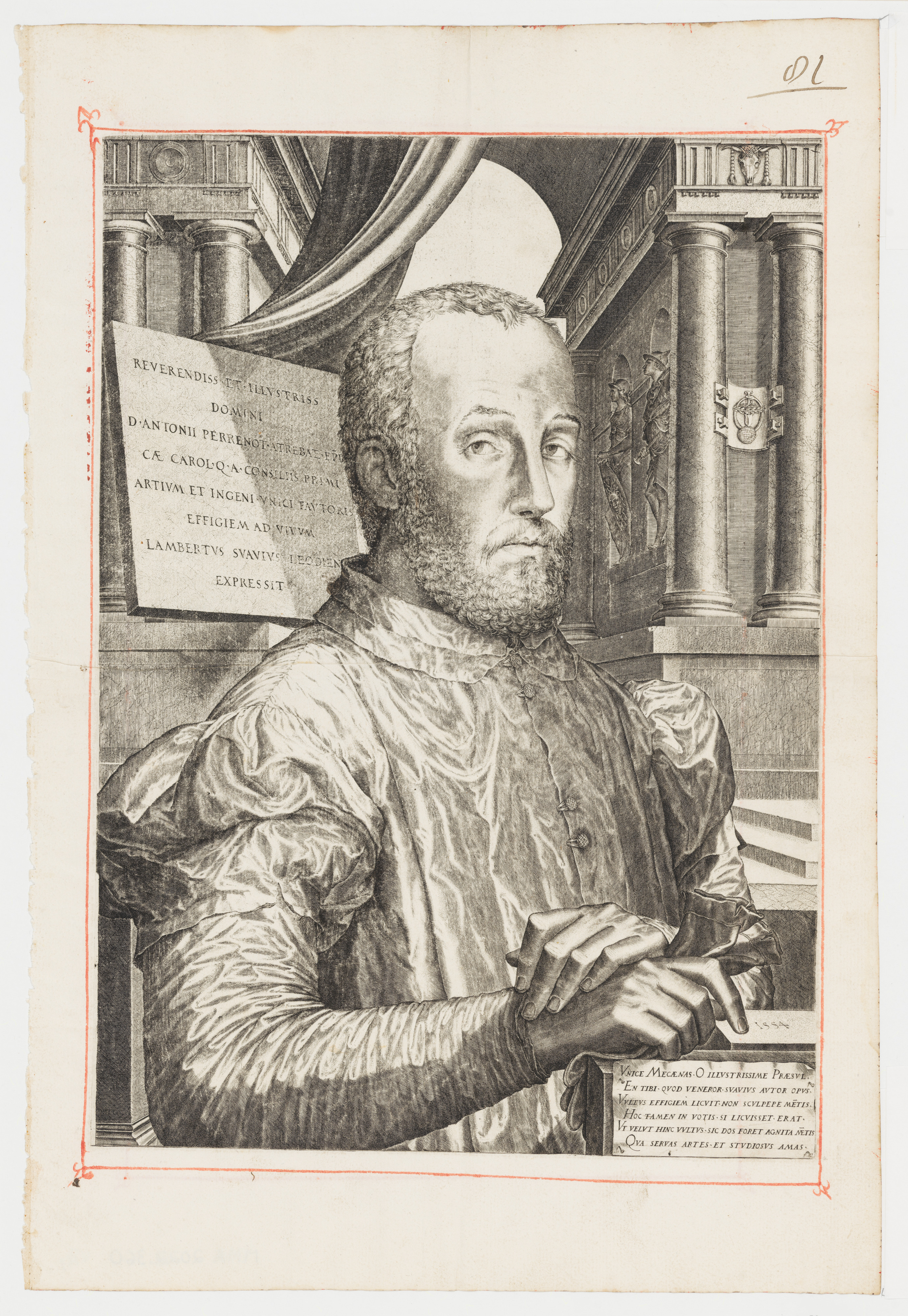
In the annals of 16th-century European power, few figures embody the intricate dance between ecclesiastical authority and political machination as vividly as Antoine Perrenot de Granvelle. As a cardinal, statesman, and trusted advisor to Philip II of Spain, Granvelle’s image was meticulously curated to project gravitas, erudition, and unyielding control. Katherine Fashion Lab’s latest standalone study—an engraving enhanced with delicate touches of gray wash—offers a profound couture analysis of this historical titan. This is not merely a portrait; it is a sartorial manifesto woven into the fabric of global heritage, where every line etched into the copper plate and every whisper of gray shadow speaks to a wardrobe designed for dominion.
The Material Lexicon: Engraving as Textile
The choice of engraving as the primary medium is itself a statement of permanence and precision. In the context of couture analysis, the incised lines of the engraving mimic the structured seams and rigid silhouettes of Granvelle’s ecclesiastical vestments. The touches of gray wash introduce a kinetic softness—a chiaroscuro effect that suggests the subtle drape of velvet or the sheen of watered silk. This dual materiality mirrors the cardinal’s own duality: the unyielding iron of his political will softened by the liturgical grace of his office. For the modern fashion scholar, this technique evokes the tension between haute couture’s architectural construction and its fluid, organic fall. The gray wash, applied sparingly, acts as a metaphorical lining—the hidden layer of intent beneath the public-facing garment.
Granvelle’s attire in this study is not adorned with the overt opulence of gold thread or gemstones; instead, the engraver’s tool renders texture through cross-hatching and stippling. This minimalist approach aligns with the cardinal’s reputation for strategic austerity. His garments are not for display but for command. The black of his cassock—rendered in deep, dense lines—absorbs light, symbolizing authority that does not reflect but emanates. The gray wash highlights the folds of his rochet (a linen surplice), suggesting a purity of purpose that is both liturgical and political. In couture terms, this is a study in negative space and restraint, where the absence of embellishment becomes the ultimate emblem of power.
Global Heritage: A Wardrobe of Conquest and Diplomacy
Granvelle’s attire cannot be divorced from the global heritage that shaped his life. Born in Besançon, educated in Louvain, and serving the Habsburg court across Flanders, Spain, and Italy, his wardrobe was a cartography of influence. The engraving captures a man whose garments are a synthesis of European ecclesiastical tradition and the burgeoning global trade networks of the 16th century. The black wool of his cassock likely originated from Spanish merino sheep, while the linen of his rochet might have been woven from Flemish flax—a nod to his Burgundian roots. The gray wash, applied to the collar and cuffs, hints at the lace that would have been imported from Venice or Milan, signaling his access to transcontinental luxury.
This study is a microcosm of how global heritage manifests in personal style. Granvelle’s attire is not merely functional; it is a diplomatic tool. The cardinal’s choice of a mozzetta (a short cape) over his cassock, barely visible in the engraving’s shadowed outlines, would have been a deliberate nod to Roman formality. Yet the absence of a biretta (the traditional ecclesiastical hat) in this depiction suggests a calculated informality—a man comfortable enough in his power to forgo symbols. For Katherine Fashion Lab, this represents a masterclass in cultural semiotics: how a single garment can encode allegiance to the Vatican, the Spanish crown, and the Holy Roman Empire simultaneously.
The Standalone Study: A Portrait of Solitary Authority
As a standalone study, this engraving isolates Granvelle from the trappings of courtly life—no throne, no crucifix, no heraldic devices. This framing forces the viewer to focus solely on the sartorial language of his person. The cardinal’s posture is erect, his gaze directed slightly to the side, as if assessing an unseen petitioner. The gray wash on his face and hands introduces a human vulnerability—a subtle reminder that even the most powerful men are subject to time’s erosion. Yet the crisp lines of his collar and the structured fall of his garments reassert control. This is couture as armor.
The composition of the study mirrors a fashion illustration: the head and shoulders dominate the frame, with the garments cascading downward in a controlled flow. The engraver’s attention to the texture of the fabric—the slight puckering at the shoulders, the precise folds at the elbows—demonstrates an understanding of how clothing shapes the body. Granvelle’s broad shoulders, emphasized by the cassock’s cut, project an image of strength. The gray wash on the collar creates a halo effect, drawing the eye upward to his face—the true locus of power. In couture analysis, this is akin to a designer’s silhouette study, where the garment is both a second skin and a statement of intent.
Implications for Modern Couture
Katherine Fashion Lab’s study of Granvelle offers a timeless lesson for contemporary fashion: power dressing is not about excess but about precision. The cardinal’s engraved persona teaches us that restraint, when executed with mastery, communicates more than ornamentation. The gray wash technique, applied here to suggest depth and movement, can be translated into modern fabric treatments—perhaps a matte finish on a tailored suit or a subtle gradient in a silk gown. The global heritage of Granvelle’s wardrobe challenges designers to source materials with narrative weight, to weave stories of trade, conquest, and diplomacy into their collections.
Moreover, the standalone nature of this study underscores the power of singularity in fashion. In an era of fast fashion and visual noise, Granvelle’s portrait reminds us that a single, well-crafted garment can command attention. The engraving itself is a precursor to the fashion photograph—a static image that captures the essence of a person through their clothing. For the modern curator, this study is a blueprint for how to present couture as a form of historical documentation, where every stitch and shadow tells a story of ambition, faith, and global entanglement.
In conclusion, Antoine Perrenot de Granvelle’s engraved portrait is far more than a historical artifact; it is a sartorial treatise on the nature of power. Through the interplay of engraving and gray wash, Katherine Fashion Lab has illuminated a wardrobe that transcends time—a wardrobe built on the foundations of global heritage, executed with the precision of a master craftsman, and worn with the unshakeable confidence of a man who understood that true authority lies not in what you wear, but in how you wear it. This study stands as a testament to the enduring dialogue between clothing and identity, a dialogue that continues to shape the couture of our own era.