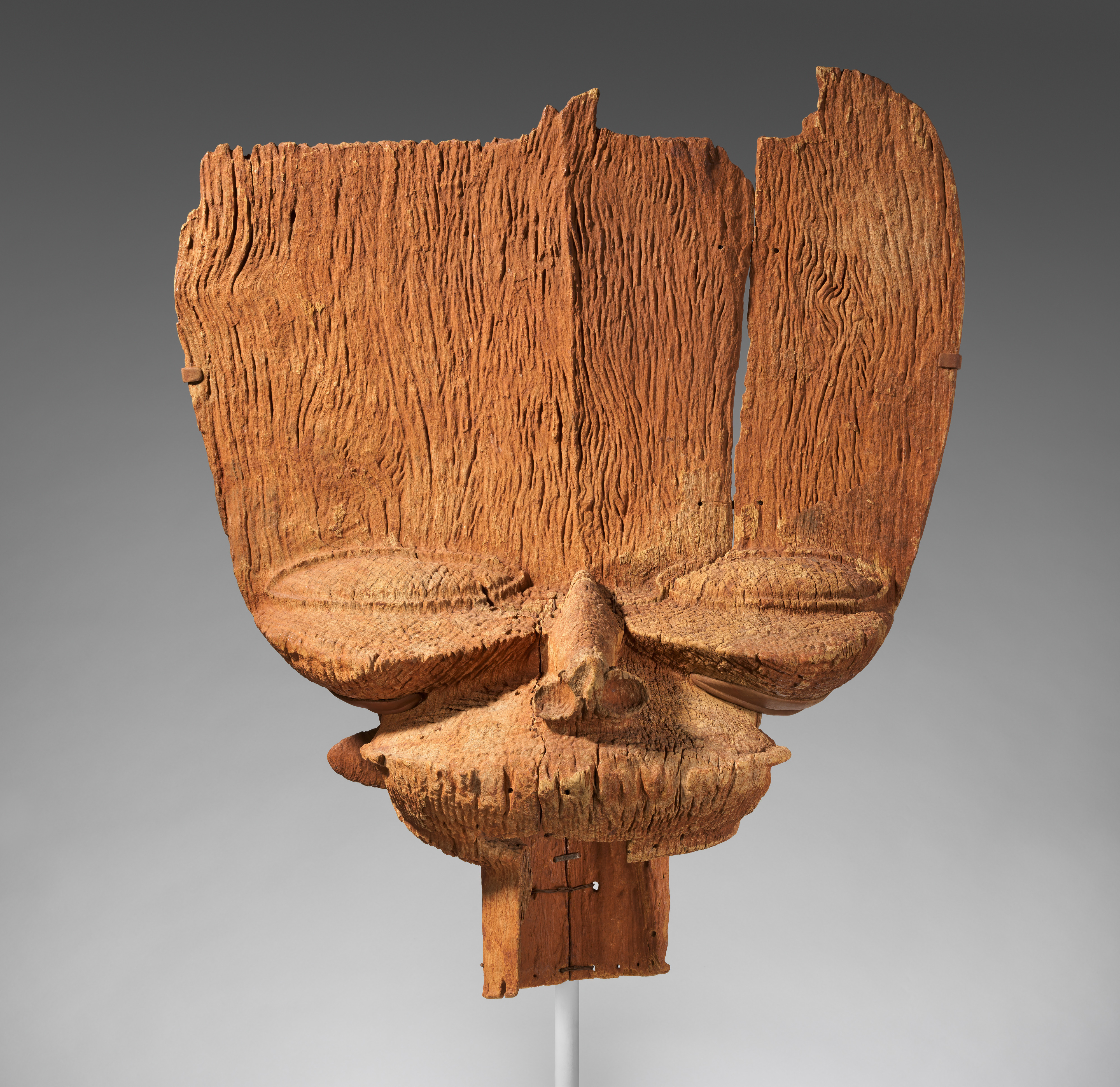
Heritage Analysis: The Tsesah Crest of the Bamileke People
In the realm of high-end luxury, the most compelling narratives are those rooted in profound cultural authenticity and symbolic depth. The Tsesah crest, a carved wooden emblem from the Bamileke people of Cameroon, represents a pinnacle of such heritage. For Katherine Fashion Lab, this artifact offers a strategic opportunity to bridge ancestral power with contemporary luxury. This analysis explores the Tsesah crest’s symbolic power, historical adornment, spiritual meaning, and proposes a 2026 high-end luxury strategy that honors its origins while positioning it as a beacon of exclusivity and cultural intelligence.
Symbolic Power: The Language of Rank and Authority
The Tsesah crest is not merely an ornamental object; it is a codified symbol of political and social authority within Bamileke chiefdoms. Carved from dense, dark wood, often iroko or ebony, the crest typically features a stylized human or animal form—frequently a buffalo, elephant, or royal figure—representing the strength, wisdom, and lineage of the ruling elite. The buffalo, for instance, embodies resilience and martial prowess, while the elephant signifies majesty and longevity. These motifs are not arbitrary; they are part of a visual lexicon understood by the community, conferring status upon the wearer or the space the crest occupies.
In traditional contexts, the Tsesah crest was reserved for kings (Fon), nobles, and high-ranking warriors during ceremonial events, such as the annual Nja festival or funerary rites. Its display was a public declaration of hierarchy, reinforcing the social order. The crest’s placement—often atop a staff, on a headdress, or mounted on a throne—elevated the bearer’s presence, both physically and symbolically. For Katherine Fashion Lab, this symbolic power translates into a narrative of exclusivity and leadership. In a 2026 luxury market saturated with mass-produced logos, the Tsesah crest offers a return to meaningful status markers, where ownership signifies not wealth alone, but a deep understanding of heritage and power.
Historical Adornment: Craftsmanship as Cultural Capital
The creation of a Tsesah crest is a sacred process, entrusted to master carvers who undergo rigorous apprenticeship. The medium—wood—is chosen for its durability and spiritual resonance. Historically, the carver would select a tree from a sacred grove, offering prayers and libations before felling it. The carving itself could take months, with each chisel stroke imbued with intention. The final piece is often polished with palm oil and adorned with beads, cowrie shells, or metals, adding layers of texture and meaning.
Adornment in Bamileke culture is a form of cultural capital. The Tsesah crest was not worn daily but reserved for moments of greatest significance—coronations, weddings, and diplomatic negotiations. Its presence in a royal court signified the chiefdom’s wealth, artistic sophistication, and connection to ancestors. For Katherine Fashion Lab, this historical context provides a blueprint for limited-edition luxury. The crest’s rarity and the labor-intensive craftsmanship mirror the ethos of haute couture. By highlighting the artisanal journey—the selection of wood, the carver’s lineage, the ritual preparation—Katherine Fashion Lab can position the Tsesah crest as a collectible artifact, akin to a masterwork by a contemporary sculptor.
Spiritual Meaning: The Crest as a Conduit Between Worlds
Beyond its social function, the Tsesah crest holds profound spiritual significance. In Bamileke cosmology, the crest is believed to be a vessel for ancestral spirits. It is often consecrated by a priest or spiritual leader, who invokes the ancestors to inhabit the object. This imbues the crest with protective and advisory powers. During ceremonies, the Fon would wear or display the crest to commune with the spirits, seeking guidance for governance, warfare, or harvests. The crest thus becomes a bridge between the visible and invisible worlds, a tangible manifestation of divine authority.
This spiritual dimension is critical for luxury branding in 2026, where consumers increasingly seek meaningful objects that resonate with personal identity and transcendence. The Tsesah crest’s spiritual narrative can be woven into Katherine Fashion Lab’s storytelling, positioning the brand as a curator of sacred artifacts rather than mere accessories. By respecting the crest’s sacrality—through proper attribution, collaboration with Bamileke cultural custodians, and transparent provenance—the brand can offer clients a piece of spiritual heritage, elevating their own sense of purpose and connection.
2026 High-End Luxury Strategy: From Artifact to Icon
To integrate the Tsesah crest into a 2026 high-end luxury strategy, Katherine Fashion Lab must adopt a three-pillar approach: cultural partnership, limited-edition curation, and experiential storytelling. Each pillar ensures the crest’s integrity while unlocking commercial and reputational value.
Cultural Partnership: The first pillar involves establishing a formal collaboration with Bamileke royal houses and master carvers. This is not merely ethical—it is strategic. By co-creating a capsule collection, Katherine Fashion Lab gains access to authentic techniques and narratives that competitors cannot replicate. The partnership should include revenue-sharing agreements, cultural education for the brand’s design team, and a commitment to preserving carving traditions. This positions the brand as a steward of heritage, not an appropriator.
Limited-Edition Curation: The second pillar focuses on product strategy. The Tsesah crest should be reinterpreted as a wearable or displayable luxury object—for example, a pendant necklace, a brooch, or a miniature sculpture for the home. Each piece should be numbered, with a certificate of authenticity detailing the carver’s name, the wood’s origin, and the spiritual blessing received. The edition size must be extremely limited, perhaps 50 to 100 pieces globally, to maintain exclusivity. Pricing should reflect the crest’s cultural weight, starting at $15,000 for smaller pieces and exceeding $100,000 for larger, ceremonial-grade works.
Experiential Storytelling: The third pillar leverages immersive experiences to deepen client engagement. Katherine Fashion Lab could host private viewings in partnership with museums or cultural institutions, featuring documentaries on the carving process and talks by Bamileke elders. For top-tier clients, a curated journey to Cameroon could be offered, allowing them to witness a crest’s consecration and meet the carver. This transforms the purchase from a transaction into a transformative experience, fostering brand loyalty and word-of-mouth prestige.
In conclusion, the Tsesah crest is far more than a wooden artifact; it is a repository of Bamileke power, artistry, and spirituality. For Katherine Fashion Lab, it represents a rare opportunity to lead the luxury market toward cultural depth and ethical sophistication. By respecting its origins and reimagining its presence, the brand can create a 2026 collection that resonates with discerning clients who seek not just beauty, but meaning. This is the future of luxury: where heritage is honored, and every crest tells a story of royalty.