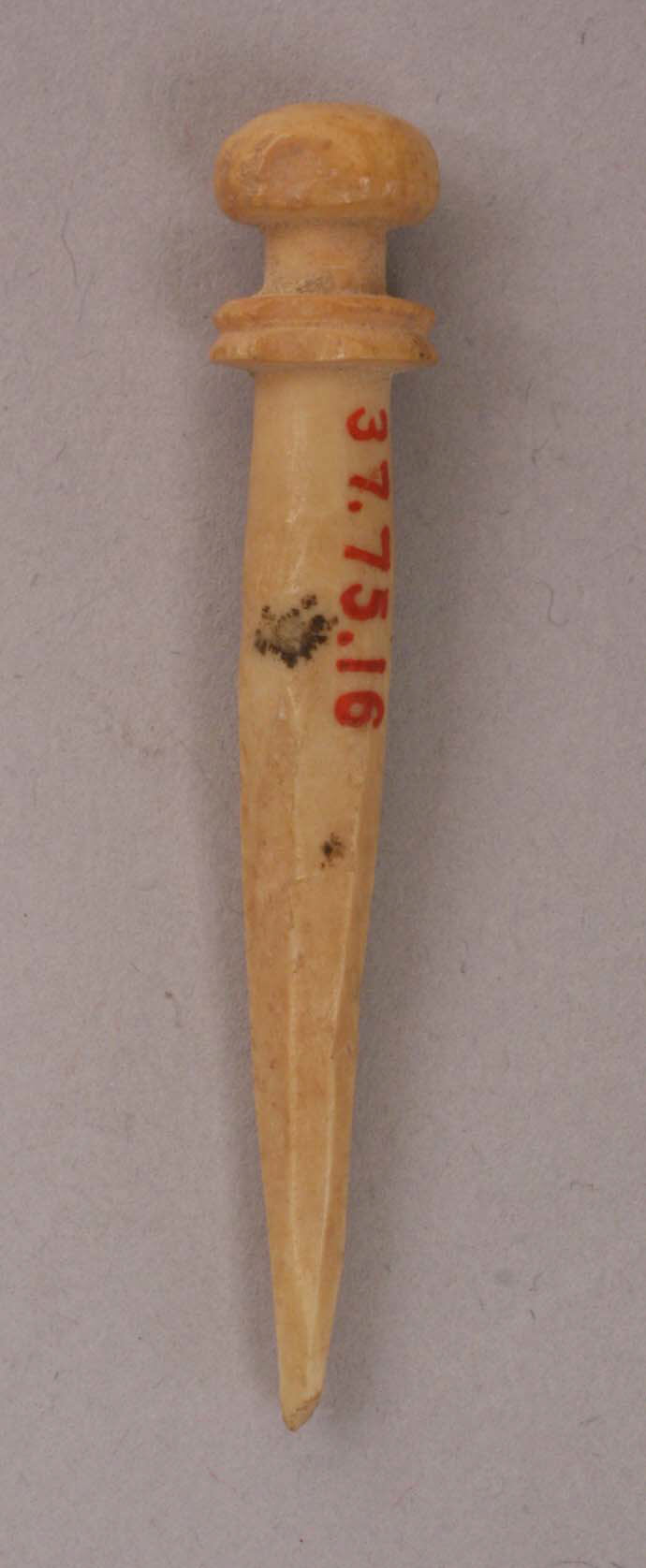
Heritage Analysis: The Bone Pin or Stylus from Ancient Civilizations
This strategic heritage analysis examines the bone pin or stylus, a seemingly utilitarian object from ancient civilizations, and repositions it as a profound artifact of symbolic power, historical adornment, and spiritual meaning. For Katherine Fashion Lab, this research provides a foundational lens through which to develop a 2026 high-end luxury strategy that leverages deep cultural authenticity, material narrative, and metaphysical resonance. The bone pin, often overlooked in favor of precious metals or gemstones, offers a uniquely raw and intimate connection to early human expression—a strategic asset for a luxury brand seeking differentiation through intellectual and emotional depth.
Symbolic Power: The Pin as a Tool of Authority and Identity
In ancient civilizations, the bone pin was far more than a fastener or writing implement; it was a potent symbol of social hierarchy, personal agency, and communal identity. Archaeological evidence from Neolithic sites across Europe, Asia, and the Americas reveals that bone pins were often carved with intricate patterns—spirals, chevrons, animal motifs—that denoted tribal affiliation, marital status, or shamanic rank. The act of wearing or wielding a bone pin was an assertion of presence. For instance, in ancient Mesopotamia, scribes used styluses made from animal bone to inscribe cuneiform on clay tablets, a practice that elevated the stylus to a symbol of knowledge and bureaucratic power. Similarly, in pre-Columbian Andean cultures, bone pins were used to secure elaborate textiles, marking the wearer as a person of wealth and ritual importance.
For Katherine Fashion Lab, this symbolic power translates directly into a 2026 luxury strategy centered on “authorial adornment.” The bone pin or stylus can be reimagined as a limited-edition accessory that confers a sense of ownership over one’s narrative. By embedding subtle, culturally specific motifs—such as a spiral representing eternity or a chevron denoting protection—the brand can offer clients a talisman of personal authority. This aligns with the growing luxury trend toward “meaningful minimalism,” where objects are valued not for ostentation but for their capacity to encode identity and status through understated, historically resonant design.
Historical Adornment: The Bone Pin as a Precursor to Modern Luxury
Historically, bone was one of the earliest materials used for personal adornment, predating metalworking by millennia. The choice of bone—often from deer, cattle, or birds—was not merely practical but deeply symbolic. Bone represented the enduring essence of life; it was the last remnant of a living creature, and thus carried connotations of resilience, ancestry, and the cycle of life and death. In ancient Egyptian contexts, bone pins were used to secure wigs and headdresses, serving as both functional fasteners and markers of ritual purity. In Celtic societies, bone pins were intricately carved with interlace patterns, reflecting a worldview where art, nature, and spirituality were inseparable.
This historical precedent offers Katherine Fashion Lab a strategic opportunity to position the bone pin as a “primordial luxury object.” In 2026, high-end consumers are increasingly drawn to materials that tell a story of origin and transformation. Bone, with its organic texture and unique grain, cannot be mass-produced; each piece is inherently singular. This aligns with the luxury industry’s shift toward “artisanal singularity”—the idea that true luxury resides in the irreproducible. By sourcing ethically harvested bone (e.g., from food industry byproducts) and collaborating with master carvers trained in ancient techniques, Katherine Fashion Lab can create a collection that feels both ancestral and avant-garde. The historical context transforms the bone pin from a simple artifact into a wearable piece of cultural archaeology, appealing to clients who seek depth beyond surface beauty.
Spiritual Meaning: The Stylus as a Conduit for Transcendence
The spiritual dimension of the bone pin or stylus is perhaps its most compelling aspect for luxury brand strategy. In many ancient cultures, bone was considered a conduit between the physical and spiritual realms. Shamans and healers used bone pins in rituals to inscribe protective symbols on the body or on ritual objects. The act of writing with a stylus was itself a sacred act—a means of fixing thought into matter, of making the ephemeral permanent. In Norse traditions, runes were often carved with bone tools, imbuing the inscriptions with the essence of the animal from which the bone came. Similarly, in ancient Chinese oracle bone divination, heated bone pins were used to create cracks on turtle shells or ox scapulae, which were then interpreted as messages from ancestors.
For Katherine Fashion Lab, this spiritual heritage offers a powerful narrative for a 2026 luxury collection. The brand can position the bone stylus as a “tool for intention-setting,” a luxury item that transcends mere decoration to become a personal ritual object. Imagine a limited-edition set: a hand-carved bone stylus paired with a leather-bound journal or a silk scarf, allowing the wearer to inscribe their own symbols or affirmations. This taps into the rising consumer interest in “conscious luxury” and “ritualistic self-care.” By emphasizing the spiritual lineage—perhaps through a collaboration with a cultural historian or a contemporary shamanic artist—the brand can create an aura of exclusivity and sacredness. The bone stylus becomes not just an accessory, but a partner in the client’s personal journey of meaning-making.
2026 High-End Luxury Strategy: From Artifact to Icon
To translate this heritage analysis into a viable 2026 luxury strategy, Katherine Fashion Lab must consider three key pillars: material authenticity, narrative depth, and experiential exclusivity. First, the bone used must be sourced with rigorous ethical standards, ideally from regenerative agricultural systems or certified heritage collections. The raw material’s origin story—whether from a specific region, animal, or historical period—should be documented and shared with clients through digital passports or micro-narratives. Second, the design language must balance ancient motifs with contemporary minimalism. A bone pin that is too literal in its recreation may feel antiquated; one that is too abstract may lose its symbolic resonance. The ideal is a hybrid: a sleek, modern silhouette with a single, carefully chosen ancient symbol carved in low relief, perhaps accented with a tiny gemstone or precious metal inlay to signal luxury.
Third, the brand should create an immersive launch experience that educates and elevates. Consider a private salon event where clients are guided through a curated display of ancient bone artifacts (on loan from museums or private collections), followed by a workshop where they can select a symbol for their own custom pin. This transforms the purchase into a rite of passage, aligning with the luxury sector’s move toward “experiential ownership.” Pricing should reflect the rarity of the material and the labor of the artisan—positioning the bone pin at a premium tier, comparable to fine jewelry, but with a distinct intellectual and spiritual premium. Marketing copy should avoid clichés of “ancient wisdom” and instead offer precise, researched references, such as “inspired by a 4,500-year-old Sumerian scribal tool” or “carved from ethically sourced deer bone, echoing the shamanic traditions of the Eurasian steppes.”
Finally, Katherine Fashion Lab must consider the long-term brand equity of this collection. The bone pin or stylus should not be a one-off novelty but the cornerstone of a broader “Heritage Artifacts” line, potentially expanding to other ancient mediums like stone, horn, or shell. By consistently returning to the theme of “primordial luxury,” the brand can build a reputation for intellectual rigor and cultural stewardship, attracting a clientele that values substance over spectacle. In a 2026 market saturated with digital and synthetic luxury, the bone pin offers a tactile, spiritual, and historically anchored alternative—a piece of the past that feels urgently relevant to the future of high-end fashion.