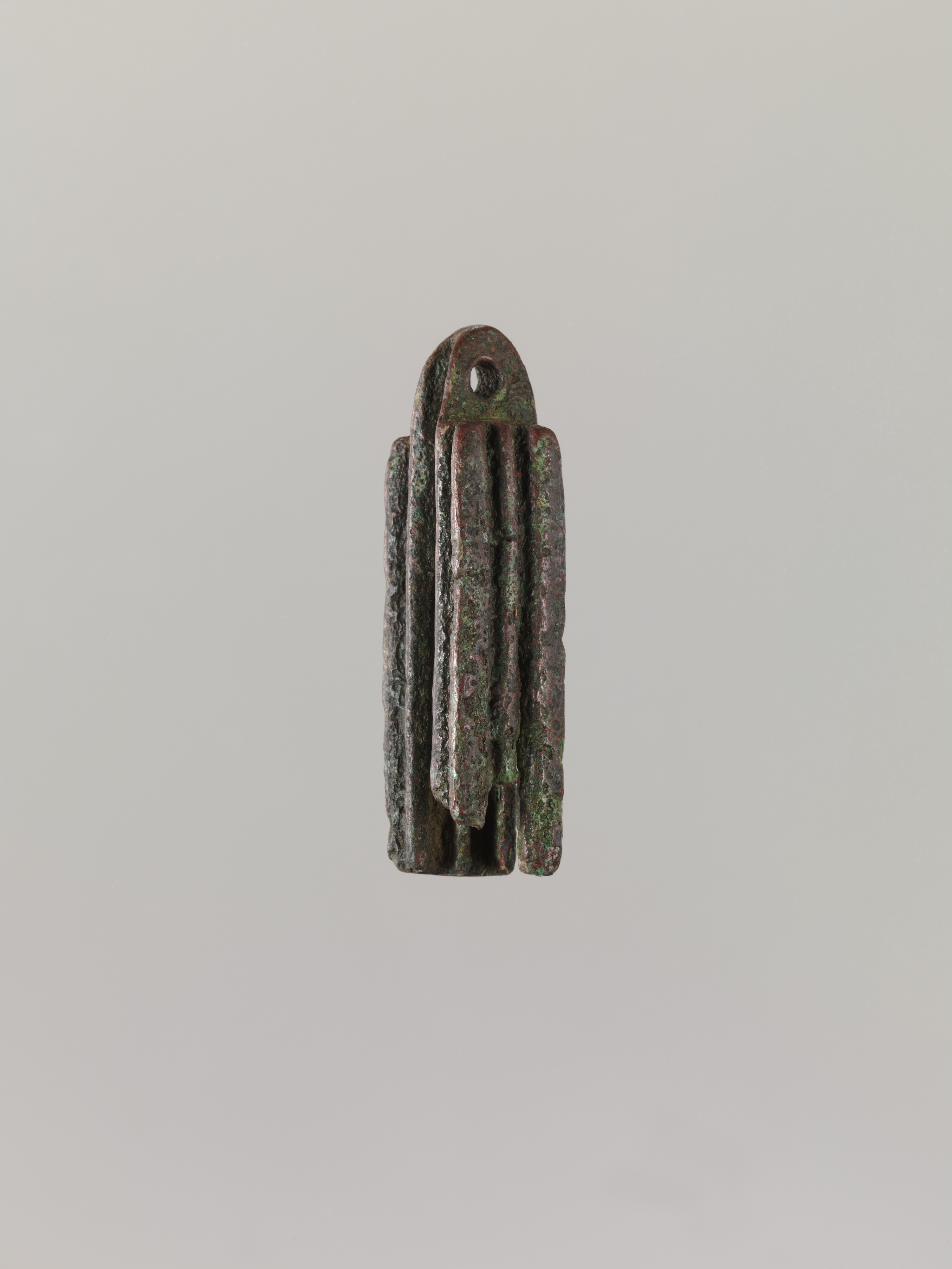
Heritage Analysis: The Chinese Bronze Coin as a Symbolic Artifact for Katherine Fashion Lab
Introduction: The Coin as a Conduit of Cultural DNA
The Chinese bronze coin, a seemingly modest object of trade, transcends its functional origins to become a profound emblem of historical resonance, spiritual authority, and aesthetic sophistication. For Katherine Fashion Lab, this artifact offers a critical lens through which to examine the interplay between material culture and luxury brand narrative. In the context of our ongoing research on 《Rock in the form of a fantastic mountain》 and 《Jar in the shape of bronze container (hu)》, the coin emerges not as an isolated relic but as a unifying thread. Both the fantastic mountain and the bronze hu jar—disparate in form yet convergent in symbolic weight—reveal a shared cultural lexicon: the pursuit of permanence, cosmological order, and the transformation of base matter into transcendent value. This paper explores the coin’s symbolic power, historical adornment, spiritual meaning, and its strategic application for a 2026 high-end luxury positioning.
Symbolic Power: The Coin as a Microcosm of Imperial Authority
The Chinese bronze coin, particularly the round coin with a square hole (fang kong qian), embodies a dualistic cosmology. Its circular shape represents heaven (tian), while the square aperture symbolizes earth (di), aligning with the ancient Chinese worldview of a harmonious universe. This geometric precision was not merely aesthetic; it was a declaration of imperial legitimacy. From the Qin dynasty onward, coinage served as a tool for centralizing power, with inscriptions bearing the reigning emperor’s reign title—a practice that fused monetary value with political propaganda.
In the context of Katherine Fashion Lab’s heritage analysis, the coin’s symbolic power lies in its ability to condense vast narratives into a tangible, portable form. Unlike the monumental 《Rock in the form of a fantastic mountain》, which evokes the cosmic mountain Kunlun as a site of immortality, or the 《Jar in the shape of bronze container (hu)》, which references ritual vessels used for ancestral offerings, the coin is an intimate artifact. It is a talisman of transaction, yet it carries the same weight of cosmological order. For a luxury brand, this duality—intimacy and authority—offers a blueprint for creating objects that are both personal and emblematic of a larger cultural legacy. The coin’s power is not in its material value (bronze is modest) but in its embedded meaning: a promise of stability, continuity, and divine sanction.
Historical Adornment: Wearing Wealth and Identity
Historically, Chinese coins were not confined to economic exchange. They were repurposed as adornment, sewn onto clothing, woven into belts, or strung as necklaces. This practice, known as qian bi shi, transformed currency into a protective amulet. During the Tang and Song dynasties, coins were often incorporated into yao dai (waist ornaments) or xiang bao (sachet charms), believed to ward off evil spirits and attract prosperity. The act of wearing coins was a performative display of wealth, status, and spiritual vigilance.
This historical adornment resonates deeply with Katherine Fashion Lab’s exploration of materiality. The coin’s transition from utilitarian object to decorative element mirrors the journey of the 《Rock in the form of a fantastic mountain》, where a natural stone is elevated to an artistic treasure, and the 《Jar in the shape of bronze container (hu)》, where a functional vessel becomes a ritual artifact. The coin, too, undergoes this transformation: its bronze patina, worn by centuries of handling, becomes a text of time. For high-end luxury strategy, this suggests a design language that values patina as a marker of authenticity. Coins, when used as motifs in jewelry or accessories, evoke a narrative of accumulation—of wealth, history, and personal story. The 2026 luxury consumer, increasingly drawn to “slow luxury” and heritage storytelling, would find resonance in adornment that carries the weight of dynastic memory.
Spiritual Meaning: The Coin as a Bridge Between Realms
Beyond its economic and decorative roles, the Chinese bronze coin holds profound spiritual significance. In Taoist and folk traditions, coins were used in burial practices, placed in tombs or on the eyes of the deceased to ensure safe passage to the afterlife. The square hole was not only a practical feature for stringing but also a symbolic portal—a conduit for spiritual energy (qi) to flow between the living and the dead. This belief is echoed in the 《Rock in the form of a fantastic mountain》, which served as a microcosm for Daoist immortals, and the 《Jar in the shape of bronze container (hu)》, which held offerings for ancestral spirits. The coin, in this context, is a humble yet potent vessel for transcendence.
For Katherine Fashion Lab, this spiritual dimension offers a rich vein for brand mythology. The coin’s ability to mediate between material and immaterial realms aligns with the luxury industry’s growing emphasis on “meaningful consumption.” In 2026, high-end consumers seek not just products but artifacts that connect them to a deeper sense of purpose. A coin-inspired design—whether in a pendant, cufflink, or bag charm—can be positioned as an amulet for modern life, a talisman for prosperity and protection. The spiritual meaning is not overtly religious but rather cultural: a nod to the enduring belief that objects carry energy. This strategy differentiates Katherine Fashion Lab from competitors by embedding a narrative of “sacred craftsmanship” into every piece.
2026 High-End Luxury Strategy: The Coin as a Design and Brand Archetype
To translate the Chinese bronze coin into a 2026 luxury strategy, Katherine Fashion Lab must consider three pillars: Materiality, Narrative, and Exclusivity.
Materiality: The coin’s bronze medium is inherently earthy and aged. For luxury, this can be reinterpreted through patinated metals—oxidized silver, raw brass, or aged gold—that mimic the coin’s historical wear. The square-hole motif can be incorporated into geometric hardware, such as clasps, rings, or closures, echoing the coin’s structural precision. This material language aligns with the 《Jar in the shape of bronze container (hu)》, which celebrates the weight and texture of bronze as a symbol of permanence.
Narrative: The coin’s story is one of circulation—of passing through countless hands, across dynasties, and between worlds. For a luxury brand, this suggests a collection titled “The Currency of Eternity,” where each piece is numbered and accompanied by a provenance story, real or imagined, connecting it to a specific historical period. This narrative approach mirrors the 《Rock in the form of a fantastic mountain》, which invites the viewer to imagine a miniature universe. The coin, too, becomes a universe in miniature: a round world of meaning.
Exclusivity: Historically, coins were mass-produced, but for luxury, scarcity is key. Katherine Fashion Lab can produce limited-edition pieces using ancient casting techniques, such as lost-wax bronze casting, with each piece bearing a unique patina. Collaborations with contemporary Chinese artisans who specialize in recreating Song dynasty coin motifs would add authenticity. The 2026 consumer values “cultural capital,” and owning a piece that references a 2,000-year-old tradition—yet feels modern—offers a distinct status signal.
Conclusion: The Coin as a Unifying Artifact
The Chinese bronze coin, in its humble simplicity, reveals a complex web of symbolic power, historical adornment, and spiritual meaning that directly correlates with our studies of the 《Rock in the form of a fantastic mountain》 and the 《Jar in the shape of bronze container (hu)》. These three artifacts—though separated by function—share a common DNA: they are all vessels for cultural memory. For Katherine Fashion Lab, the coin is not merely a decorative motif but a strategic archetype. It embodies the tensions between economy and art, utility and ritual, intimacy and empire. By integrating the coin’s heritage into a 2026 luxury strategy, the brand can offer consumers not just an accessory but a portal—a small, bronze circle through which the past flows into the present, and where value is measured not in currency but in continuity.