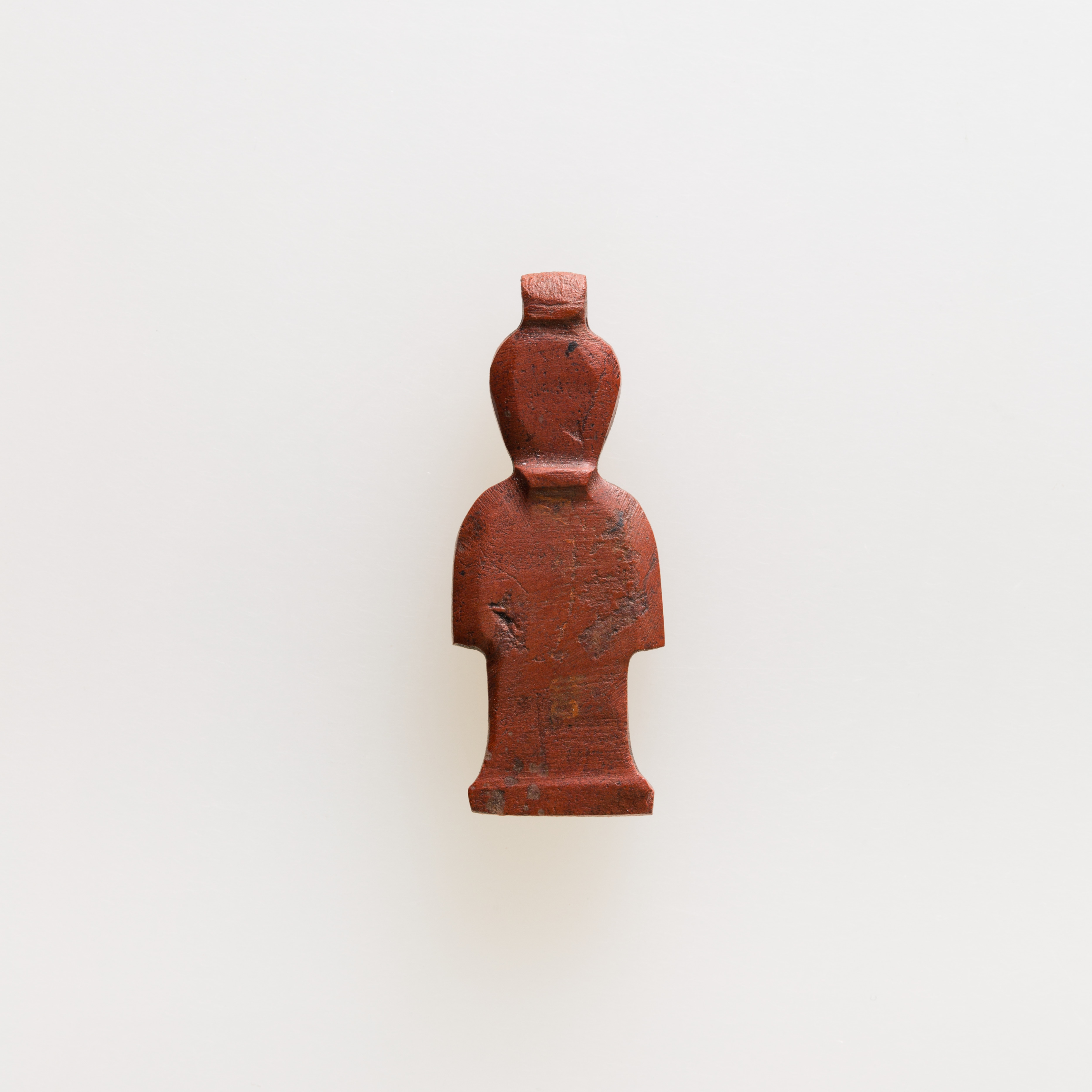
Heritage Analysis: The Tit (Isis Knot) Amulet in Red Glass
As Lead Heritage Curator at Katherine Fashion Lab, I present this strategic standalone research on the Tit amulet, an ancient symbol of profound spiritual and cultural resonance. Crafted from red glass, this artifact embodies a nexus of symbolic power, historical adornment, and spiritual meaning that offers a compelling foundation for a 2026 high-end luxury strategy. The Tit amulet, often associated with the goddess Isis, represents a sophisticated interplay of life, protection, and divine femininity—elements that align seamlessly with contemporary luxury values of authenticity, empowerment, and heritage storytelling.
Symbolic Power: The Essence of the Isis Knot
The Tit amulet, commonly referred to as the Isis knot, derives its name from the Egyptian goddess Isis, who embodies motherhood, magic, and fertility. The amulet’s form—a looped knot with a central cross-like structure—symbolizes the union of opposites: life and death, mortal and divine, protection and vulnerability. In ancient Egyptian culture, the Tit was believed to channel the blood of Isis, conferring vitality and safeguarding against evil forces. The red glass medium amplifies this symbolism, as red was associated with life force, blood, and the regenerative powers of the sun god Ra. This chromatic choice imbues the amulet with a visceral potency, linking the wearer to cycles of creation and renewal.
From a strategic perspective, the Tit’s symbolic power offers a rich narrative for luxury branding. In 2026, high-end consumers seek not merely products but talismans of meaning—objects that confer identity, protection, and transcendence. The Tit amulet’s dual role as both adornment and spiritual tool positions it as a potent signifier of inner strength and femininity. For Katherine Fashion Lab, this symbolism can be leveraged to craft a collection that speaks to the modern woman’s desire for resilience and self-empowerment, echoing the goddess Isis’s archetype of nurturing yet formidable authority.
Historical Adornment: A Legacy of Prestige
Historically, the Tit amulet was not merely a decorative item but a functional component of funerary and daily adornment in ancient Egypt. Archaeological evidence from the New Kingdom (c. 1550–1070 BCE) places Tit amulets in burial contexts, often placed on the chest of mummies to protect the deceased in the afterlife. The red glass variant, a less costly alternative to carnelian or jasper, democratized access to this spiritual technology, allowing individuals of varying social strata to partake in its protective powers. This material choice reflects a sophisticated understanding of accessible luxury—a concept that resonates with modern high-end markets seeking exclusivity without elitism.
In terms of adornment, the Tit was typically worn as a pendant or incorporated into broad collars, serving as a focal point of ritualistic jewelry. Its design—simple yet geometrically precise—allowed for versatility in both formal and everyday settings. For Katherine Fashion Lab, this historical context provides a blueprint for creating timeless, modular pieces that transcend transient trends. The amulet’s legacy as a status symbol, rooted in spiritual rather than material wealth, offers a counterpoint to contemporary luxury’s focus on opulence. By reimagining the Tit in red glass—a material that balances fragility with durability—the Lab can position its 2026 collection as a homage to ancient craftsmanship while embracing modern sustainability and ethical sourcing.
Spiritual Meaning: The Blood of Isis and Divine Protection
The spiritual meaning of the Tit amulet is inextricably linked to the goddess Isis, whose mythos centers on resurrection and maternal protection. According to the Pyramid Texts, the Tit was said to contain the blood of Isis, rendering it a powerful amulet for warding off evil spirits and ensuring safe passage through the underworld. This blood symbolism is particularly resonant in red glass, which mimics the color of life-giving fluid and evokes the cyclical nature of existence—birth, death, and rebirth. In funerary rituals, the Tit was often paired with the Djed pillar (symbolizing stability) to create a complementary protective system: the Tit for blood and life, the Djed for endurance and resurrection.
For a 2026 luxury strategy, this spiritual dimension offers a profound emotional hook. High-end consumers increasingly prioritize wellness, mindfulness, and spiritual connectivity, seeking objects that serve as anchors in a fragmented world. The Tit amulet’s narrative of divine protection can be translated into a collection that emphasizes intentionality—each piece blessed or designed with meditative precision, much like ancient artisans consecrated their work. Katherine Fashion Lab can collaborate with contemporary spiritual leaders or ritual designers to imbue the collection with authentic energy, differentiating it from mass-market imitations. The red glass medium, with its translucent depth, further enhances this spiritual aesthetic, evoking a sense of mystery and inner glow that aligns with luxury’s emphasis on transcendent experience.
2026 High-End Luxury Strategy: Heritage Reimagined
To operationalize the Tit amulet’s heritage for a 2026 luxury market, Katherine Fashion Lab must adopt a multi-faceted strategy that balances reverence with innovation. First, the collection should be positioned as “Heritage Reimagined”—a limited-edition line that honors ancient Egyptian symbolism while integrating contemporary design language. The red glass medium, historically accessible, can be elevated through artisanal techniques such as hand-blown glass or kiln-casting, ensuring each piece is unique and labor-intensive. This aligns with luxury’s shift toward craftsmanship and scarcity, appealing to collectors who value narrative over novelty.
Second, the symbolic power of the Tit should be amplified through storytelling. Marketing materials—from lookbooks to digital campaigns—must foreground the amulet’s spiritual meaning, using evocative language like “the blood of Isis” and “amulet of protection.” Collaborations with Egyptologists, cultural historians, or even luxury wellness brands can lend authenticity, while immersive experiences (e.g., virtual tours of Egyptian tombs or ritual workshops) deepen consumer engagement. For a 2026 launch, consider a capsule collection timed to the spring equinox, a period associated with rebirth and renewal, mirroring the Tit’s life-affirming energies.
Third, the historical adornment context informs product architecture. The Tit amulet can be reimagined as a modular pendant, convertible between necklace and bracelet, echoing its ancient versatility. Pairing it with complementary symbols—such as the Djed pillar or the Eye of Horus—creates a cohesive system of protective jewelry, allowing consumers to customize their spiritual toolkit. Pricing should reflect exclusivity, targeting a premium segment that values heritage over trend. A starting price point of $2,500 for a single red glass pendant, escalating to $15,000 for a set with gold accents, positions the collection as both aspirational and attainable within the luxury echelon.
Finally, sustainability must be woven into the strategy. Red glass, as a medium, offers eco-friendly potential through recycled materials or low-impact production methods. By partnering with ethical glass artisans in regions like Murano or Egypt, Katherine Fashion Lab can support traditional crafts while reducing carbon footprint. This ethical dimension resonates with the 2026 luxury consumer, who increasingly demands transparency and purpose. The Tit amulet’s ancient roots in protection and life can thus be extended to protect the planet, creating a compelling brand narrative that bridges past and future.
Conclusion
The Tit (Isis knot) amulet in red glass is far more than a historical artifact; it is a strategic asset for Katherine Fashion Lab’s 2026 high-end luxury vision. Its symbolic power as a conduit of divine blood, its legacy as a adornment of spiritual prestige, and its profound meaning of protection and rebirth offer a rich tapestry for brand storytelling. By reimagining this ancient symbol through artisanal craftsmanship, immersive marketing, and ethical practices, Katherine Fashion Lab can forge a collection that resonates with the modern luxury seeker’s deepest desires: authenticity, empowerment, and transcendence. In doing so, the Lab not only honors the legacy of Isis but also positions itself as a vanguard of heritage-driven luxury in an era hungry for meaning.