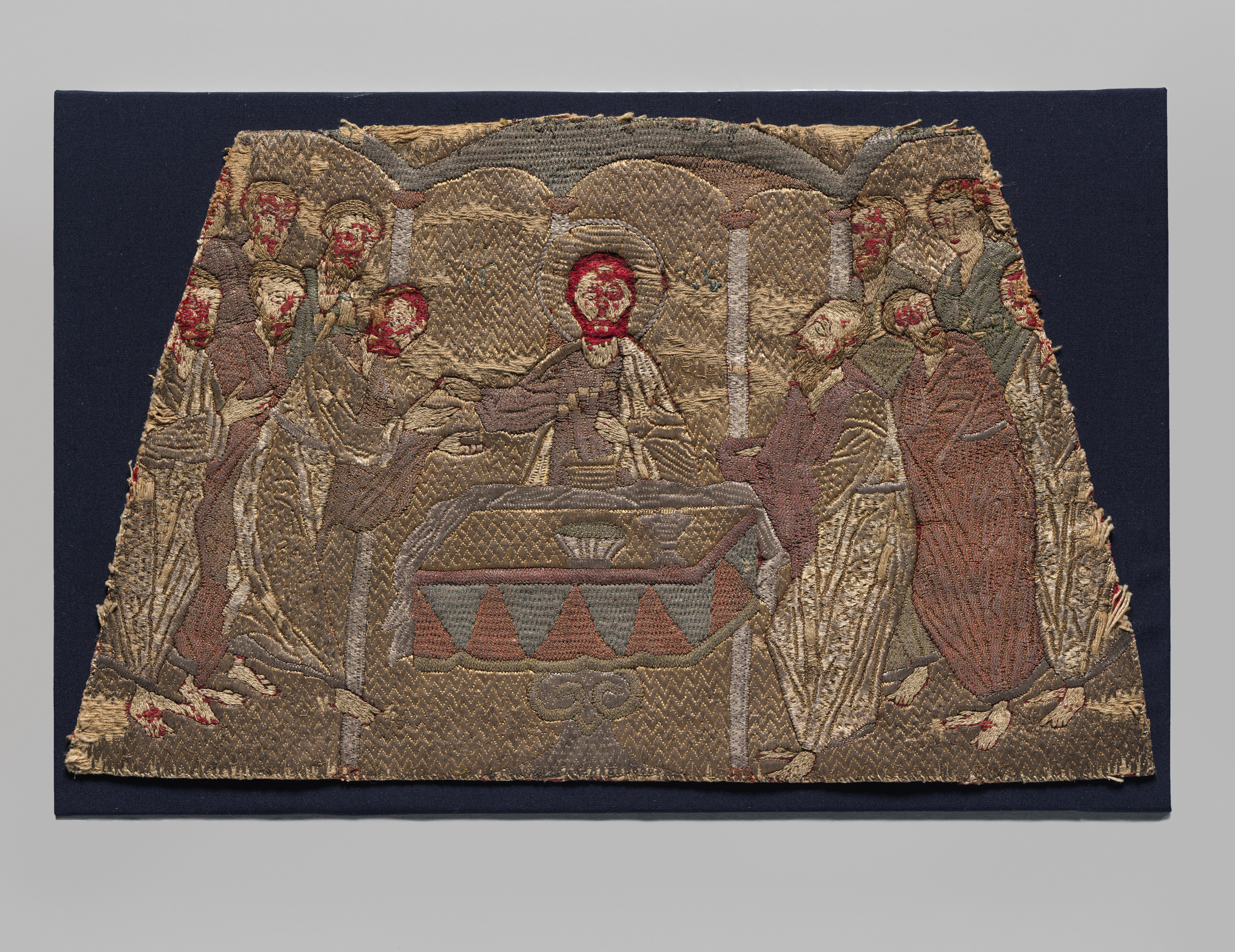
The Liturgical Cuff: A Study in Global Heritage and Couture Craftsmanship
In the rarefied world of haute couture, where fabric meets narrative and stitch becomes statement, the Liturgical Cuff by Katherine Fashion Lab stands as a profound meditation on the intersection of sacred tradition and contemporary design. This standalone study, drawn from a rich tapestry of Global Heritage, elevates a seemingly humble accessory into a canvas of cultural dialogue. The piece, meticulously constructed from silk and metal thread embroidery on a foundation of silk satin and cotton plain weave, transcends its liturgical origins to become a masterclass in material storytelling and artisanal precision.
Deconstructing the Foundation: Silk Satin and Cotton Plain Weave
The choice of substrate is neither arbitrary nor purely aesthetic; it is a deliberate architectural decision. The silk satin foundation provides a luminous, almost ethereal ground—its high thread count and lustrous finish catch light in a manner that suggests the divine radiance often associated with liturgical vestments. This satin, with its fluid drape and subtle sheen, acts as a counterpoint to the structural rigidity required for a cuff. It is a paradox of softness and strength, demanding precise handling to prevent distortion during embroidery.
Beneath this opulent surface lies the cotton plain weave, a humble yet essential underlayer. This cotton base serves a dual purpose: it stabilizes the delicate silk satin, preventing stretching and ensuring the cuff maintains its form over extended wear, and it absorbs the tension of the metal thread embroidery without compromising the integrity of the silk. This interplay between luxury and utility—silk as the visible glory, cotton as the unseen backbone—mirrors the duality of liturgical objects themselves: outwardly sacred, inwardly grounded in ritual function.
The Embroidery: Silk and Metal Thread as Narrative Agents
The embroidery is the heart of this analysis, where Global Heritage becomes tangible. The silk thread used in the embroidery is not merely a colorant; it is a reflective medium that shifts in hue from deep burgundy to burnished gold under varying light, evoking the stained glass and candlelight of ecclesiastical spaces. The metal thread, likely a composite of fine silver or gold-plated copper wrapped around a silk core, introduces a tactile and visual weight. Its stiffness requires the embroiderer to work with a controlled tension, often using a technique known as or nué (shaded goldwork), where colored silk threads are couched over a metal base to create gradients of light and shadow.
The motifs themselves are a lexicon of global sacred symbolism. Interlocking geometric patterns recall the intricate Islamic arabesques found in medieval mosques, while stylized vine and leaf forms echo the Byzantine and Eastern Orthodox iconography of the Tree of Life. Interspersed are subtle Celtic knotwork motifs, suggesting eternity and the interconnectedness of all things. This is not a pastiche but a curated synthesis—a global heritage map stitched into a single, wearable relic. The embroidery does not merely decorate; it narrates a journey across continents and centuries, from the silk routes of Central Asia to the scriptoria of European monasteries.
Structural Integrity and Wearability: The Couture Imperative
In couture, beauty must be borne by structure. The Liturgical Cuff, while inspired by vestments that are often stiff and ceremonial, is designed for the modern body. The silk satin and cotton plain weave foundation is cut with a slight curve to conform to the wrist’s anatomy, with a hidden seam that allows for a tailored fit without visible interruption of the embroidery. The cuff’s width—approximately three inches—is calibrated to be substantial enough to command attention but narrow enough to avoid overwhelming the forearm.
Closure is achieved through a concealed metal thread button and loop, a detail that speaks to the piece’s liturgical heritage (buttons are often a feature of clerical cuffs) while maintaining a sleek, minimalist profile. The button itself is hand-embroidered with a cruciform pattern, a subtle nod to the original context without overt religious iconography, making the piece accessible to a secular, global audience. The interior is lined with a soft, unbleached cotton, ensuring comfort against the skin—a reminder that even the most sacred objects are meant to be worn, to be lived in.
Global Heritage as a Design Philosophy
What elevates this cuff from a mere accessory to a couture artifact is its philosophical grounding in Global Heritage. Katherine Fashion Lab does not appropriate; it engages in a dialogue. The liturgical cuff, historically a marker of clerical authority in Western Christianity, is reimagined here as a universal symbol of devotion—not to a single faith, but to the craft itself. The silk and metal thread embroidery techniques are drawn from traditions as diverse as Indian zardozi, Chinese Suzhou embroidery, and Italian goldwork. Each stitch is a testament to the cross-pollination of cultures that has defined textile history for millennia.
This approach challenges the notion of “purity” in design. The cuff is not a replica of any single historical artifact; it is a hybrid, a synthesis that respects its sources while forging a new identity. The cotton plain weave foundation, for instance, recalls the utilitarian textiles of the American South or West Africa, yet it is seamlessly integrated into a piece that also references the opulence of Renaissance vestments. This is couture as cultural diplomacy—a wearable argument that heritage is not static but evolving, that the past can be a living resource rather than a museum relic.
Conclusion: A Standalone Study in Craft and Context
The Liturgical Cuff by Katherine Fashion Lab is more than an object of study; it is a provocation. It asks us to reconsider the boundaries between sacred and secular, between global and local, between art and function. Through the deliberate marriage of silk satin and cotton plain weave, and the intricate dance of silk and metal thread embroidery, this piece embodies the couture ethos: that every detail matters, that materials carry memory, and that the hand of the artisan is the ultimate luxury.
As a standalone study, it invites further inquiry into how heritage can be recontextualized for contemporary wear without losing its soul. The cuff stands as a testament to the power of craft to transcend time and geography, to turn a simple band of fabric into a vessel of global narrative. In the hands of Katherine Fashion Lab, the liturgical cuff is no longer a relic of the past—it is a blueprint for the future of couture, where every stitch is a bridge between worlds.