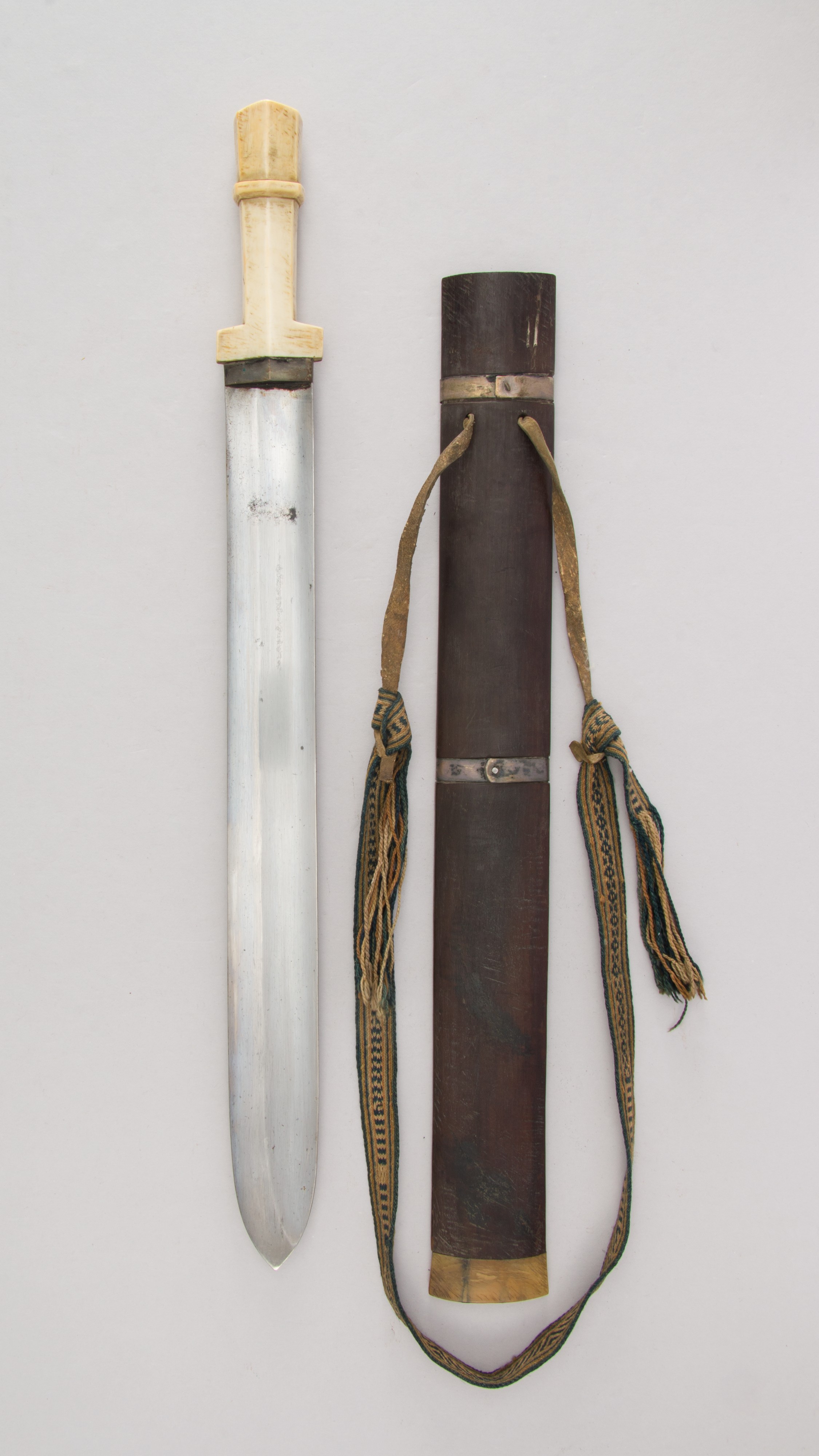
Executive Heritage Analysis: The Bhutanese Sword with Scabbard
This research paper presents a comprehensive heritage analysis of the Bhutanese Sword with Scabbard, a ceremonial artifact crafted from ivory, wood, horn, silver, and textile. As Lead Heritage Curator for Katherine Fashion Lab, I examine this object through the lenses of symbolic power, historical adornment, spiritual meaning, and its strategic relevance for 2026 high-end luxury positioning. The analysis underscores how Bhutanese material culture offers a sophisticated template for contemporary luxury narratives that prioritize authenticity, craftsmanship, and metaphysical resonance.
Symbolic Power: The Sword as a Mark of Authority and Protection
In Bhutanese culture, the sword with scabbard—known locally as a patang or dara—is not merely a weapon but a potent symbol of temporal and spiritual authority. Historically, the sword was an indispensable attribute of the Druk Gyalpo (Dragon King) and high-ranking monastic officials, signifying their role as protectors of the Buddhist dharma and the Bhutanese state. The blade’s dual-edged nature represents the balance between compassion and wrath, a central tenet in Vajrayana Buddhism, where enlightened beings may manifest fierce forms to subdue ignorance and evil.
The inclusion of silver in the scabbard’s fittings amplifies this symbolism. Silver, associated with lunar energy and purity in Bhutanese cosmology, is believed to ward off malevolent spirits. The ivory hilt, often carved with intricate motifs of dragons or clouds, further reinforces the wielder’s connection to divine forces. For Katherine Fashion Lab, this symbolic architecture offers a blueprint for 2026 luxury narratives that prioritize protective and empowering qualities. A high-end collection could draw on the sword’s iconography to create accessories—such as belt buckles, brooches, or handbag clasps—that embody strength, authority, and spiritual guardianship.
Historical Adornment: Craftsmanship as Status and Identity
The Bhutanese sword with scabbard is a masterpiece of composite craftsmanship, integrating materials that each carry their own historical and cultural weight. The wooden core of the scabbard, often carved from hardwoods like walnut or juniper, provides structural integrity and is sometimes lacquered with natural resins. Over this, textile wrappings—typically silk or cotton in auspicious colors like maroon, gold, or white—are meticulously applied, creating a tactile contrast between the rigid blade and the supple fabric. The horn elements, usually from yak or buffalo, are polished to a deep luster and used for decorative bands or pommels, symbolizing durability and the raw power of the Himalayan wilderness.
Historically, the sword was a marker of social hierarchy. The quality of materials and complexity of ornamentation directly correlated with the owner’s rank. A nobleman’s sword might feature repoussé silverwork depicting mythical beasts, while a monk’s sword would be more austere, emphasizing spiritual over temporal power. This gradation of craftsmanship offers a nuanced lesson for luxury brand strategy: exclusivity and authenticity are best communicated through material provenance and artisanal rarity. For 2026, Katherine Fashion Lab could collaborate with Bhutanese silversmiths or textile weavers to produce limited-edition pieces that tell a story of heritage and hierarchy, appealing to discerning clients who value cultural depth over mass-market appeal.
Spiritual Meaning: The Sword as a Ritual Object and Dharma Tool
Beyond its secular roles, the Bhutanese sword holds profound spiritual significance within Vajrayana Buddhism. In tantric rituals, the sword is often used as a phurba (ritual dagger) variant, symbolizing the cutting through of ignorance and the subjugation of ego. The blade’s sharpness is a metaphor for discriminating wisdom (prajna), which severs attachments and delusions. The scabbard, conversely, represents the sheath of compassion (karuna) that contains and protects this wisdom, preventing its misuse.
The material combination of ivory and horn further deepens this spiritual narrative. Ivory, derived from elephants, is associated with memory and ancestral wisdom, while horn, from animals native to the Himalayas, grounds the object in the local landscape and its sacred geography. When a Bhutanese warrior or monk wears the sword, they are not merely carrying a weapon but embodying a cosmic principle—the union of wisdom and compassion. For a 2026 luxury strategy, this spiritual dimension offers a powerful differentiator. Katherine Fashion Lab can position its products as talismanic objects that enhance the wearer’s inner strength and clarity, appealing to a market increasingly interested in mindfulness, intentionality, and metaphysical wellness. Limited-edition jewelry or small leather goods could incorporate motifs inspired by the sword’s iconography, such as miniature blades or scabbard clasps, imbued with blessings from Bhutanese lamas.
2026 High-End Luxury Strategy: Translating Heritage into Contemporary Desire
As Katherine Fashion Lab prepares for the 2026 luxury market, the Bhutanese sword with scabbard offers a strategic template for creating collections that resonate with cultural connoisseurs and spiritual seekers. The following pillars are essential for translating this heritage into a commercially viable yet respectful luxury proposition:
Material Integrity and Provenance
Leverage the sword’s material diversity—ivory, wood, horn, silver, textile—to create a narrative of scarcity and craftsmanship. For 2026, ethical sourcing is paramount. Katherine Fashion Lab should partner with Bhutanese artisans who use sustainable alternatives to ivory, such as tagua nut or fossilized mammoth ivory, and ensure that silver and horn are traceable to ethical supply chains. This approach aligns with conscious luxury trends while honoring the object’s original material language.
Symbolic Storytelling in Product Design
Translate the sword’s dual symbolism of protection and wisdom into wearable art. For example, a “Scabbard Clutch” handbag could feature a detachable silver clasp shaped like a sword guard, while a “Dharma Blade” pendant could be crafted from oxidized silver and horn, with a removable textile wrap. Each piece should be accompanied by a heritage card explaining its Bhutanese roots and spiritual meaning, elevating the product from mere accessory to collectible artifact.
Experiential Retail and Co-Creation
For 2026, luxury is increasingly about experiential ownership. Katherine Fashion Lab could host private trunk shows in collaboration with Bhutanese monasteries or cultural foundations, where clients can learn about the sword’s history and participate in ritual blessing ceremonies. Limited-edition pieces could be offered through a made-to-order model, allowing clients to choose specific textiles or silver finishes, thereby creating a personalized talisman that mirrors the historical gradation of status and meaning.
Digital and Archival Integration
Leverage digital platforms to tell the sword’s story through high-resolution 3D scans, interviews with Bhutanese artisans, and virtual reality experiences of Himalayan fortresses. This content can be integrated into NFT-based provenance certificates, appealing to tech-savvy luxury clients who value both tradition and innovation. The 2026 launch of a “Bhutanese Legacy Capsule” should be supported by a digital archive that traces the sword’s journey from ritual object to luxury icon.
Conclusion: A Blueprint for Culturally Grounded Luxury
The Bhutanese sword with scabbard is far more than a historical artifact; it is a living repository of symbolic power, historical adornment, and spiritual meaning. For Katherine Fashion Lab, its analysis reveals a clear path toward 2026 high-end luxury strategy that prioritizes authenticity, craftsmanship, and metaphysical resonance. By honoring the object’s cultural integrity while translating its essence into contemporary forms, the Lab can position itself as a leader in heritage-driven luxury that speaks to the discerning, spiritually aware consumer of tomorrow.