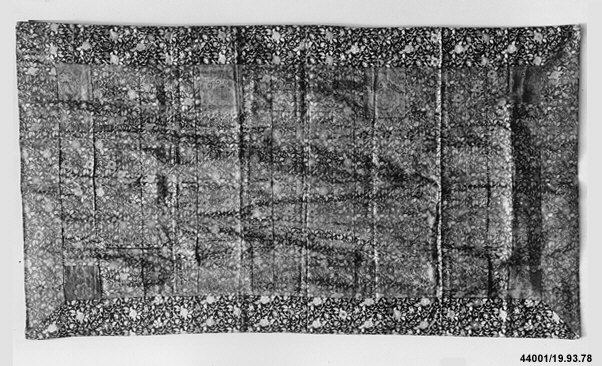
The Shichijō Priest’s Robe: A Study in Sacred Silhouette and Material Transcendence
In the rarefied domain of haute couture, where fabric becomes philosophy and silhouette speaks of centuries of unspoken ritual, the Shichijō priest’s robe stands as a singular artifact. At Katherine Fashion Lab, we approach this garment not merely as a historical relic, but as a masterclass in the interplay between material transcendence and sacred geometry. Crafted from silk—a fibre that has long symbolized both earthly luxury and celestial purity—this robe from Japan’s Shichijō tradition offers a profound lesson in how couture can distill spiritual authority into form.
The Architectural Grammar of the Shichijō Silhouette
The Shichijō robe, named after the seventh ward of Kyoto’s historic textile district, is defined by its deliberate volumetric restraint. Unlike the Western ecclesiastical vestment, which often amplifies the body’s presence through shoulder emphasis or sweeping trains, this robe achieves its gravitas through controlled draping and vertical linearity. The cut is deceptively simple: a T-shaped construction with wide, flowing sleeves that extend beyond the wrists, and a hem that falls to the ankles. Yet within this apparent simplicity lies a sophisticated understanding of negative space and weight distribution.
The silk itself becomes an architectural material. Its natural luster and fluidity allow the robe to hold a line without stiffness, creating a silhouette that is both monumental and ethereal. When the priest moves, the fabric does not cling but floats—a quality achieved through the precise balance between the silk’s thread count and the garment’s cutting geometry. This is not a robe that imposes a shape upon the body; rather, it negotiates a dialogue between the wearer’s physical presence and the spiritual authority they embody. The result is a silhouette that is simultaneously humble and majestic—a paradox that lies at the heart of couture’s highest aspirations.
Silk as a Conduit for the Sacred
Why silk? For the Shichijō tradition, the choice of material is far from arbitrary. Silk has been revered in Japan for millennia as a medium that bridges the mundane and the divine. Its production—from the laborious cultivation of silkworms to the delicate hand-reeling of threads—is itself a ritualized process. In the context of the priest’s robe, silk serves as a conduit for light. The fabric’s natural sheen catches ambient illumination, creating a subtle, shifting aura around the wearer. This is not a garment that demands attention through ornamentation; it commands through luminosity.
From a couture analysis perspective, the silk’s hand feel and drape coefficient are critical. The Shichijō robe typically uses a habutae or rinzu weave—a plain or figured silk that offers a crisp yet supple texture. This allows the garment to hold pleats and maintain structure even as it yields to the body’s motion. The absence of stiff interlinings or heavy embellishments means that the silk must bear the full weight of the garment’s symbolic significance. Every fold, every crease becomes a calligraphic mark—a testament to the material’s ability to record movement and preserve stillness.
Color and the Language of Restraint
In the Shichijō tradition, color is not applied; it is imbued. The robe’s palette—often deep indigo, charcoal, or muted gold—is achieved through natural dyes that interact with the silk’s protein structure. This is not the flat, synthetic color of modern textiles; it is a living hue that shifts in different lights. The indigo, for example, carries a blue-black depth that evokes the night sky or the depths of a temple pond. This chromatic restraint is a deliberate choice: the robe must not compete with the priest’s ritual actions or the sacred space. Instead, it absorbs and reflects the environment, becoming a silent participant in the ceremony.
For the couturier, this teaches a lesson in color as atmosphere. The Shichijō robe does not scream; it resonates. Its hues are chosen for their ability to hold space—to create a visual field that is contemplative rather than confrontational. In an era where fashion often relies on shock and novelty, this garment reminds us that true luxury lies in the quiet authority of refined restraint.
The Intersection of Ritual and Wearability
One might ask: How does a garment designed for sacred ritual translate to the runway or the wardrobe of the contemporary fashion connoisseur? The answer lies in the universality of its principles. The Shichijō robe’s construction—its seamless integration of form and function—offers a blueprint for modern couture. The robe’s kimono-inspired cut allows for a full range of motion, making it inherently wearable despite its ceremonial origins. Its lack of fastenings (it is held closed by an obi sash) speaks to a design philosophy that prioritizes flow over restriction.
From a structural standpoint, the robe’s shoulder-to-hem ratio is worth noting. The sleeves are cut wide enough to allow the arms to move freely within the fabric, creating a second skin that is both protective and expressive. The neckline—often a simple V or round shape—frames the face without overwhelming it. These details, though subtle, are the hallmarks of masterful tailoring. They remind us that couture is not about complexity for its own sake, but about elegance through economy.
Conclusion: The Shichijō Robe as a Couture Archetype
In the Katherine Fashion Lab, we view the Shichijō priest’s robe as a living document—a testament to the power of material, silhouette, and color to communicate the ineffable. Its silk is not just a fabric; it is a medium of transcendence. Its silhouette is not just a shape; it is a manifestation of spiritual hierarchy. Its color is not just a hue; it is a modulation of sacred light.
For the modern designer, this robe offers a masterclass in discipline. It teaches that the most profound statements are often made with the fewest elements. It challenges the notion that innovation requires novelty, suggesting instead that reverence for tradition can yield designs of timeless relevance. As we continue our work at the intersection of heritage and haute couture, the Shichijō robe remains a guiding star—a reminder that the true art of dress lies not in what we add, but in what we choose to leave out.
In the hands of a couturier, this garment is not merely a robe; it is a philosophy made tangible. And in its silent, flowing lines, we hear the echo of centuries of devotion—and the whisper of fashion’s highest calling.