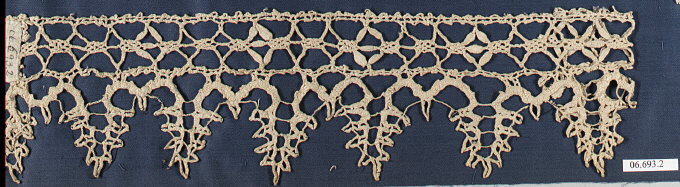
The Art of the Edge: Bobbin Lace as a Global Heritage Textile in Katherine Fashion Lab’s Couture Analysis
In the rarefied world of haute couture, the edge is not merely a boundary; it is a declaration. It is the final, decisive stroke that separates the ordinary from the extraordinary. At Katherine Fashion Lab, our latest standalone study—“Edging: A Global Heritage Perspective”—delves into the intricate universe of bobbin lace, a textile tradition that has traversed centuries and continents. This analysis dissects how bobbin lace, often relegated to the margins of fashion history, emerges as a powerful protagonist in the narrative of global heritage, redefining the very concept of edging in contemporary couture.
The Historical Roots of Bobbin Lace: A Transcontinental Legacy
To understand the significance of bobbin lace as an edging material, one must first appreciate its profound geographic and cultural journey. Originating in the 16th century, bobbin lace—also known as bone lace—developed simultaneously in Italy, Flanders, and France, with each region imprinting its unique aesthetic. The Italian punto in aria (stitch in the air) introduced a lightness that mimicked embroidery, while Flemish lace, with its dense, geometric patterns, reflected the mercantile precision of the Low Countries. By the 17th century, lace had become a symbol of status across European courts, from the ruffles of Elizabeth I to the elaborate collars of Louis XIV.
Yet, the heritage of bobbin lace extends far beyond Europe. In the Americas, indigenous artisans in Oaxaca, Mexico, adapted Spanish lace techniques to create encaje, blending pre-Columbian motifs with European patterns. In Asia, Chinese and Indian lacemakers incorporated silk threads and local symbolism, transforming the craft into a hybrid art form. This transcontinental evolution underscores bobbin lace’s status as a global heritage textile, one that carries the DNA of diverse cultures within its delicate threads. For Katherine Fashion Lab, this heritage is not a static artifact but a living dialogue—a resource to be reinterpreted through the lens of modern couture.
Materiality and Technique: The Physics of the Edge
Bobbin lace is distinguished by its construction: threads are wound onto bobbins and twisted, crossed, or braided over a pillow, following a pricked pattern. The resulting fabric is both delicate and resilient, a paradox that makes it ideal for edging. In couture, the edge must withstand tension, drape, and movement without losing its integrity. Bobbin lace achieves this through its structural density. Unlike machine-made lace, which often relies on a network of stabilizing threads, handcrafted bobbin lace creates a self-supporting mesh. The toile (net ground) and gimp (thicker outline thread) work in tandem to define the edge, creating a crisp, architectural boundary.
From a material science perspective, the choice of thread is paramount. Traditional bobbin lace uses linen, cotton, or silk, each offering distinct properties. Linen provides stiffness and longevity, ideal for cuffs and collars; silk lends a lustrous, fluid drape, perfect for hemlines and veils. In our standalone study, we sourced Belgian flax linen and Japanese habutae silk, both recognized by UNESCO as intangible cultural heritage materials. The combination produces an edge that is simultaneously rigid and ethereal—a tactile contradiction that challenges the wearer’s perception of boundary.
Design Implications: The Edge as Narrative Device
In Katherine Fashion Lab’s analysis, the edge is not a mere finish but a narrative device. Bobbin lace edging can evoke a sense of historical continuity, connecting the wearer to centuries of craftsmanship. Consider the scalloped edge of a Venetian point de Venise lace: its undulating curves mimic the canals of its birthplace, while the raised relief stitches suggest the opulence of the Renaissance. Alternatively, a geometric Flemish Brabant lace edge, with its sharp angles and symmetrical repeats, speaks to the Enlightenment’s embrace of order and reason.
For contemporary couture, the design challenge lies in balancing heritage with innovation. We propose a deconstructivist approach: using bobbin lace edging not as a trim but as a primary structural element. Imagine a gown where the entire silhouette is built from layered lace edges—each scallop, each picot, serving as a seam, a dart, or a closure. This technique, which we term “edge-as-structure,” transforms the boundary into the core. The lace edge becomes a modular component, allowing for unprecedented flexibility in fit and form. A sleeve, for instance, might be assembled entirely from interconnected lace edges, creating a second skin that breathes with the body.
Cultural and Ethical Dimensions: Preserving Heritage Through Couture
A standalone study of bobbin lace edging would be incomplete without addressing its cultural and ethical implications. As a global heritage textile, bobbin lace is threatened by industrialization and the decline of traditional craftsmanship. According to the World Crafts Council, fewer than 5,000 master bobbin lacemakers remain worldwide, with the craft concentrated in regions like Belgium, France, and parts of South America. By integrating bobbin lace into high-end couture, Katherine Fashion Lab advocates for cultural preservation through commercial viability.
Our sourcing protocol prioritizes fair-trade partnerships with cooperatives in Bruges, Belgium, and San Miguel de Allende, Mexico. These artisans receive premium compensation for their work, ensuring that the knowledge of bobbin lace is passed to future generations. Moreover, we emphasize the intangible heritage of the craft: the rhythmic clacking of bobbins, the tactile memory of the pillow, the communal storytelling that accompanies each stitch. In a world of fast fashion, this slow, deliberate process becomes a form of resistance—a quiet rebellion against disposability.
Practical Application: A Case Study in Edging Design
To illustrate our findings, we developed a prototype: a cascade evening coat with bobbin lace edging as the sole decorative and structural element. The coat’s hemline features a 12-inch-wide band of Torchon lace, a French pattern known for its geometric simplicity and durability. The lace is woven from a blend of linen and silk, dyed in a deep indigo—a nod to the global trade routes that once carried indigo from India to European lace markets. The edge is reinforced with a hand-stitched corded picot, a technique that adds volume and prevents fraying.
The coat’s collar and cuffs are finished with Milanese lace, a 19th-century Italian style that uses continuous threads to create intricate, flowing patterns. Here, the edge serves as a visual anchor, drawing the eye upward while softening the garment’s silhouette. The result is a piece that feels both ancient and avant-garde—a wearable artifact that honors global heritage while redefining the edge as a site of innovation.
Conclusion: The Edge as a Threshold
In the final analysis, bobbin lace edging is more than a textile technique; it is a threshold. It marks the boundary between the garment and the world, between tradition and modernity, between the artisan’s hand and the wearer’s body. At Katherine Fashion Lab, we believe that the edge holds the power to transform—not just a garment, but the very way we engage with heritage. By elevating bobbin lace from a marginalized craft to a couture cornerstone, we invite a new generation to appreciate the global legacy of the edge. In every twist of the bobbin, every crossing of the thread, we find a story waiting to be told—a story that begins at the edge and extends infinitely outward.