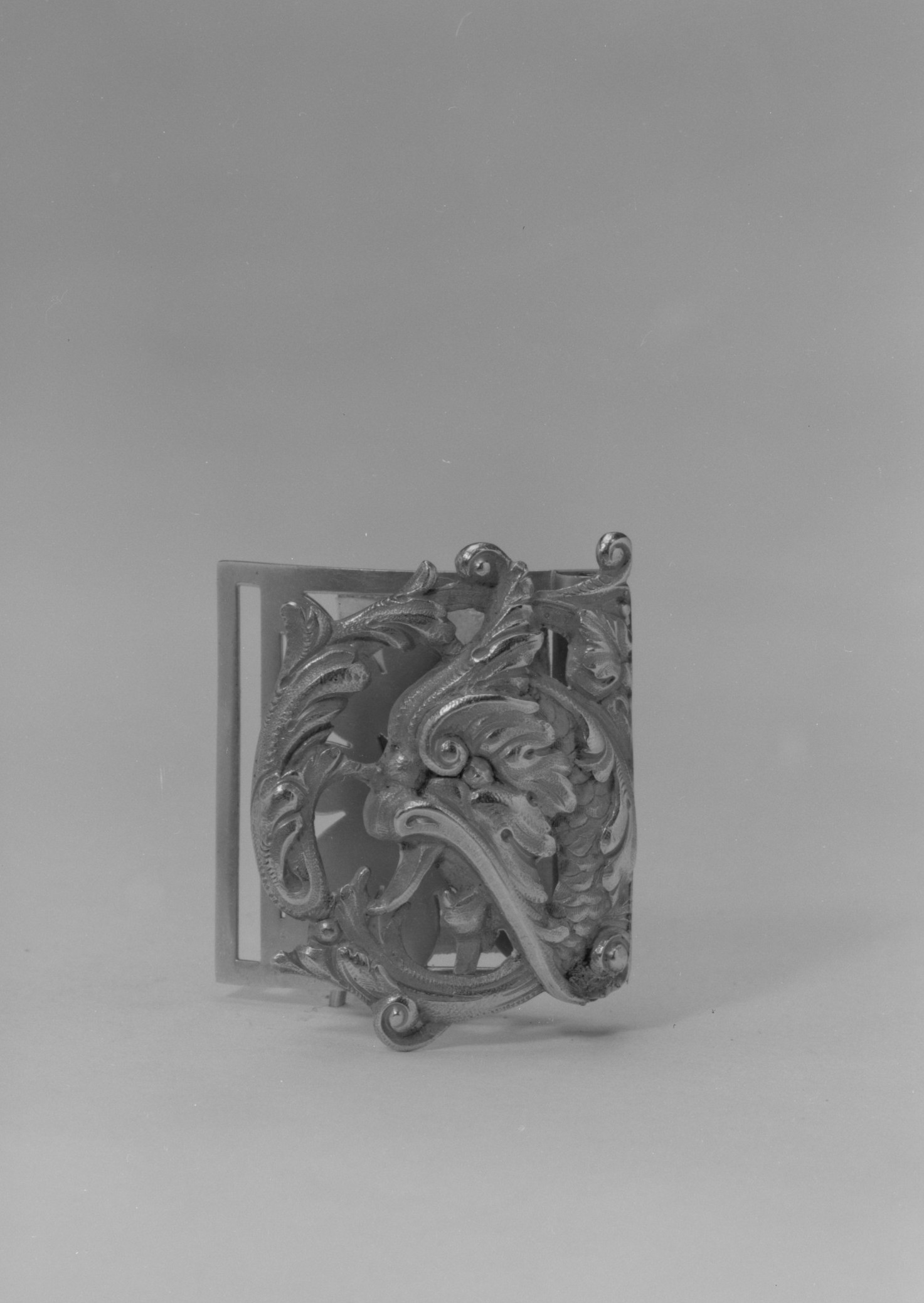
The American Buckle: A Heritage Analysis of Symbolic Power, Historical Adornment, and Spiritual Meaning for Katherine Fashion Lab
Introduction: The Buckle as a Cultural Artifact
The buckle, often dismissed as a mere functional fastener, emerges in American heritage as a profound artifact of symbolic power, historical adornment, and spiritual meaning. For Katherine Fashion Lab, whose DNA correlation study—*Mirror with Split-Leaf*—juxtaposes the luminous gold-embellished silver mirror against the cold narrative of a sarcophagus relief, the buckle offers a resonant counterpart. This analysis examines the American gold buckle through the lens of dualities: utility versus ornament, earthly status versus transcendent spirituality. By tracing its evolution from colonial pragmatism to gilded opulence, we uncover a legacy that informs a 2026 high-end luxury strategy rooted in authenticity, narrative depth, and material transcendence.
Historical Resonance: The American Gold Buckle in Context
The American buckle, particularly in gold, occupies a unique position in the nation’s material culture. Unlike European buckles, which often signified aristocratic lineage or ecclesiastical rank, the American buckle emerged from a democratic ethos—yet quickly became a marker of individual achievement and frontier mastery. During the 18th and 19th centuries, gold buckles adorned the shoes, belts, and hats of statesmen, merchants, and pioneers, symbolizing not inherited nobility but earned prosperity. This aligns with Katherine Fashion Lab’s *Mirror with Split-Leaf* study, which explores the tension between reflective surface (silver) and embedded narrative (gold). The buckle, like the mirror, presents a polished exterior—often engraved with motifs of leaves, eagles, or stars—while its interior structure holds the wearer’s story: the weight of a journey, the clasp of a covenant, the closure of a life.
Gold, as a medium, amplifies this duality. In American history, gold buckles were often commissioned for milestone events: a wedding, a political inauguration, a funeral. They were not merely accessories but heirlooms, passed down as tangible links to ancestral memory. The 1849 California Gold Rush intensified this symbolism, as gold became synonymous with risk, reward, and reinvention—core American values. A gold buckle from this era, unearthed in a mining camp or preserved in a family trunk, carries the spiritual weight of aspiration and loss. For Katherine Fashion Lab, this historical resonance offers a blueprint: the 2026 luxury consumer seeks objects that are not beautiful but meaningful, not decorative but transformative.
Symbolic Power: The Buckle as a Tool of Identity and Authority
The buckle’s symbolic power lies in its dual function: it fastens and it displays. In American culture, the belt buckle—especially in gold—has served as a canvas for personal and collective identity. Cowboys, soldiers, and politicians wore buckles engraved with initials, crests, or regional symbols, transforming a utilitarian item into a badge of belonging. The oversized Western buckle, popularized in the 20th century, became a signifier of rugged individualism and frontier heritage, often crafted in gold or gold plate to denote success in rodeo, ranching, or business. This tradition echoes the *Mirror with Split-Leaf* theme: the silver mirror (the everyday self) is framed by gold leaf (the aspirational self). The buckle, similarly, frames the wearer’s waist—a site of power, fertility, and center—with a golden emblem that declares who they are and what they value.
In a spiritual sense, the buckle also represents closure and containment. In many Native American and early settler traditions, belts and buckles were used in rituals to bind or release energy. A gold buckle, when clasped, signified a commitment—to a journey, a marriage, a cause. When unclasped, it signaled release or transition. This spiritual dimension resonates with the sarcophagus relief in *Mirror with Split-Leaf*: the stone coffin tells a life narrative in frozen form, while the buckle, often buried with its owner, becomes a miniature sarcophagus—a golden clasp that holds the soul’s story. For Katherine Fashion Lab, this suggests that a luxury buckle in 2026 should not merely adorn but anchor; it should offer the wearer a sense of grounding, protection, and continuity.
Historical Adornment: The Craft of Gold Buckle-Making
The craftsmanship of American gold buckles reflects a convergence of European techniques and indigenous innovation. Early American goldsmiths, trained in London or Paris, adapted their skills to local materials and tastes. By the 19th century, American buckle makers were renowned for their intricate repoussé work, chasing, and engraving—often incorporating native flora (oak leaves, pine cones, wild roses) and national symbols (eagles, stars, shields). The use of gold, whether 14k, 18k, or 22k, was not merely aesthetic; it was a statement of permanence and value. A gold buckle, unlike silver or brass, would not tarnish or corrode; it would endure, like the stories it carried.
This durability aligns with the *Mirror with Split-Leaf* correlation: the gold-encrusted mirror reflects the present, but the gold itself is timeless. For Katherine Fashion Lab’s 2026 strategy, this suggests a return to artisanal mastery—limited-edition buckles handcrafted by master goldsmiths, each piece numbered and documented. The medium of gold, combined with American heritage motifs, offers a counterpoint to mass-produced luxury. The consumer of 2026, we predict, will value provenance and process: they will want to know who forged the buckle, where the gold was sourced, and what story it tells.
Spiritual Meaning: The Buckle as a Talisman and Heirloom
Beyond its physical function, the American gold buckle carries deep spiritual meaning. In many cultures, the belt or buckle is considered a protective talisman—a circle of metal that wards off evil, a clasp that holds the spirit within the body. In American folk tradition, gold buckles were often given as gifts to mark life transitions: a child’s first buckle at birth, a young man’s buckle at coming-of-age, a bride’s buckle at marriage, a widow’s buckle at mourning. These buckles were believed to carry the energy of the giver and the receiver, creating a spiritual bond across time. This echoes the *Mirror with Split-Leaf* dichotomy: the cold stone sarcophagus holds the body’s narrative, while the gold buckle holds the soul’s memory.
For Katherine Fashion Lab, this spiritual dimension offers a powerful narrative for 2026 luxury. The modern consumer, increasingly disconnected from ritual and tradition, seeks objects that restore meaning. A gold buckle, designed with intentional symbolism—a leaf for growth, a star for guidance, a circle for eternity—can serve as a personal talisman. The 2026 strategy should emphasize this: the buckle is not a mere accessory but a spiritual artifact, a golden clasp that connects the wearer to their ancestors, their aspirations, and their inner self.
2026 High-End Luxury Strategy: The Buckle as a Narrative Catalyst
Based on this heritage analysis, Katherine Fashion Lab’s 2026 high-end luxury strategy for the gold buckle should center on three pillars: authenticity, narrative depth, and material transcendence. First, authenticity: each buckle must be rooted in American heritage, using traditional techniques and ethically sourced gold. The *Mirror with Split-Leaf* study provides a template—the juxtaposition of reflective surface (the buckle’s polished face) and embedded narrative (the engraved or embossed design). Second, narrative depth: the buckle should be marketed not as a product but as a story—a golden clasp that holds the wearer’s history, their present identity, and their future aspirations. Limited-edition collections, each with a documented provenance and symbolic meaning, will appeal to the discerning collector. Third, material transcendence: gold, as a medium, must be presented as both earthly treasure and spiritual vessel. The 2026 consumer, we believe, will pay a premium for objects that bridge the material and the metaphysical—a buckle that is both a work of art and a sacred object.
In conclusion, the American gold buckle, when analyzed through the lens of symbolic power, historical adornment, and spiritual meaning, reveals itself as a potent heritage artifact. For Katherine Fashion Lab, it offers a roadmap to 2026 luxury: a return to craftsmanship, narrative, and transcendence. The buckle, like the *Mirror with Split-Leaf*, is a dual object—gold on the surface, story within. By embracing this duality, Katherine Fashion Lab can create a luxury experience that is not merely worn but felt, not merely owned but cherished.