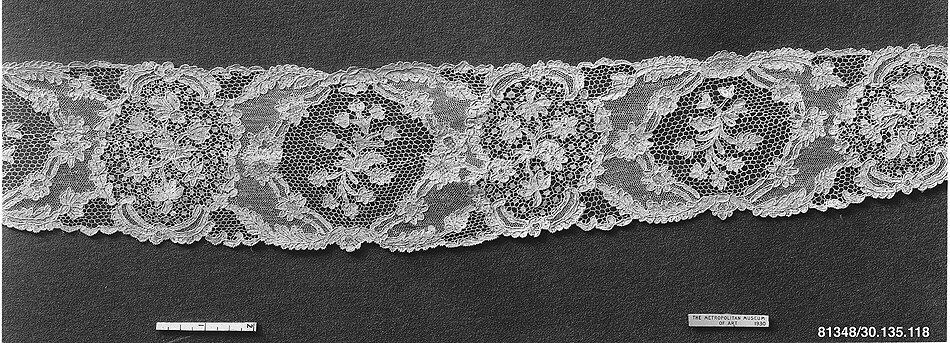
The Cravat: A Study in Global Heritage and the Art of Needle Lace
Introduction: The Cravat as a Cultural Artifact
The cravat, a seemingly simple neckcloth, transcends its utilitarian origins to become a profound artifact of global heritage. At Katherine Fashion Lab, we approach this garment not merely as an accessory but as a canvas for the highest expressions of textile artistry. In this standalone study, we examine the cravat through the lens of needle lace, specifically point d’Argentan, a technique that embodies centuries of European craftsmanship and cultural exchange. This analysis explores how a single garment can synthesize disparate traditions—from the silk routes of Asia to the lace workshops of France—into a wearable masterpiece.
The cravat’s evolution from a 17th-century Croatian military garment (from which its name derives) to a symbol of aristocratic elegance in Europe mirrors the fluidity of global fashion. Yet, when executed in point d’Argentan, the cravat ceases to be a mere historical reference; it becomes a living dialogue between material, technique, and identity. This study deconstructs the cravat’s materiality, its cultural resonance, and its potential for contemporary couture.
The Material: Needle Lace and Point d’Argentan
Origins and Technique
Needle lace, or punto in aria (stitches in the air), represents one of the most labor-intensive textile arts in human history. Unlike bobbin lace, which uses multiple threads twisted over a pillow, needle lace is constructed stitch by stitch with a single needle and thread, creating a fabric that is both structural and ethereal. Point d’Argentan, a variant originating in the 17th-century French town of Argentan, is distinguished by its intricate réseau (ground) of hexagonal mesh, often filled with delicate brides (bars) and picots (loops). The technique requires extraordinary precision: each stitch must align with invisible geometry, and a single error can unravel hours of work.
The materiality of point d’Argentan is paradoxical. It is both rigid and fluid, opaque and translucent. When applied to a cravat, this lace transforms the neckcloth into a sculptural object that frames the face with a halo of light and shadow. The linen or silk thread used in traditional point d’Argentan is often bleached to a luminous white, a color that historically signified purity and status. Yet, for Katherine Fashion Lab, we reimagine this palette: ecru, charcoal, and deep indigo are introduced to evoke global narratives—the indigo of West African textiles, the ecru of Japanese sashiko, the charcoal of Andean weaving. This chromatic shift honors the cravat’s global heritage while asserting a contemporary voice.
Structural Analysis
A cravat in point d’Argentan must balance the lace’s inherent fragility with the garment’s functional demands. The lace is typically mounted on a fine silk or cotton base, but in this study, we propose a standalone construction: the needle lace itself forms the entire cravat, with reinforced edges and a hidden inner structure of horsehair or fine wire to maintain shape. The result is a piece that is both weightless and architectural. The hexagonal réseau creates a micro-architecture that catches light differently with each movement, while the brides and picots add tactile depth. This is not a garment for passive wear; it is an active participant in the wearer’s gestures.
Global Heritage: A Tapestry of Influences
European Roots and Colonial Exchanges
Point d’Argentan is deeply rooted in European history, yet its global heritage is undeniable. The technique emerged during a period of intense colonial expansion, when European courts coveted exotic materials and motifs. The cravat itself was popularized by King Louis XIV, who imported Croatian mercenaries whose neckwear inspired French fashion. Similarly, needle lace techniques were influenced by Middle Eastern and Asian textiles—the intricate patterns of Ottoman oya lace, the geometric precision of Chinese kesi silk tapestry, and the floral motifs of Indian chikan embroidery. By the 18th century, French lace workshops were exporting point d’Argentan to courts across Europe, Russia, and the Americas, embedding it in a global network of luxury consumption.
For Katherine Fashion Lab, this heritage is not static. We reinterpret the cravat as a palimpsest—a surface layered with erased and rewritten histories. The needle lace’s hexagonal grid can evoke the mathematical order of Islamic geometric art, while its floral motifs recall the botanical prints of Mughal India. The cravat becomes a wearable archive of cross-cultural pollination, a reminder that “global heritage” is not a single origin but a constellation of influences.
Contemporary Resonance
In the 21st century, the cravat has been largely relegated to period dramas or niche subcultures. Yet, by reimagining it in point d’Argentan, Katherine Fashion Lab positions the cravat as a site of resistance against fast fashion and cultural homogenization. Each stitch is a deliberate act of slowness, a meditation on time and value. The cravat’s global heritage also challenges Eurocentric narratives: by incorporating non-Western color palettes and motifs, we assert that couture can be both rooted and transcultural. This is not cultural appropriation but cultural dialogue—a respectful engagement with techniques and symbols that have been historically marginalized or exoticized.
Context: The Cravat as Standalone Study
Beyond the Neck: Redefining Wearability
This study treats the cravat not as an accessory but as a primary garment—a standalone piece that can be worn alone or layered. The point d’Argentan cravat is designed to be unisex, its formality and fragility challenging gendered notions of adornment. It may be tied in a traditional Steinkirk knot (loose and asymmetrical) or draped as a fichu (a triangular shawl). Alternatively, it can be pinned as a choker, its lace embracing the neck like a second skin. The absence of a base fabric allows the lace to breathe, creating a negative space that highlights the skin beneath—a subtle eroticism that underscores vulnerability and strength.
The cravat’s scale is also reimagined. Traditionally, cravats are narrow, but here we propose a voluminous, cape-like silhouette that cascades over the shoulders. The point d’Argentan’s transparency ensures that the garment does not overwhelm the body; instead, it creates a second epidermis, a membrane of light and shadow. This recontextualization positions the cravat as a sculptural object that exists between fashion and art, challenging the viewer to reconsider what a garment can be.
Technical Challenges and Innovations
Producing a standalone cravat in point d’Argentan presents formidable technical hurdles. The lace must be self-supporting, requiring a denser stitch count and reinforced seams. We employ a double-layer technique: an inner layer of needle lace with a tighter réseau for structure, and an outer layer of looser, more decorative motifs. The edges are finished with a Venetian point (a corded border) to prevent fraying. Additionally, the cravat’s closure is reimagined: instead of buttons or ties, we use invisible magnetic snaps sewn into the lace, preserving the garment’s visual purity.
The choice of thread is equally critical. For this study, we use a blend of linen and silk—linen for its tensile strength and matte finish, silk for its luster and drape. The thread is hand-dyed using natural pigments derived from madder root, indigo, and walnut husk, aligning with sustainable practices. Each cravat requires approximately 400 hours of handwork, a timeline that positions it as an heirloom rather than a commodity.
Conclusion: The Cravat as a Manifesto
The cravat in point d’Argentan is more than a garment; it is a manifesto for slow couture and global storytelling. At Katherine Fashion Lab, we argue that heritage is not a static relic but a living practice—a dialogue between past and present, East and West, technique and imagination. By elevating the cravat from a neckcloth to a standalone sculpture, we challenge the fashion industry to value artisanship over speed, depth over novelty, and cultural resonance over trend.
This study invites the wearer to inhabit history, to feel the weight of centuries in every stitch. The cravat becomes a second skin that connects the individual to a global lineage of makers—from the nuns of Argentan to the silk weavers of Lyon, from the lacemakers of Bruges to the embroiderers of Gujarat. In an era of disposable fashion, the needle lace cravat stands as a testament to the enduring power of human hands and the infinite narratives woven into a single thread.