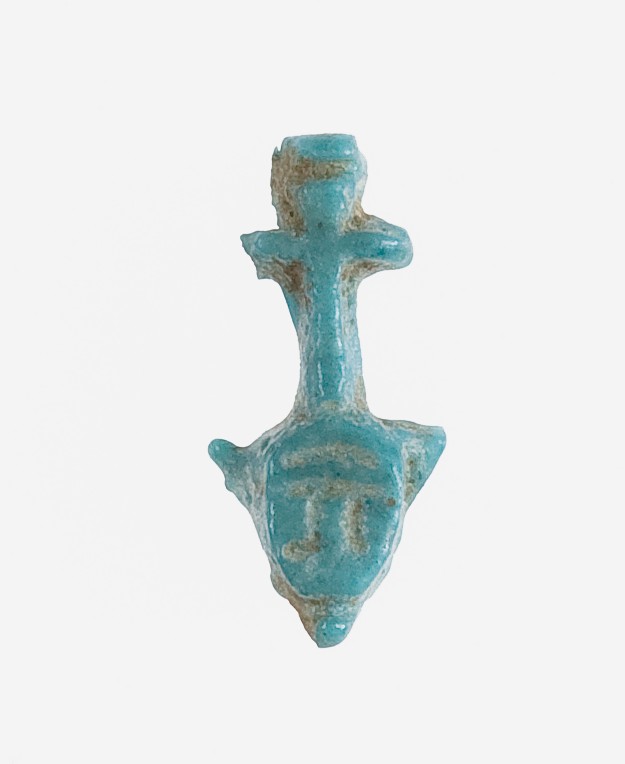
Heritage Analysis: Fragment of Amulet with Nefer Sign
This strategic heritage analysis examines the Fragment of Amulet with Nefer sign, an artifact from an ancient civilization, rendered in faience. As Lead Heritage Curator for Katherine Fashion Lab, I evaluate this object not merely as a historical relic but as a potent symbol with enduring relevance for high-end luxury strategy in 2026. The Nefer sign, representing beauty, goodness, and perfection, offers a foundational archetype for contemporary brand narratives. This paper explores its symbolic power, historical adornment, spiritual meaning, and strategic application within the luxury sector.
Symbolic Power of the Nefer Sign
The Nefer sign, hieroglyphically depicted as a heart and trachea, is one of the most semantically rich symbols from the ancient world. Its meaning transcends a single concept, encompassing beauty, goodness, perfection, and happiness. In the context of this faience amulet fragment, the Nefer sign functioned as a talismanic device, believed to imbue the wearer with these positive attributes. The choice of faience, a glazed non-clay ceramic material that mimics precious stones like turquoise and lapis lazuli, enhances its symbolic power. Faience was associated with rebirth, light, and eternal life, as its brilliant blue-green hue evoked the Nile and the sky. Thus, the amulet’s symbolic power is dual: the Nefer sign conveys abstract ideals of perfection, while the faience medium grounds these ideals in a material that signifies immortality and divine favor.
Cultural and Hieroglyphic Resonance
In ancient Egyptian culture, the Nefer sign was not just a decorative motif but a linguistic and spiritual tool. It appeared on amulets, jewelry, and architectural elements to invoke protection and blessing. The fragment’s incomplete state does not diminish its power; rather, it emphasizes the enduring nature of the symbol itself. For luxury brands, the Nefer sign represents a universal human aspiration—the pursuit of beauty and goodness—that transcends time. This symbolic power can be leveraged in 2026 to create brand stories that resonate with consumers seeking authenticity, meaning, and transcendence in their luxury purchases.
Historical Adornment and Material Culture
Amulets like this Nefer fragment were integral to personal adornment in ancient civilizations, particularly among the elite. They were worn on the body, often as pendants or sewn into clothing, to serve as portable sources of spiritual protection. The faience medium was highly valued for its ability to replicate the color and luster of precious gems at a lower cost, democratizing access to symbolic power while maintaining aesthetic appeal. This practice of adornment was not merely decorative; it was a statement of identity, status, and cosmic alignment.
Faience as a Luxury Material
Faience’s production required sophisticated kiln technology and skilled craftsmanship, making it a marker of artisanal excellence. Its glossy surface and vibrant color palette—ranging from deep blue to bright green—positioned it as a luxury material in its own right. For Katherine Fashion Lab, this historical context underscores the value of material storytelling. In 2026, luxury consumers will increasingly seek out brands that honor heritage materials and techniques. The faience fragment teaches us that luxury is not solely about rarity but about the narrative embedded in the material. A faience-inspired collection could evoke the same sense of eternal beauty and craftsmanship, appealing to a clientele that values provenance and artistry.
Spiritual Meaning and Amuletic Function
The spiritual meaning of the Nefer amulet fragment is deeply rooted in ancient Egyptian cosmology. Amulets were believed to channel divine energy, protecting the wearer from harm and ensuring a favorable afterlife. The Nefer sign, specifically, was associated with the goddess Hathor, who embodied love, beauty, and joy. Wearing this amulet was an act of spiritual alignment, inviting these qualities into one’s life. The fragment’s physical breakage does not negate its spiritual efficacy; in antiquity, even broken amulets were often retained for their residual power, reflecting a belief in the indestructibility of sacred symbols.
Relevance for Modern Spirituality
In contemporary luxury markets, spirituality has reemerged as a key consumer driver. High-net-worth individuals increasingly seek products that offer meaning, protection, and a sense of purpose. The Nefer amulet fragment provides a blueprint for integrating spiritual narratives into luxury goods. For 2026, Katherine Fashion Lab could develop a “Nefer Line” that features talismanic jewelry, each piece imbued with the symbolic intent of beauty and goodness. This approach aligns with the growing trend of “conscious luxury,” where consumers value emotional and spiritual resonance alongside material quality.
2026 High-End Luxury Strategy: The Nefer Blueprint
To translate the heritage of the Nefer amulet fragment into a compelling 2026 luxury strategy, Katherine Fashion Lab must focus on three pillars: symbolic curation, material innovation, and experiential marketing. The Nefer sign’s timeless appeal offers a unique opportunity to differentiate in a crowded market by emphasizing heritage and meaning.
Symbolic Curation: The Power of Archetypes
Luxury brands in 2026 will compete not on product features but on cultural archetypes. The Nefer sign is an archetype of perfection that can be woven into every touchpoint, from product design to brand messaging. A limited-edition collection could feature the Nefer hieroglyph in modern interpretations—embossed on leather goods, etched into metal hardware, or woven into silk scarves. Each piece would carry a certificate of authenticity explaining the symbol’s history, transforming the purchase into an educational and spiritual experience.
Material Innovation: Faience Reimagined
The faience medium offers a rich palette for material innovation. In 2026, sustainable luxury will be paramount. Katherine Fashion Lab could collaborate with contemporary ceramic artists to develop a modern faience using eco-friendly glazes and recycled materials. This would honor the ancient craft while addressing modern environmental concerns. The resulting pieces—perhaps in the form of statement pendants, cufflinks, or even small sculptures—would carry the same luminous quality as the original, appealing to collectors who value both heritage and sustainability.
Experiential Marketing: The Amuletic Journey
Finally, the spiritual dimension of the Nefer amulet lends itself to immersive brand experiences. In 2026, luxury consumers will crave transformative retail experiences. Katherine Fashion Lab could launch a “Nefer Sanctuary” pop-up, where clients participate in a ritual of intention-setting, selecting a Nefer-inspired piece that aligns with their personal aspirations. This experiential layer elevates the product from a mere accessory to a personal talisman, fostering deep emotional loyalty. Digital extensions, such as an augmented reality app that reveals the amulet’s hieroglyphic meaning, would further engage tech-savvy luxury buyers.
Conclusion
The Fragment of Amulet with Nefer sign is far more than a broken piece of ancient faience; it is a strategic asset for high-end luxury positioning in 2026. Its symbolic power of beauty and perfection, its historical role in personal adornment, and its profound spiritual meaning offer a rich reservoir of inspiration. By curating this heritage with intentionality—through symbolic design, innovative materials, and experiential storytelling—Katherine Fashion Lab can create a luxury offering that resonates with the modern quest for authenticity, meaning, and transcendence. The Nefer sign, once a whisper from the ancient world, becomes a resonant voice in the future of luxury.