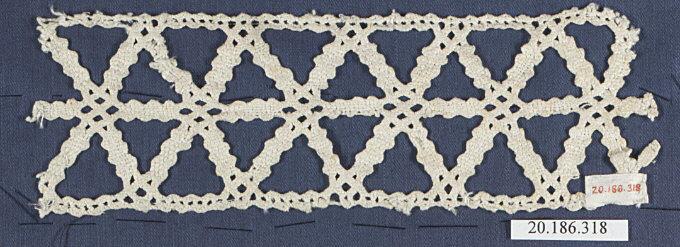
Insertion: The Art of Negative Space in Couture
In the rarefied world of haute couture, the concept of "insertion" transcends its literal definition as a technique of embedding one material within another. At Katherine Fashion Lab, insertion becomes a philosophical statement—a deliberate negotiation between presence and absence, structure and void. This standalone study, drawn from a global heritage of textile craftsmanship and centered on the ethereal medium of bobbin lace, challenges conventional notions of garment construction. By treating emptiness as a design element, the Lab repositions insertion not as a mere decorative afterthought, but as a foundational principle of architectural drapery.
The Historical Precedent: Bobbin Lace as Global Language
Bobbin lace, with its roots stretching from 16th-century Flanders to the convents of Italy and the courts of France, represents a pinnacle of human dexterity and patience. Yet its narrative is not exclusively European. The Lab’s research traces parallel traditions in Chinese silk knotting, Indian chikan embroidery, and Peruvian fiber arts, where openwork techniques similarly celebrate the interplay of thread and void. This global heritage informs the study’s methodology: insertion is not a colonial imposition but a dialogue. The bobbin lace used in this collection is handcrafted in collaboration with artisans from Bruges, Burano, and Oaxaca, each contributing regional tension ratios and pattern vocabularies. The result is a textile that speaks multiple dialects of craftsmanship, unified by a shared reverence for negative space.
Material Logic: Bobbin Lace as Structural Paradox
At first glance, bobbin lace appears fragile—a lattice of twisted linen or silk that seems to defy gravity. Yet its structural integrity is precisely what makes it ideal for insertion. Each knot and crossing creates a tensile network capable of supporting weight while remaining visually permeable. In Katherine Fashion Lab’s study, bobbin lace is not merely applied as a trim or overlay; it is integrated as a load-bearing component. Panels of lace are inserted into seams of organza and micro-suede, acting as transparent joints that reveal the underlying silhouette. The material’s inherent transparency is leveraged to create a gradient of opacity across the garment, from solid fabric at the shoulders to lace insertions at the waist and hem. This gradient mimics the natural fall of light, drawing the eye through the garment rather than allowing it to rest on a single surface.
Design Methodology: Insertion as Spatial Intervention
The Lab’s design process begins with a negative mold—a plaster cast of the human form that is then carved with voids. These voids correspond to the planned insertion points. Bobbin lace is woven directly onto these molds, allowing the thread to follow the contours of the body while leaving deliberate gaps. The result is a garment that exists in two states: as a continuous textile and as a series of discreet insertions that fragment the silhouette. For example, a floor-length gown may feature a solid bodice of matte charmeuse, with a single vertical insertion of lace running from the collarbone to the navel, widening as it descends. This insertion creates a visual column that elongates the torso while exposing a sliver of skin—a controlled revelation that honors the wearer’s agency.
Cultural Resonance: Insertion as a Metaphor for Hybridity
In a globalized fashion economy, the term "insertion" carries geopolitical weight. It evokes the insertion of foreign aesthetics into local traditions, often with problematic power dynamics. Katherine Fashion Lab confronts this by foregrounding collaboration over appropriation. The bobbin lace used in this study is not a generic "European" lace but a bespoke fusion of techniques. The Bruges artisans contribute a dense, floral pattern known as duchesse lace, while the Burano workers offer a lighter, geometric punto in aria. The Oaxacan weavers introduce a looser, more organic mesh inspired by pre-Columbian netting. These are not layered or juxtaposed but interwoven within the same insertion panel, creating a literal hybrid textile. The insertion thus becomes a metaphor for cultural exchange—a space where multiple heritages coexist without erasing one another.
Technical Execution: Engineering the Void
From a construction standpoint, insertion demands precision. The bobbin lace must be stabilized before it can bear the weight of surrounding fabrics. The Lab employs a technique called fuse-and-release, where a water-soluble stabilizer is temporarily bonded to the lace. The garment is assembled with the stabilizer intact, then submerged in warm water, dissolving the backing and leaving the lace suspended within the seam allowances. This process requires exacting tension control; a single misaligned thread can cause the entire insertion to pucker. The Lab’s pattern makers use laser-cut templates to map insertion points, ensuring that the lace’s pattern aligns with the garment’s grain line. The result is a seamless integration that appears almost ethereal—as if the lace materialized from the fabric itself.
Aesthetic Implications: The Power of the Unseen
The standalone study format allows Katherine Fashion Lab to isolate insertion as a pure design variable, free from the constraints of a full collection. This focus reveals the aesthetic potential of absence. In a world saturated with maximalist embellishment, insertion offers a counterpoint: restraint. The garments in this study are intentionally monochromatic—ivory, bone, and chalk—so that the lace’s shadow play becomes the primary visual event. Light passes through the insertions, casting intricate patterns onto the wearer’s skin and the surrounding space. The clothing becomes a portable architecture, defining interior and exterior realms simultaneously.
Conclusion: Insertion as a New Couture Lexicon
Katherine Fashion Lab’s analysis of insertion through bobbin lace redefines the relationship between material and void. By treating negative space as a design element with its own structural and cultural logic, the Lab challenges the industry to reconsider what constitutes "fabric." Insertion is not a technique of addition but of subtraction—a deliberate removal that creates meaning. As the fashion world grapples with issues of sustainability, heritage preservation, and cultural equity, this study offers a model: one where global traditions are not mined for surface inspiration but integrated into the very architecture of the garment. The bobbin lace insertion is a testament to the power of the unseen, proving that what is left out can be as eloquent as what is included.