Heritage Analysis: The Falcon Amulet of Senebtisi
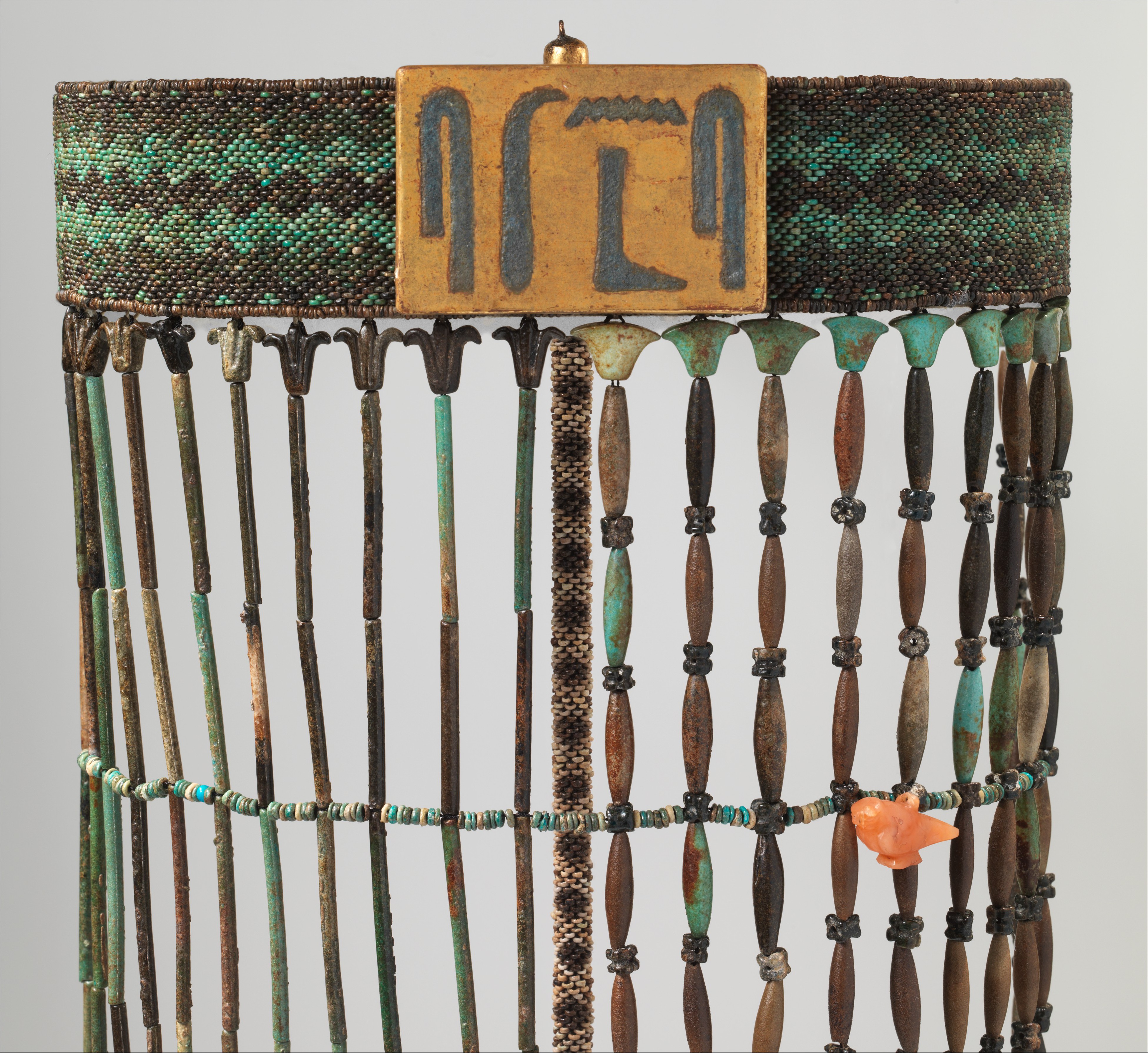
In the annals of ancient adornment, few artifacts encapsulate the intersection of spiritual authority, material opulence, and symbolic resonance as profoundly as the Falcon Amulet of Senebtisi. This small yet commanding object, carved from carnelian and originating from the Middle Kingdom of ancient Egypt (circa 1850 BCE), transcends its physical dimensions to function as a talisman of divine protection, a marker of elite status, and an architectural blueprint for modern luxury strategy. For Katherine Fashion Lab, this amulet offers a strategic lens through which to examine heritage-driven brand positioning, particularly as we approach the 2026 high-end market. This paper deconstructs the amulet’s symbolic power, its role in historical adornment, its spiritual meaning, and ultimately, its actionable implications for a luxury brand seeking to harness ancient authenticity in a contemporary context.
Symbolic Power: The Falcon as Divine and Royal Emblem
The Falcon in Egyptian Cosmology
The falcon, in ancient Egyptian thought, was not merely a bird of prey but a terrestrial manifestation of the sky god Horus. Horus, the son of Osiris and Isis, was the protector of the pharaoh and the embodiment of kingship. The Falcon Amulet of Senebtisi, therefore, was not a decorative trinket but a concentrated vessel of royal authority and celestial power. When worn, it signaled that the bearer—likely a noblewoman or priestess of high rank—was under the direct aegis of Horus. This amulet functioned as a microcosm of the state’s ideological apparatus: the falcon’s piercing gaze was believed to see through deception, while its wings offered metaphysical shelter. For Katherine Fashion Lab, this symbolic density suggests that a single, meticulously crafted piece can carry the weight of an entire narrative. In luxury strategy, this translates to a monumental minimalism—a design language where each element, from material to motif, is chosen for its ability to convey layered meaning without superfluous ornamentation.
Power Through Material: Carnelian’s Role
The choice of carnelian is equally strategic. In ancient Egypt, carnelian was associated with the blood of Isis, symbolizing life force, vitality, and protection against evil. Its deep, fiery orange-red hue evoked the setting sun, linking the wearer to cycles of rebirth and eternity. For Senebtisi, the carnelian falcon was a dual amulet: it protected her in the afterlife while asserting her earthly prestige. The material’s hardness and translucence also required exceptional craftsmanship, making it a marker of exclusive access to skilled artisans. For a 2026 luxury strategy, this underscores the value of material provenance. Carnelian, like rare gemstones or heritage textiles, must be sourced with a story—its origin, its extraction, its historical significance. The amulet teaches us that luxury is not just about rarity but about the narrative density embedded in the raw material itself.
Historical Adornment: The Amulet in Funerary and Daily Context
Adornment as Ritual Technology
Senebtisi’s falcon amulet was discovered in her tomb at Lisht, a site associated with the royal court of Pharaoh Amenemhat I. It was not worn casually but placed strategically within her mummy wrappings, often near the throat or chest. This placement was deliberate: the amulet acted as a spiritual battery, ensuring that her soul (the ba) could recognize and reunite with her body in the afterlife. Historical adornment in this context was not aesthetic decoration but ritual technology—a functional tool for navigating metaphysical realms. For Katherine Fashion Lab, this reframes the concept of “wearable art.” A high-end piece should not merely complement an outfit; it should serve a transformative purpose for the wearer, whether that be empowerment, protection, or identity affirmation. The amulet’s role as a talisman suggests that 2026 luxury consumers will increasingly seek items that offer emotional and spiritual utility—objects that do something for the soul, not just for the wardrobe.
Gender and Status in Adornment
Senebtisi was a woman of considerable status, evidenced by the richness of her tomb goods. Her falcon amulet, however, was not exclusively masculine despite its association with Horus. In Egyptian society, women could wield the protective power of the falcon, particularly in funerary contexts. This gender fluidity in symbolism is a critical insight for modern luxury. The amulet demonstrates that heritage symbols can be recontextualized without losing their potency. For Katherine Fashion Lab, this suggests a strategy of inclusive heritage—taking motifs historically tied to royalty or masculinity (e.g., the falcon, the lion, the scarab) and reimagining them for a diverse, global clientele. The amulet’s endurance across millennia proves that symbolic power is not static; it adapts to the wearer’s identity.
Spiritual Meaning: Protection, Transformation, and Eternity
The Amulet as a Soul’s Compass
Spiritually, the Falcon Amulet of Senebtisi was part of a larger funerary apparatus designed to guide the deceased through the Duat (the underworld). The falcon’s ability to soar between earth and sky made it an ideal psychopomp—a guide for the soul’s journey. Carnelian’s association with blood and life further ensured that the amulet would animate the spirit in the afterlife. This is not passive protection; it is active transformation. The wearer was not just shielded but elevated, their essence aligned with the divine. For a 2026 luxury strategy, this suggests a shift from status signaling to spiritual curation. High-end consumers are increasingly drawn to brands that offer tools for self-actualization—pieces that help them navigate personal transitions, whether career changes, life milestones, or existential quests. The amulet’s spiritual meaning teaches us that luxury can be a vehicle for inner metamorphosis, not just external display.
Eternity as a Brand Value
The amulet’s purpose was to secure eternal life—a concept that resonates deeply with the luxury industry’s obsession with timelessness. However, Egyptian eternity was not static; it was cyclical, involving daily rebirths of the sun and seasonal floods of the Nile. This dynamic eternity offers a more nuanced model for brand longevity. Rather than chasing fleeting trends, Katherine Fashion Lab can position its 2026 collections as heirlooms in motion—pieces designed to be passed down, reimagined, and reactivated across generations. The carnelian falcon was not meant to be locked in a tomb; it was meant to accompany Senebtisi’s soul through endless transformation. Similarly, a luxury piece should be designed for a life of evolving significance, not just a single moment of purchase.
2026 High-End Luxury Strategy: Translating Heritage into Action
Strategic Pillars from the Amulet
For Katherine Fashion Lab, the Falcon Amulet of Senebtisi provides three strategic pillars for 2026: Symbolic Compression, Material Narrative, and Ritualized Consumption. First, Symbolic Compression means that each piece must function as a micro-narrative, carrying historical, spiritual, and personal meaning in a compact form. Design teams should research ancient motifs not as decorative references but as operational symbols that can be decoded by the wearer. Second, Material Narrative demands that every gemstone, metal, or textile be sourced with a documented heritage—a “biography” that includes its geological origin, its historical use, and its cultural significance. This transforms raw materials into authenticated artifacts that command premium pricing. Third, Ritualized Consumption involves creating purchase experiences that mimic ancient rites: private viewings, storytelling sessions, and personalized consecration ceremonies where the piece is “activated” for the new owner. This elevates the transaction from commerce to cultural participation.
Positioning for 2026: The “Neo-Heritage” Consumer
The 2026 luxury consumer will be characterized by a desire for rooted innovation—they seek modernity that is grounded in tradition. The Falcon Amulet of Senebtisi offers a blueprint for serving this demographic. Katherine Fashion Lab can develop a capsule collection titled “Horus’s Gaze,” featuring carnelian pendants, falcon-motif cuffs, and amulet-inspired talismans. Each piece would come with a digital heritage passport—a blockchain-verified record of its design lineage, material sourcing, and symbolic meaning. Marketing campaigns should emphasize the amulet’s protective and transformative qualities, positioning the collection as armor for the modern soul. Collaborations with Egyptologists, spiritual advisors, and contemporary artists can further authenticate the narrative. The goal is not to replicate ancient artifacts but to reanimate their essence for a new era.
Conclusion: The Amulet’s Enduring Lesson
The Falcon Amulet of Senebtisi is more than a historical curiosity; it is a strategic case study in the power of symbolic design. For Katherine Fashion Lab, it demonstrates that true luxury is not about excess but about concentrated meaning. As we approach 2026, the brand that can weave together material authenticity, spiritual depth, and historical gravitas will command not just market share but cultural relevance. The carnelian falcon, small enough to hold in one hand, carries the weight of an entire civilization. In a world of digital saturation and fleeting trends, that weight is precisely what the discerning consumer will seek. Let this amulet be our guide: to craft objects that protect, transform, and endure.