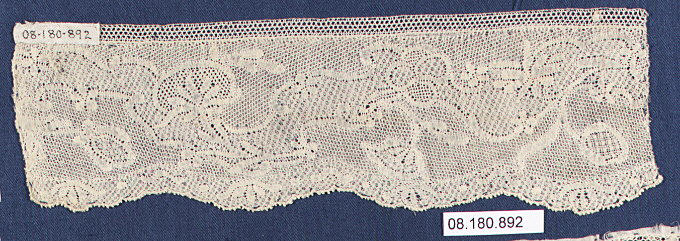
The Art of the Border: A Couture Analysis of Drawnwork in Katherine Fashion Lab’s Global Heritage Collection
In the rarefied world of haute couture, the concept of the “border” is rarely a mere geographical or political demarcation. At Katherine Fashion Lab, it becomes a philosophical and material frontier—a space where craftsmanship meets identity, and where the tactile memory of global heritage is woven into the very structure of a garment. This standalone study examines the lab’s latest collection, which elevates drawnwork—a meticulous, ancient embroidery technique—from a decorative afterthought to the central narrative of sartorial boundary-making. The result is a profound meditation on how edges, seams, and thresholds define not only a garment’s form but its cultural soul.
Deconstructing the Border: From Liminality to Luxury
The border, in Katherine Fashion Lab’s lexicon, is not a line of exclusion but a site of convergence. The collection draws inspiration from the global heritage of drawnwork, a technique that involves withdrawing threads from woven fabric to create open, lace-like patterns. Historically, this practice has been a hallmark of craftsmanship from Eastern Europe to the Mediterranean, from the Andes to Southeast Asia. Here, the lab recontextualizes these traditions within a contemporary couture framework, treating the border as a dynamic, living element. Each garment’s hem, cuff, neckline, and seam becomes a canvas for drawnwork, transforming the periphery into a focal point of intricate geometry and cultural dialogue.
The materiality of drawnwork is central to this analysis. Unlike machine-made lace or laser-cut embellishments, drawnwork requires an intimate, hand-driven process. Artisans must carefully extract individual threads from the base fabric—often a sheer cotton, linen, or silk—then manipulate the remaining strands into patterns of holes, twists, and weaves. This technique creates a unique tension between opacity and transparency, solidity and void. At the border of a gown, this tension becomes a metaphor for the porous nature of cultural identity: what is left out is as meaningful as what is retained. The lab’s choice to use drawnwork exclusively for border treatments—rather than as a full-surface application—underscores the philosophical weight of edges. The border is where the garment meets the world, where it touches the skin, and where it negotiates its relationship with air and light.
Global Heritage as Material Vocabulary
Katherine Fashion Lab’s “Border” collection is a cartography of global textile traditions, each drawnwork pattern referencing a specific cultural lineage. For instance, a floor-length column dress features a hem border of Hungarian Kalotaszeg drawnwork, characterized by dense geometric stars and diamonds, rendered in white-on-white thread on a black silk base. This choice evokes the Transylvanian heritage of border communities, where embroidery was a language of regional pride. Meanwhile, a tailored jacket’s cuffs and collar employ Filipino calado—a delicate, floral drawnwork that mirrors the archipelago’s colonial history of textile trade. The lab’s artisans have adapted these patterns not as mere replicas but as hybrid forms: a single sleeve might combine the structural precision of Czech vyšívání with the airy loops of Indian chikan work, creating a border that speaks to multiple ancestries simultaneously.
This approach challenges the fashion industry’s tendency toward cultural appropriation. Instead, the lab practices a form of curatorial collaboration, working with master embroiderers from each region to ensure authenticity while allowing for innovation. The result is a collection that respects the origin of each stitch while asserting its relevance in a globalized context. The border, in this sense, becomes a site of ethical encounter—a place where heritage is not frozen in time but reanimated through contemporary design.
Couture Construction: The Technical Precision of Drawnwork Borders
From a technical standpoint, integrating drawnwork into couture borders demands exceptional skill. Unlike appliqué or embroidery, drawnwork alters the structural integrity of the fabric. Katherine Fashion Lab’s pattern makers and artisans must calculate how thread removal will affect the drape, weight, and movement of the garment. For a flowing silk chiffon gown, the drawnwork border at the hem is reinforced with a fine, almost invisible organza underlay to prevent tearing, while still allowing the pattern to breathe. On a structured wool coat, the border at the lapel is treated with a micro-stitched edge that stabilizes the openwork without compromising its delicacy.
The collection also explores the concept of the “negative border”—where the drawnwork pattern is created by removing threads from the fabric’s selvage, leaving a raw, unfinished edge that is then hand-finished with tiny, precise knots. This technique references the “hemstitch” traditions of rural Europe and Asia, where borders were often left intentionally frayed as a sign of handcraft. In Katherine Fashion Lab’s hands, this raw edge is elevated to a luxury detail, framed by subtle beadwork or silk thread that catches the light. The border thus oscillates between fragility and strength, echoing the precariousness of cultural preservation in a fast-fashion world.
Philosophical Dimensions: The Border as Identity
Beyond technique, the “Border” collection engages with pressing contemporary themes: migration, diaspora, and the politics of belonging. Each drawnwork pattern tells a story of movement—of threads crossing from one region to another, of artisans carrying their skills across oceans and generations. A striking evening cape, for example, features a border of Palestinian tatreez drawnwork, its cross-stitch motifs reimagined as openwork patterns that seem to float against the fabric. This piece directly references the embroidery traditions of Palestinian refugee communities, where borders are both literal and metaphorical. The lab does not shy away from this political resonance; instead, it uses the garment as a platform for dialogue, with a portion of proceeds supporting artisan cooperatives in conflict zones.
Similarly, a minimalist jumpsuit incorporates Japanese kogin—a sashiko-style drawnwork from the northern Tohoku region, originally used to reinforce workwear. Here, the border at the ankles and wrists is densely stitched, creating a visual barrier that is both protective and decorative. This duality—the border as shield and ornament—echoes the experiences of diaspora communities, who often use textile traditions to maintain cultural boundaries while adapting to new environments.
Conclusion: The Border as a Living Archive
Katherine Fashion Lab’s “Border” collection is not merely a couture analysis of drawnwork; it is a manifesto for how fashion can serve as a living archive of global heritage. By centering the border—the liminal space between inside and outside, self and other—the lab challenges us to reconsider how we define cultural identity in a borderless world. Each garment becomes a map of human connection, stitched with the threads of centuries-old techniques. The drawnwork border is not a line that divides but a threshold that invites: to touch, to see, to remember. In an industry often obsessed with novelty, this collection offers a profound counterpoint—a reminder that the most luxurious fabric of all is the one woven from the stories of our shared humanity.