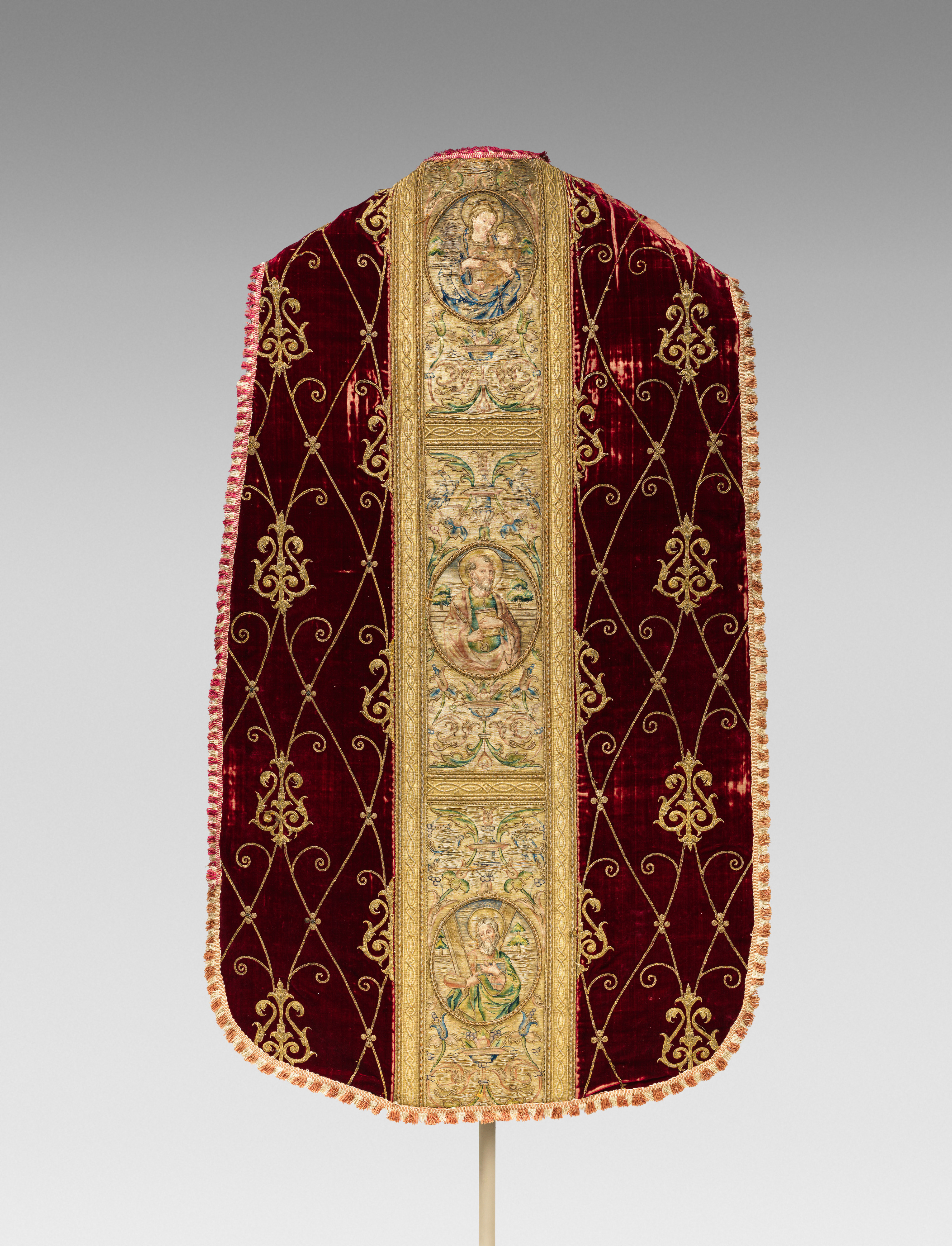
Deconstructing the Sacred: The Chasuble as a Canvas for Contemporary Couture
Within the lexicon of global heritage garments, few possess the layered semiotic weight of the chasuble. A vestment steeped in ritual, symbolism, and centuries of artisanal tradition, its primary form—a generous, often ornate poncho-like cloak—presents a profound case study for the modern couturier. At Katherine Fashion Lab, our standalone analysis of this garment seeks not to replicate its liturgical function, but to dissect its architectural, material, and symbolic DNA. We interrogate how its inherent dichotomy—concealing the body while amplifying spiritual presence—can inform avant-garde design philosophies centered on silhouette, surface, and narrative depth.
Architectural Theology: Silhouette as Doctrine
The chasuble’s most immediate impact is architectural. Historically evolving from the Roman paenula, a common traveler’s cloak, its shape was refined into a symbol of ecclesiastical authority and the "yoke of Christ." Its fundamental structure is one of sublime contradiction: it obscures the individual human form beneath, rendering the wearer a monumental, non-gendered tabernacle. For the couture analyst, this presents a masterclass in silhouette-driven presence. The garment’s volume is not merely decorative; it is performative space.
In a contemporary context, this invites exploration into how volume can communicate authority, sanctuary, or abstraction in fashion. The Lab examines the chasuble’s curved, often bell-like drape as a study in controlled fullness. Unlike the structured volumes of a Balenciaga sack dress or the exaggerated shoulders of power suiting, the chasuble’s volume is inherently fluid and kinetic, moving with a solemn grace. This teaches us that authority in silhouette can be soft, enveloping, and protective, rather than rigid and imposing. The challenge for modern interpretation lies in re-contextualizing this sacred volume—could it speak to the need for emotional or digital sanctuary in the 21st century?
The Alchemy of Sanctity: Silk and Metal Thread
The prescribed materials of silk and metal thread are not arbitrary; they form a material theology central to the chasuble’s essence. Silk, a filament produced by the silkworm’s metamorphosis, has long been allegorized as a symbol of purity, resurrection, and luxury. Its inherent properties—a luminous sheen, a distinctive rustle (scroop), and a dye-receptive surface—make it the ideal ground for sacred storytelling. Metal thread, typically gold or silver, transforms this silk ground into a luminous, reflective plane. This combination is the cornerstone of sacred materiality.
Technically, the application of metal thread—through embroidery, couching, or orphrey bands—is an act of both devotion and extreme craftsmanship. It alters the fabric’s behavior, weight, and light interaction. At Katherine Fashion Lab, we analyze this material dialogue through the lens of sensory couture. The juxtaposition of the soft, fluid silk against the hard, linear, light-capturing metal creates a multisensory experience: visual brilliance, tactile contrast, and auditory presence. In modern terms, this is a precursor to explorations in hybrid textiles and smart materials. Could the interplay of a soft, organic base with a hard, technological overlay reflect our current human-tech integration? The metal thread, catching candlelight, functions as an ancient analogue to modern reflective safety strips or interactive LED fibers—both are designed to be seen, to communicate status or presence within a specific environment.
Symbolic Codex: Narrative Embodied in Form
Beyond structure and material, the chasuble is a narrative garment. Its surface is a coded text, where iconography—crosses, lambs, vines, IHS monograms—communicates doctrine to a literate and illiterate congregation alike. This transforms the wearer into a walking altarpiece. This aspect of wearable narrative is perhaps the most directly translatable to contemporary haute couture, where garments are often conceptual and tell personal or cultural stories.
However, the Lab’s analysis identifies a crucial distinction: in its original context, the symbolism is prescribed and collective, understood within a shared belief system. In fashion, the narrative is often personal, abstract, or critical. The lesson is not in the specific symbols, but in the principle of integrated semiotics—where decoration is never merely decoration, but essential to the garment’s intellectual and emotional resonance. A modern "chasuble" might embroider its surface with data streams, ecological motifs, or abstract geometries that speak to contemporary beliefs and anxieties, using the same meticulous craftsmanship to encode new meanings.
Conclusion: A Blueprint for Transcendent Design
The chasuble, in this standalone study, emerges not as a relic, but as a vibrant blueprint. It demonstrates how garment architecture can transcend the body to create an aura of significance. It showcases how the deliberate, alchemical pairing of materials (silk and metal) can engineer a specific, powerful sensory and symbolic experience. Finally, it proves that surface decoration, when deeply integrated, can elevate a garment from an object of attire to an object of contemplation.
For Katherine Fashion Lab, the global heritage of the chasuble provides a rigorous framework for innovation. It asks pressing questions: How can contemporary design create volume that offers psychological sanctuary? How can material hybrids express our current existential dialogues? And how can we craft wearable narratives that carry meaning in a fragmented world? By deconstructing this sacred vestment, we find not limits, but a liberated field of possibility—where the solemnity of tradition meets the fearless inquiry of future couture.