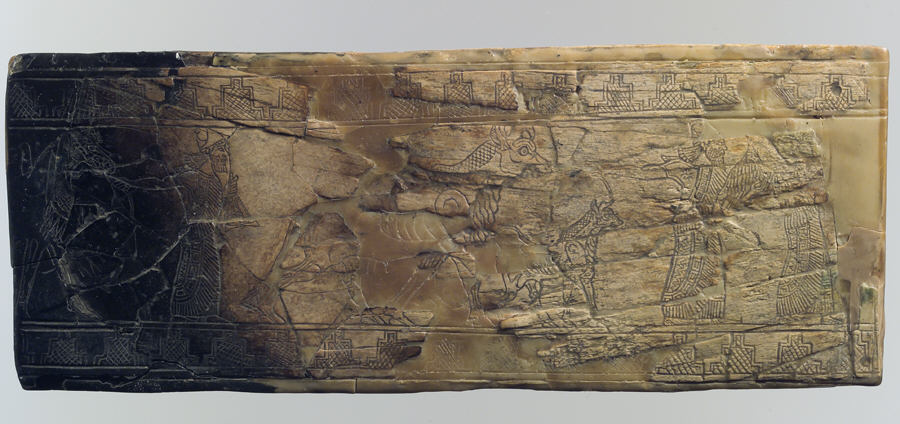
Heritage Analysis: Assyrian Plaque with Robed Priests Leading Animals
Historical and Cultural Provenance
The Assyrian ivory plaque, dating from the 9th to 7th centuries BCE, represents a pinnacle of ancient Near Eastern craftsmanship. Carved from elephant tusk—a material as rare and precious in antiquity as it is today—this plaque depicts robed priests leading animals, likely for ceremonial sacrifice or ritual procession. Originating from the imperial workshops of Nimrud or Khorsabad, such plaques were often inlaid into furniture, thrones, or temple doors, serving both decorative and sacral functions. The medium of ivory itself was a marker of supreme wealth and cosmopolitan trade, as Assyria imported tusks from Egypt, Syria, and the Levant. For Katherine Fashion Lab, this artifact offers a profound narrative of symbolic power, historical adornment, and spiritual meaning that can be strategically translated into a 2026 high-end luxury strategy.
Symbolic Power: Hierarchical Authority and Divine Mediation
The imagery of robed priests leading animals is not merely anecdotal but deeply encoded with symbolic authority. In Assyrian cosmology, the priest (often a šangû) was the intermediary between the mortal king and the divine pantheon, particularly the god Ashur. The robe—elaborately fringed and tiered—denoted rank, purity, and proximity to the sacred. The animals, typically bulls, lions, or rams, symbolized strength, fertility, and sacrificial submission. Leading them was an act of dominion over nature and a demonstration of the priest’s power to channel cosmic order (me). For a luxury brand, this translates into the concept of curated authority. In 2026, Katherine Fashion Lab can position its collections as “ceremonial conduits” of status, where each garment or accessory is a symbol of the wearer’s command over tradition, craftsmanship, and exclusivity. The plaque’s hierarchical composition—priest before animal, animal before altar—mirrors a modern luxury hierarchy: designer, product, client. This symbolic chain can be leveraged in marketing narratives that emphasize heritage as power, not mere decoration.
Historical Adornment: Ivory as the Ultimate Luxury Material
Ivory in Assyrian culture was more than a medium; it was a statement of imperial reach and artisanal mastery. The material’s creamy patina, fine grain, and capacity for intricate low-relief carving made it ideal for representing the subtle folds of priestly robes and the muscular tension of animals. Historically, ivory was often overlaid with gold leaf or inlaid with lapis lazuli, creating a polychromatic opulence that signified divine light. For Katherine Fashion Lab, this invites a re-examination of materiality in high-end design. In 2026, the brand can adopt ethically sourced, heritage-inspired alternatives—such as tagua nut, fossilized mammoth ivory, or advanced bio-resins—that mimic ivory’s visual and tactile qualities while adhering to modern sustainability standards. The plaque’s use of negative space and geometric borders also offers a blueprint for pattern-making in textiles and jewelry: clean lines, symmetrical motifs, and a focus on the interplay between figure and ground. This approach aligns with the quiet luxury trend, where material integrity and craftsmanship speak louder than logos.
Spiritual Meaning: Ritual Procession as Brand Pilgrimage
The act of leading animals in a procession was a spiritual performance—a public reaffirmation of divine favor and societal order. The priests’ robes, with their tassels and embroidered symbols, were not mere clothing but sacred vestments that channeled protective energies. The animals, often adorned with garlands or ribbons, were themselves participants in this liturgy. This ritualistic dimension offers a powerful metaphor for the luxury consumer experience. In 2026, Katherine Fashion Lab can design “processional” collections that evoke a sense of journey, transformation, and spiritual elevation. Consider limited-edition pieces that are unveiled through curated, multi-sensory events—like a modern-day procession—where clients are led through a narrative of creation and meaning. The plaque’s spiritual subtext—sacrifice, renewal, and covenant—can be translated into brand rituals: annual heritage drops, symbolic “offerings” of craftsmanship, or collaborations with artisans who preserve ancient techniques. This elevates the brand from a purveyor of goods to a custodian of sacred aesthetics.
2026 High-End Luxury Strategy: Translating the Plaque into Tangible Value
To operationalize this heritage analysis, Katherine Fashion Lab must adopt a four-pillar strategic framework for 2026: Narrative Authority, Material Integrity, Ritual Engagement, and Exclusivity Through Provenance.
Narrative Authority: The brand’s marketing and editorial content should center on the plaque’s story as a “charter of power.” Each collection can be introduced with a digital or physical “tablet” (inspired by Assyrian cuneiform) that explains the symbolic meaning of its motifs. For instance, a robe with tiered fringe directly references the priest’s garment, while animal-inspired hardware on handbags echoes the sacrificial animals. This transforms products into conversation pieces with historical gravitas.
Material Integrity: In an era of heightened ecological consciousness, Katherine Fashion Lab must pioneer luxury upcycling of heritage materials. Partnering with museums or private collections to ethically source antique ivory fragments for bespoke jewelry—or using 3D scans of the plaque to create molds for recycled precious metals—creates a bridge between past and future. The brand’s commitment to traceable provenance (e.g., blockchain-verified sourcing of alternative ivories) will appeal to the ultra-high-net-worth consumer who demands both beauty and ethics.
Ritual Engagement: The plaque’s processional theme can inspire a “Rite of Passage” loyalty program, where clients progress through tiers (Novice, Priest, Guardian) by engaging with brand heritage content, attending exclusive events, or commissioning custom pieces. Each tier unlocks access to limited-edition “ceremonial” items—such as a silk scarf printed with the plaque’s motif or a bronze cuff engraved with a protective Assyrian symbol. This gamified spirituality fosters deep emotional attachment and repeat patronage.
Exclusivity Through Provenance: Finally, the plaque’s unique origin story allows for hyper-limited editions. Katherine Fashion Lab can produce only 100 replicas of the plaque’s central scene, each hand-carved by a master artisan and accompanied by a certificate of historical authentication. These are not sold in stores but offered through private viewings—a modern-day “temple” for select clients. The price point should reflect the artifact’s cultural weight, positioning the brand at the apex of collectible luxury.
Conclusion
The Assyrian plaque with robed priests leading animals is far more than an archaeological curiosity; it is a strategic blueprint for a luxury brand seeking to differentiate itself through depth and authenticity. By decoding its layers of symbolic power, historical adornment, and spiritual meaning, Katherine Fashion Lab can craft a 2026 strategy that resonates with a discerning clientele hungry for stories, not just products. The plaque teaches us that true luxury is ritualistic, hierarchical, and materially sacred—a lesson as relevant in the boardroom as it was in the palace of Nimrud.