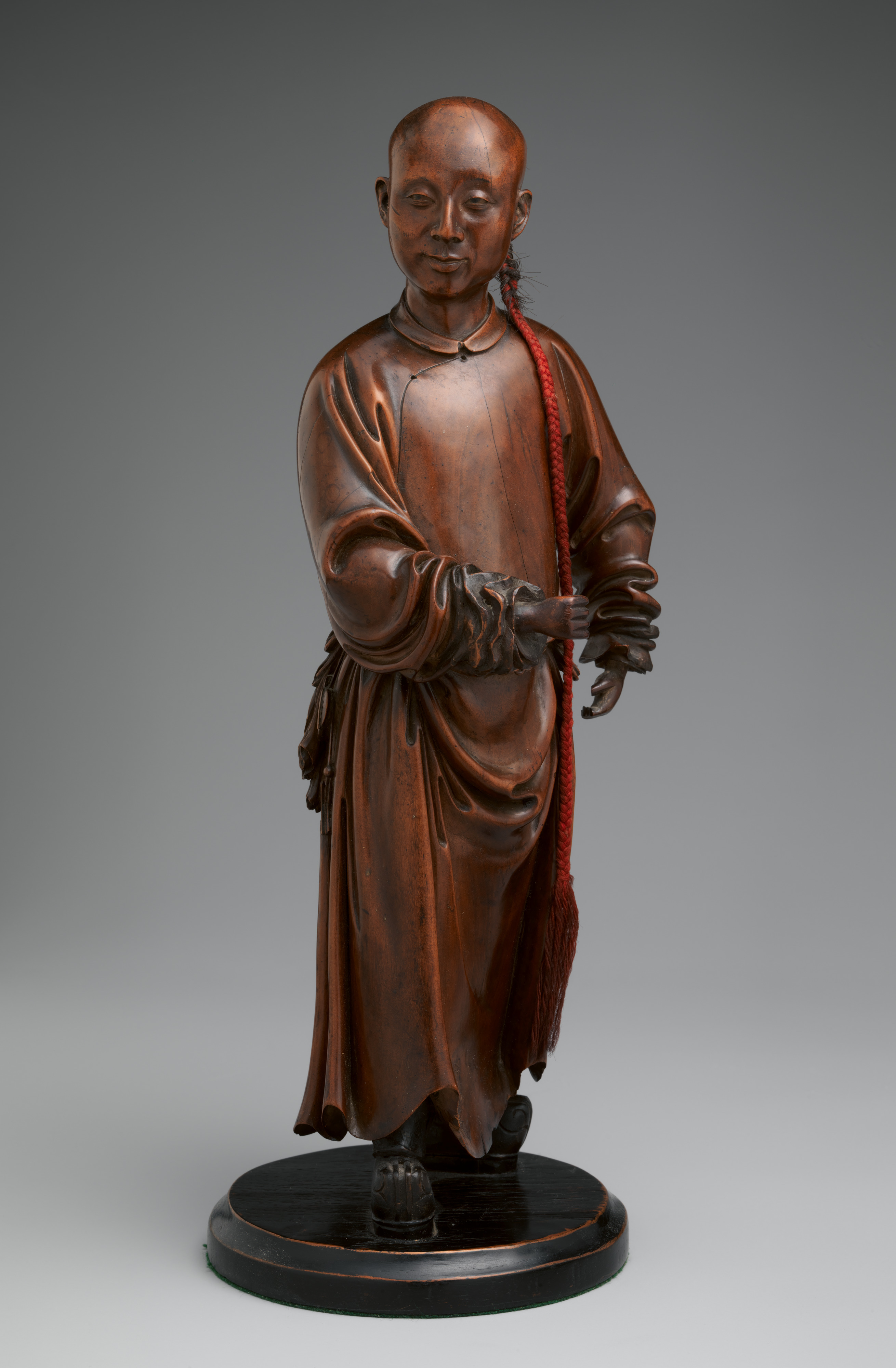
The Gentleman in Miniature: Deconstructing the Figure of a Gentleman at Katherine Fashion Lab
In the hallowed halls of Katherine Fashion Lab, where the ephemeral meets the eternal, a singular object commands attention: a figure of a gentleman, originating from China. This is not a garment to be worn, nor a sketch to be revised. It is a standalone study, a three-dimensional meditation on masculine identity, rendered in the unlikely triumvirate of boxwood, horsehair, and silk. To analyze this piece is to dissect the very architecture of gentlemanly conduct, where materiality becomes metaphor and every carved line whispers a history of restraint and refinement.
Material Alchemy: Boxwood, Horsehair, and Silk
The choice of materials is the first, and perhaps most profound, statement. Boxwood, a dense, fine-grained hardwood, is the structural core. Its pale, almost ivory hue suggests purity and durability, a foundation of unyielding integrity. The carver’s mastery is evident in the subtle articulation of the figure’s posture—the slight tilt of the head, the relaxed yet purposeful set of the shoulders. Boxwood does not yield easily; every curve and contour is a triumph of patience over resistance. This speaks to the gentleman’s own self-discipline, a character forged through persistent refinement.
Contrast this with the horsehair, which flows from the figure’s head in a cascade of fine, dark strands. Horsehair is a paradoxical material: both strong and supple, it possesses a natural luster that catches light with an almost liquid quality. In traditional Chinese culture, horsehair was used in ceremonial attire and scholar’s caps, signifying status and intellectual vigor. Here, it animates the figure, lending a sense of movement and vitality to an otherwise static form. The hair is not merely decorative; it is a narrative element, suggesting a mind in constant, quiet motion—a scholar’s consciousness beneath a composed exterior.
Finally, silk—the quintessential fabric of Chinese luxury—drapes the figure in a robe of understated elegance. Silk’s tactile softness and luminous sheen create a visual paradox against the boxwood’s austerity. The robe is not ostentatious; its folds are carved with a precision that mimics natural drape, falling in clean, vertical lines. This is not a garment of display, but of concealment. The silk veils the body while simultaneously revealing the gentleman’s mastery of decorum. In fashion terminology, this is the epitome of restrained opulence: wealth expressed not through excess, but through the flawless execution of simplicity.
The Aesthetic of the Standalone Study
Context is critical. This piece is a standalone study, not a functional garment or a part of a larger ensemble. In the world of haute couture and design, a study is a distillation—a concentrated exploration of a single idea. Here, that idea is the idealized male form as a vessel for cultural values. Unlike a mannequin, which is anonymous and utilitarian, this figure is a character. Its posture—shoulders back, chin lifted, hands perhaps clasped behind the back or resting at the sides—echoes the classical contrapposto of Western sculpture, yet its ethos is distinctly Chinese.
The absence of color is deliberate. The natural tones of boxwood and the dark, unadorned horsehair create a monochromatic palette that forces the viewer to focus on form and texture. This is a study in silhouette and negative space. The figure’s verticality is emphasized by the unbroken line of the robe, while the horsehair introduces a horizontal counterpoint, a soft cloud of energy above the rigid torso. The overall effect is one of balance—a harmony between the cerebral and the physical, the dynamic and the static.
Cultural Semiotics: The Chinese Gentleman as Global Archetype
To understand this figure, one must decode its cultural DNA. The Chinese gentleman, or junzi (君子), is a Confucian ideal: a man of moral rectitude, learning, and social responsibility. He is not defined by wealth or birth, but by character. This figure embodies that ethos through its material choices. Boxwood, often used for seals and scholarly implements, evokes the scholar-official—a man who wields power through intellect, not force. The horsehair, reminiscent of the cap worn by imperial examinees, reinforces this association with erudition.
Yet, the figure also transcends its specific cultural origin. In the global context of Katherine Fashion Lab, it becomes a universal symbol of masculine grace. The silk robe, with its clean lines and minimal ornamentation, could easily be interpreted as a precursor to the modern tailored suit—a garment designed to impose order on the body. The horsehair, in its wildness, hints at the untamed spirit that every gentleman must learn to govern. This duality is the heart of the piece: the tension between discipline and desire, between public composure and private passion.
Craftsmanship as Narrative
The technical execution of this study is a narrative in itself. The carving of boxwood requires an intimate understanding of the wood’s grain; a single misjudgment can ruin months of labor. The artisan has clearly worked with the grain, allowing it to guide the flow of the robe’s folds. The horsehair, too, demands skill—each strand must be individually set and secured, a painstaking process that mirrors the meticulous grooming of a gentleman’s appearance. The silk, likely applied as a carved surface rather than a separate fabric, demonstrates a fusion of materials that blurs the line between sculpture and textile art.
This craftsmanship is not merely technical prowess; it is a form of embodied philosophy. In Chinese aesthetics, the process of creation is as important as the final object. The patience required to carve boxwood, the precision needed to set horsehair, the delicacy of rendering silk—these are virtues that the figure itself represents. The gentleman is not just a subject; he is a product of the very values he embodies.
Implications for Contemporary Couture
What does this standalone study teach us about fashion today? In an era of fast fashion and digital rendering, the Figure of a Gentleman is a defiant statement of slow, intentional creation. It challenges the designer to think beyond the garment and consider the anthropology of dress. The piece suggests that true elegance lies not in novelty, but in the mastery of fundamentals: proportion, material, and narrative.
For Katherine Fashion Lab, this study serves as a foundational text. It reminds us that the most powerful fashion statements are often the quietest. The gentleman does not shout; he is heard through the precision of his carriage, the quality of his cloth, the texture of his being. In a world of relentless noise, this figure stands as a monument to articulate silence—a lesson in how to be present without demanding attention.
In conclusion, the Figure of a Gentleman is far more than a decorative object. It is a thesis on masculine refinement, a dialogue between East and West, and a testament to the enduring power of material storytelling. At Katherine Fashion Lab, we do not merely observe this figure; we converse with it, learning from its poise, its patience, and its profound sense of self. It is, in every sense, a study worth mastering.