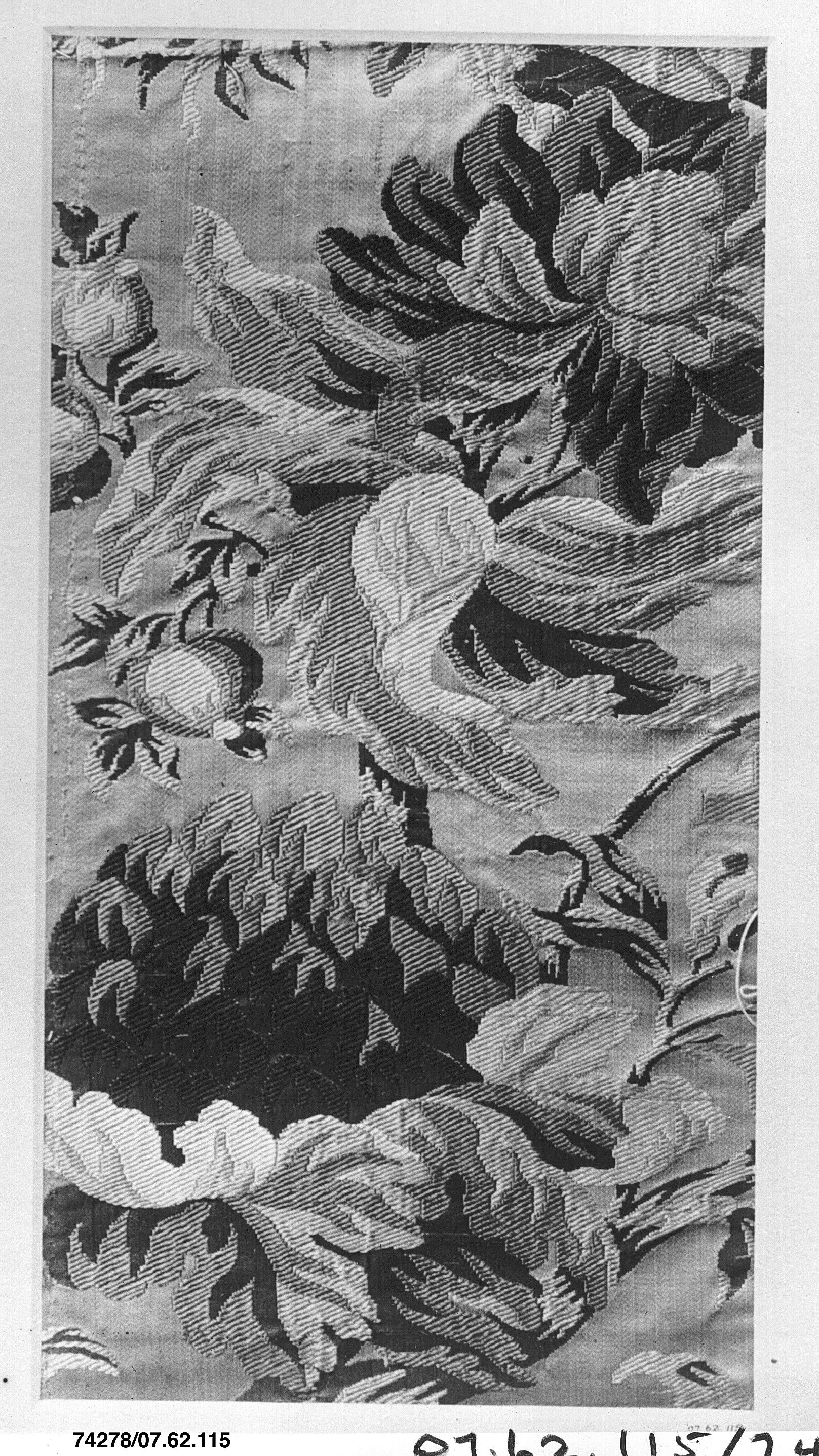
Strategic Heritage Analysis: The Silk Codex
For Katherine Fashion Lab, heritage is not an archive but an active, codified language. This analysis deconstructs the foundational "Piece"—a conceptual silk artifact from an Ancient Civilization—to extract a strategic blueprint for 2026 high-end luxury. Silk serves not merely as a medium but as the original membrane where technology, spirituality, and power converged. By examining its historical role in symbolic power, bodily adornment, and spiritual meaning, we formulate a forward-facing strategy that translates archaic potency into contemporary desire, positioning KFL not as a follower of trends, but as a curator of transcendent codes.
Decoding the Silk Matrix: Symbolic Power & Historical Adornment
In the context of Ancient Civilizations, notably along the proto-Silk Road corridors of China, Persia, and Byzantium, silk was a geopolitical instrument before it was a textile. Its possession was a direct corollary to sovereignty. The "Piece" under analysis is therefore not a passive garment but a loaded artifact: a ceremonial robe or a diplomatic gift. Its value was engineered through a monopoly on knowledge (sericulture), extreme labor intensity (thousands of cocoons per meter), and a resultant materiality—lustrous, strong, lightweight—that mimicked the divine. Adornment in this context was a performative act of statecraft. The body, sheathed in silk, became a territory itself, mapping hierarchy through color (imperial yellow, royal purple), motif (dragons, phoenixes), and weave complexity. This establishes our first strategic principle: Luxury is effective when it functions as a legible, non-verbal language of exclusion and authority. For KFL in 2026, this translates beyond logo-centric display. It demands the creation of a complete, proprietary iconography and material syntax where every stitch, dye, and finish is a deliberate glyph in KFL’s own power lexicon.
The Spiritual Weft: Transcendence Woven into Fiber
The spiritual meaning of ancient silk was multifaceted, anchoring its symbolic power in a cosmological framework. In many traditions, the lifecycle of the silkworm—from larva to cocoon to moth—was seen as a potent metaphor for resurrection and transcendence. The fiber, shimmering with a captured-light quality, was considered a bridge between earthly and celestial realms. Taoist alchemists sought robes of silk to aid spiritual ascent; Buddhist sutras were transcribed onto silk scrolls, sanctifying the text through the medium. The "Piece" thus carried a sacred charge, its touch and drape intended to alter the wearer’s state and perception. This imbues a second strategic principle: True luxury must engage in a narrative of personal transformation, not just possession. The material must be perceived as alchemical. For KFL’s 2026 strategy, this moves the value proposition from "craftsmanship" to "metamorphosis." Research and development must focus on sensorial and experiential innovation—silks treated with sound frequencies, dyes responsive to bio-rhythms, weaves that interact with light in spiritually evocative ways—to reclaim this ancient promise of transcendence for the modern psyche.
The 2026 Luxury Strategy: From Archetype to Architecture
The 2026 high-end luxury landscape will be defined by cognitive scarcity, experiential depth, and brand sovereignty. Leveraging the "Silk Codex" analysis, Katherine Fashion Lab’s strategy must architect a standalone ecosystem built on three pillars:
1. The Neo-Monopoly: Replicate the ancient monopoly not through supply constraint, but through intellectual and technological sovereignty. KFL must invest in proprietary biomimetic silk research—developing exclusive, lab-grown silk variants with unprecedented properties (structural color, climate reactivity, therapeutic release). This creates a tangible, defensible "Codex" that cannot be replicated, mirroring the secret of sericulture. Patents become the new borders.
2. Adornment as Interface: Evolve historical adornment from display to interaction. The 2026 KFL "Piece" should be a bio-cognitive interface. Imagine silk that functions as a seamless layer in a client’s digital-physical identity—woven with conductive filaments for subtle, haptic communication, or embedded with nano-encapsulates that release scent or compounds keyed to emotional or spiritual well-being. The garment becomes an active agent in the wearer’s life, a modern talisman.
3. The Ritual of Acquisition: Destabilize the conventional retail model by embedding the spiritual and symbolic history into the client journey. The acquisition of a KFL silk piece should be a curated, multi-sensory ritual—beginning with a consultation that maps the client’s personal symbolism (a modern interpretation of imperial motifs), followed by involvement in key material or design choices, culminating in a private ceremony of "activation" or presentation. This transforms the transaction into an initiation, building profound brand allegiance.
Conclusion: Weaving the Future Code
The ancient silk "Piece" reveals that the most enduring luxury operates at the nexus of the political, the spiritual, and the technological. For Katherine Fashion Lab, the path to 2026 dominance lies in refusing to see heritage as aesthetic nostalgia. Instead, it must be reverse-engineered as a strategic code. By interpreting symbolic power as the creation of a proprietary language, spiritual meaning as a framework for transformative experience, and historical adornment as a blueprint for the bio-digital interface, KFL can construct a luxury paradigm that is both timeless and unprecedented. The goal is to weave a new Codex—where every collection is not a seasonal statement, but a chapter in an ongoing, authoritative narrative of human elevation. The future of luxury is not mined from trends; it is spun, with deliberate and knowing artistry, from the enduring threads of the past.