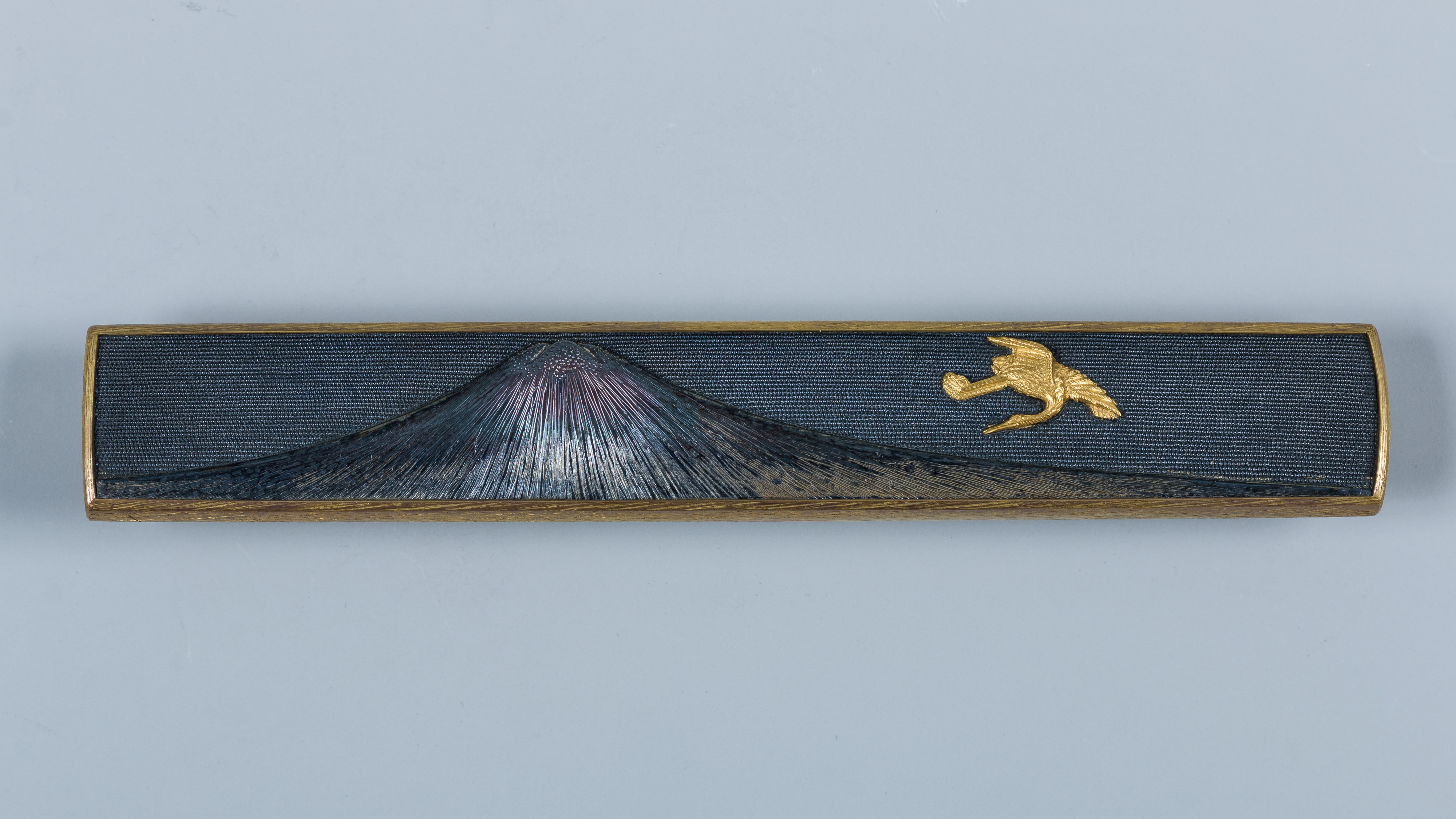
Heritage Analysis: The Japanese Kozuka as a Strategic Artifact of Symbolic Power and Spiritual Adornment
In the realm of high-end luxury, the most compelling artifacts are those that transcend their functional origins to become vessels of cultural memory, spiritual resonance, and symbolic authority. The Japanese kozuka—the ornate knife handle once carried as part of a samurai’s daishō—represents a pinnacle of this transformative power. Crafted from shakudō, a revered copper-gold alloy, and inlaid with gold and silver, the kozuka is not merely a tool but a microcosm of Japanese aesthetic philosophy, warrior ethos, and spiritual discipline. For Katherine Fashion Lab, this artifact offers a profound strategic blueprint for 2026: a model of silent authority, where material integrity, symbolic depth, and historical resonance converge to define a new paradigm of luxury.
Historical Adornment and the Language of the Warrior-Artist
The kozuka emerged during the Muromachi period (1336–1573) as an integral component of the samurai’s sword furniture. While the katana symbolized the warrior’s soul, the kozuka served a more intimate, utilitarian purpose: it was a small knife handle, often stored in a pocket on the scabbard, used for tasks ranging from cutting food to performing ritual suicide. However, its true significance lay in its adornment. By the Edo period (1603–1868), the kozuka had evolved into a canvas for highly skilled metalwork, executed by master artisans known as kinkōshi. These craftsmen employed techniques such as takazōgan (high-relief inlay) and nanako (fish-roe ground texture) to create intricate scenes from nature, mythology, and literature.
The choice of shakudō as the primary medium is itself a statement of refined taste. This alloy, typically composed of 95–98% copper and 2–5% gold, undergoes a chemical patination process that yields a deep, lustrous black-blue hue—a color associated with the night sky, water, and the contemplative void. Against this dark ground, gold and silver inlays appear as luminous accents, evoking stars or fireflies. This chromatic tension between the matte, subdued body and the brilliant highlights embodies the Japanese aesthetic of hibi—the beauty of imperfection and understatement. For a high-end luxury audience, this speaks directly to the quiet luxury movement: power that does not shout but resonates through material integrity and subtle contrast.
Symbolic Power: The Kozuka as a Talisman of Identity and Protection
Every element of the kozuka’s design carried profound symbolic weight. Common motifs included dragons (symbols of water, wisdom, and imperial authority), phoenixes (rebirth and transcendence), and tigers (courage and protection). More esoteric designs featured Buddhist deities, such as Fudō Myōō, the immovable wisdom king, whose wrathful visage was believed to ward off evil and guide the warrior toward enlightenment. The kozuka was thus not merely an accessory but a portable talisman, imbuing its bearer with spiritual fortitude and a visible declaration of their values.
This symbolic power is directly transferable to modern luxury strategy. In 2026, affluent consumers are increasingly seeking objects of meaning—items that tell a story, protect a heritage, or affirm personal identity. The kozuka model suggests that luxury brands can move beyond logo-centricity toward iconographic storytelling. For Katherine Fashion Lab, this could translate into collections where each piece incorporates a specific motif—perhaps a dragon for resilience or a crane for longevity—crafted in precious metals and offered with a narrative card explaining its historical and spiritual significance. This transforms a product into a heritage artifact, elevating perceived value and emotional connection.
Spiritual Meaning: The Way of the Sword as a Path to Luxury
At its core, the kozuka is inseparable from the samurai’s spiritual discipline, bushidō—the way of the warrior. This code emphasized rectitude, courage, benevolence, respect, honesty, honor, and loyalty. The kozuka, as a tool carried on the person at all times, served as a constant reminder of these principles. Its craftsmanship was not merely decorative but a form of meditative practice; the artisan’s patience and precision mirrored the warrior’s self-cultivation. Owning a fine kozuka was a statement of one’s commitment to a life of discipline and aesthetic refinement.
For high-end luxury in 2026, this spiritual dimension offers a powerful differentiator. The modern luxury consumer is not simply buying a product; they are investing in a philosophy of living. The kozuka exemplifies how an object can embody mindful craftsmanship and a code of ethics. Katherine Fashion Lab can leverage this by positioning its pieces as modern talismans—objects that encourage the wearer to embody qualities such as resilience, calm, or integrity. This could be articulated through marketing narratives that highlight the artisan’s process, the material’s spiritual properties (e.g., shakudō’s association with protection and clarity), and the intended symbolic benefits for the wearer.
2026 High-End Luxury Strategy: Lessons from the Kozuka
Translating the kozuka’s heritage into a viable 2026 luxury strategy requires a multi-layered approach. First, material authenticity must be paramount. The use of shakudō, gold, and silver is not arbitrary; it reflects a deep understanding of how materials age, patina, and interact with the wearer. Katherine Fashion Lab should consider reviving or partnering with artisans who can produce these alloys and techniques, offering a limited-edition series of wearable objects—perhaps cufflinks, brooches, or pendant handles—that directly reference the kozuka’s form and function. The patination process should be highlighted as a unique selling point, with each piece developing a distinctive character over time, aligning with the trend toward slow luxury and anti-disposability.
Second, narrative architecture is critical. Each piece must come with a heritage dossier—a small booklet or digital experience that traces the motif’s origin, the artisan’s lineage, and the spiritual meaning. This transforms the purchase into an educational and emotional journey, fostering brand loyalty among discerning clients who value knowledge as much as aesthetics. The kozuka’s historical role as a status marker within the samurai hierarchy also suggests a strategy of exclusive tiering: different motifs and metal combinations could denote different levels of spiritual or social significance, creating a collector’s ecosystem.
Third, the aesthetic of restraint—the kozuka’s quiet, powerful presence—should inform Katherine Fashion Lab’s 2026 visual identity. In an era of digital saturation, the brand can position itself as a sanctuary of silence, where luxury is expressed through negative space, precise lines, and the interplay of light and shadow. The kozuka’s design philosophy—where every detail serves a purpose and nothing is superfluous—resonates with the contemporary demand for mindful consumption and intentional design.
Finally, the kozuka offers a model for cross-category innovation. Historically, it was a component of a larger system (the sword). Katherine Fashion Lab could develop a modular luxury system—a collection of interchangeable handles, pendants, or clasps that allow the wearer to customize their piece for different occasions or spiritual intentions. This speaks to the 2026 consumer’s desire for personalization and versatility, while maintaining a cohesive heritage narrative.
Conclusion: The Kozuka as a Strategic Archetype
The Japanese kozuka is far more than a historical curiosity; it is a strategic archetype for the future of high-end luxury. Its fusion of symbolic power, spiritual meaning, and masterful craftsmanship offers a template for brands seeking to transcend transactional relationships and create objects of lasting significance. For Katherine Fashion Lab, the kozuka’s legacy suggests a path forward: one where luxury is measured not by visibility but by depth, not by novelty but by timeless resonance. By embracing the kozuka’s principles—material integrity, narrative depth, and quiet authority—the lab can position itself at the vanguard of a new luxury paradigm, rooted in heritage but poised for the future.