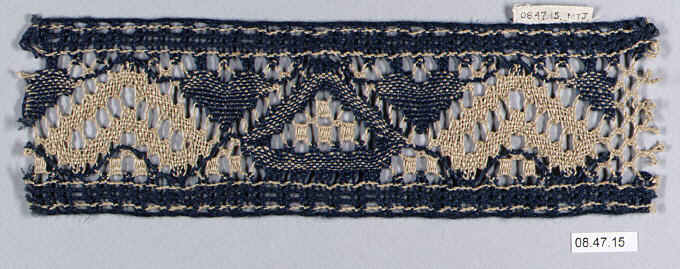
The Language of Fragments: Bobbin Lace as Global Heritage at Katherine Fashion Lab
In the rarefied air of haute couture, where fabric is often treated as a blank canvas for architectural ambition, Katherine Fashion Lab’s standalone study of Fragment offers a profound recalibration. Here, the subject is not a garment but a concept—the incomplete, the residual, the memory-laden shard. The chosen material, bobbin lace, serves as both medium and metaphor, while its origin, Global Heritage, anchors the collection in a narrative of cultural transmission. This analysis unpacks how the Lab transforms a fragile textile into a powerful statement on identity, preservation, and the poetics of imperfection.
Deconstructing the Fragment: Conceptual Foundations
At its core, the Fragment study challenges the Western couture tradition of the pristine, finished garment. Katherine Fashion Lab positions the fragment not as a flaw but as a deliberate aesthetic and philosophical choice. The fragment is a relic of process, a snapshot of creation arrested in time. It evokes archaeological shards, torn letters, and the edges of a story half-told. In this context, bobbin lace—a textile built from thousands of tiny knots and loops—becomes the ideal vehicle. Each thread is a line of a narrative, and its deliberate incompleteness invites the viewer to complete the story.
The Lab’s approach is rigorously intellectual. The fragment is treated as a palimpsest: layers of lace are overlaid, some sections left raw and unbound, others meticulously finished. This duality speaks to the tension between preservation and decay, between the desire to hold onto heritage and the inevitability of its transformation. The collection does not mourn loss; instead, it celebrates the fragment as a site of possibility.
Bobbin Lace: A Material Genealogy
Bobbin lace, with its origins in 16th-century Europe, is a textile of immense technical complexity. Threads are wound on bobbins and twisted, braided, and crossed over a pillow, guided by pins. Historically, it was a craft of patience and precision, passed through generations of women in regions from Flanders to Venice. Yet Katherine Fashion Lab recontextualizes this material as Global Heritage, acknowledging that lace-making traditions exist across cultures—from the encaje of the Philippines to the tenerife of the Canary Islands, from the chikan of India to the guipure of France. The Lab’s study deliberately blurs these geographical lines, sourcing threads from multiple continents and techniques from disparate traditions.
The material itself is treated with reverence but not nostalgia. Bobbin lace is inherently fragile, its structure visible and vulnerable. In the Fragment study, this fragility is amplified. Edges are left unbound, threads are cut mid-pattern, and sections are suspended in net-like frames. The lace becomes a metaphor for the fragility of cultural memory—beautiful, intricate, but always at risk of unraveling. The Lab’s artisans employ a technique called contemporary bobbin lace, where traditional patterns are disrupted by asymmetrical cuts and intentional voids. This is not lace as decorative trim; it is lace as conceptual architecture.
Global Heritage: A Tapestry of Influences
The Global Heritage origin is not merely a sourcing label; it is a curatorial stance. Katherine Fashion Lab resists the trap of cultural appropriation by engaging in what they term dialogic creation. The study involved collaborations with lace-makers from Bruges, Burano, and Binan (Philippines), each contributing a signature stitch or pattern. These are not pasted onto a Western silhouette; they are woven into the very structure of the fragment. For instance, a bodice piece might combine the dense toile de fond of French lace with the openwork knotting of Filipino puni.
The result is a textile that speaks multiple languages simultaneously. A sleeve fragment, for example, features a pattern of brides (connecting threads) that mimic the branching of a family tree—a nod to the genealogical nature of heritage. Another piece uses gimp (a thicker thread) to outline a shape that references a traditional barong Tagalog collar, but the shape is cut off, left as a ghost. The fragment becomes a vessel for cultural memory, but one that acknowledges that memory is always partial, always mediated by the present.
Standalone Study: The Art of the Unfinished
This is a standalone study, meaning the pieces are not intended for a larger collection but exist as discrete objects of inquiry. Each fragment is a complete statement in itself. The Lab presents them as artifacts: mounted on raw linen boards, suspended in frames, or draped over minimalist mannequins. The viewer is encouraged to walk around each piece, to see the back where threads are knotted and cut, to observe the tension between order and chaos.
One standout piece is a corset fragment—only the left side, with boning channels made of twisted lace cords. The right side is absent, replaced by a negative space outlined in silk thread. This asymmetry forces the viewer to imagine the missing half, to engage in an act of co-creation. Another piece, a veil fragment, is a square of lace that has been partially burned at the edges, the charred threads forming a delicate, organic border. This is not destruction for shock value; it is a meditation on how heritage is often preserved through loss—the burned edges of a library, the torn pages of a manuscript.
Technical Mastery and Philosophical Depth
From a technical standpoint, the Fragment study demonstrates exceptional mastery. The bobbin lace is executed with a precision that honors its historical roots, while the intentional fragmentation requires a deep understanding of structural integrity. The Lab’s artisans must know exactly where to cut so that the lace does not collapse. This is a high-wire act of design: too much removal, and the piece loses its coherence; too little, and it remains a cliché. The balance is achieved through a rigorous process of negative space mapping, where the voids are as carefully planned as the threads.
Philosophically, the study engages with contemporary debates about cultural heritage in a globalized world. The fragment is a critique of the notion of “authentic” tradition. By combining techniques from different continents, Katherine Fashion Lab argues that heritage is not static but constantly being reassembled from fragments. The bobbin lace, with its intricate network of connections, becomes a metaphor for the globalized self—a patchwork of influences, some inherited, some chosen, all partial.
Conclusion: The Fragment as Future
Katherine Fashion Lab’s Fragment study is not a nostalgic look back at lost crafts. It is a forward-facing proposition: that the future of couture lies in honoring the incomplete. By centering bobbin lace as a material of global heritage, the Lab elevates a craft often relegated to the margins of fashion history. The fragment, in their hands, is not a sign of deficiency but of potential—a space where memory, skill, and imagination converge. In a world saturated with digital perfection, this tactile, vulnerable, and intellectually rigorous study reminds us that the most powerful stories are often the ones we have to piece together ourselves.