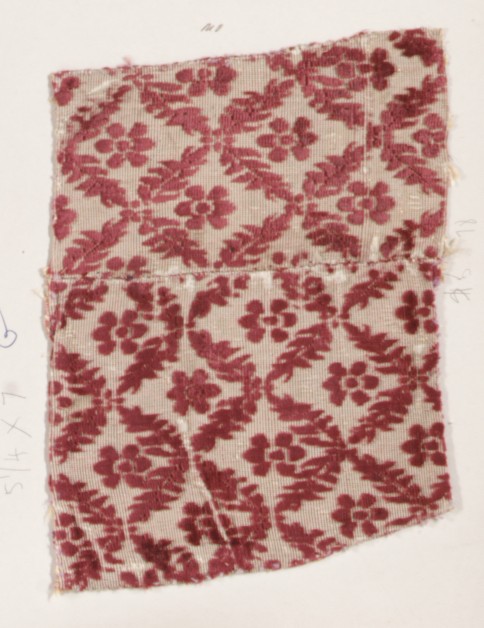
The Art of Fragmentation: A Couture Analysis of Katherine Fashion Lab’s “Fragment” Study
In the rarefied realm of haute couture, where fabric becomes narrative and stitch defines philosophy, Katherine Fashion Lab’s standalone study titled “Fragment” emerges as a masterclass in controlled deconstruction. At first glance, the piece appears to be a deliberate rupture—a torn silhouette, an interrupted line, a memory of a garment rather than its full expression. Yet, upon closer examination, this study reveals itself as a sophisticated dialogue between wholeness and disintegration, heritage and innovation. The choice of materials—luxurious silk interwoven with gleaming metal thread—elevates the concept from mere conceptual art to a wearable meditation on the passage of time and the preservation of cultural memory.
Deconstructing the Fragment: A Conceptual Framework
The term “fragment” in this context is not an admission of incompleteness but a deliberate artistic strategy. Katherine Fashion Lab draws upon the global heritage of textile arts, where fragments have historically served as carriers of identity. From the Japanese boro tradition of patching worn garments to the European practice of preserving lace remnants from ancestral trousseaux, fragments are repositories of history. This study channels that ethos, presenting a garment that is both a finished object and an ongoing archive. The silk base—a material synonymous with luxury and fluidity—provides a canvas of softness, while the metal thread introduces tension, rigidity, and a sense of archaeological excavation. Together, they create a visual and tactile paradox: the fragment is whole, and the whole is fragmented.
Materiality and Metaphor: Silk and Metal Thread
Silk, with its origins in ancient Chinese sericulture, represents a global heritage of trade, craftsmanship, and sensorial pleasure. In this study, the silk is not merely a backdrop but an active participant in the narrative of fragmentation. The fabric is manipulated into asymmetrical drapes, raw edges, and deliberate tears that are meticulously finished to prevent unraveling—a metaphor for controlled chaos. The metal thread, likely a blend of fine gold or silver filaments wrapped around a core, introduces a contrasting element of permanence. Where silk is ephemeral and yielding, metal is enduring and structural. The interplay between these two materials mirrors the tension between cultural preservation and modern reinterpretation. The metal thread is embroidered in patterns that evoke ancient motifs—perhaps Celtic knots, Islamic geometrics, or African adinkra symbols—yet these patterns are intentionally broken, interrupted, or left incomplete. This is not a sign of failure but a commentary on the impossibility of fully reconstructing the past. The fragment, in this sense, becomes a honest acknowledgment of historical loss and the beauty of imperfection.
Silhouette and Structure: The Architecture of the Fragment
The silhouette of the “Fragment” study is deliberately non-linear. It eschews the traditional couture canon of symmetry and balance in favor of an organic, almost geological form. One shoulder is exposed, the fabric cascading in a single, unbroken sweep that terminates in a frayed edge. The opposite side features a structured bodice where metal thread embroidery creates a lattice-like exoskeleton, suggesting armor or a protective shell. This duality—soft versus hard, exposed versus shielded—reinforces the theme of fragmentation as a state of being. The garment does not attempt to hide its seams or construction; instead, it celebrates them. Visible stitching, raw hems, and intentional gaps in the embroidery become design features. This approach aligns with the Japanese aesthetic of wabi-sabi, which finds beauty in impermanence and imperfection. However, the global heritage lens expands this concept beyond a single cultural tradition, positioning the fragment as a universal human experience.
Global Heritage: A Tapestry of Influences
Katherine Fashion Lab’s dedication to “Global Heritage” is not superficial. The “Fragment” study draws from multiple cultural lexicons without appropriating or diluting them. The metal thread work references the intricate zardozi embroidery of South Asia, where gold and silver threads were historically used to adorn royal garments. Yet, the patterns here are fragmented, suggesting the decline of such traditions in the face of industrialization. Similarly, the silk draping echoes the chiton of ancient Greece, a garment that was essentially a rectangular piece of fabric pinned at the shoulders—a fragment of cloth that defined an entire civilization’s aesthetic. By juxtaposing these references, the study creates a dialogue between East and West, ancient and contemporary. It does not claim ownership of any single heritage but rather presents a curated collection of fragments from the global textile archive, reassembled into a new, cohesive language.
Standalone Study: The Power of the Singular
As a standalone study, this piece is not part of a larger collection or seasonal narrative. This isolation is intentional. It forces the viewer to engage with the fragment on its own terms, without the context of a runway show or a thematic series. The study becomes a meditation in miniature, a concentrated exploration of a single idea. In the world of haute couture, where collections often tell elaborate stories, the standalone study is a radical act of focus. It allows Katherine Fashion Lab to distill the concept of fragmentation to its essence, free from commercial pressures or narrative obligations. The garment exists as an object of contemplation, inviting the audience to project their own interpretations of heritage, loss, and renewal onto its incomplete forms.
Technical Mastery: The Couture Craft Behind the Fragment
The execution of the “Fragment” study demands an extraordinary level of technical skill. The raw edges of the silk must be precisely cut and treated to prevent fraying, while still appearing deliberately unfinished. The metal thread embroidery requires a steady hand and an understanding of tension; too tight, and the silk puckers; too loose, and the pattern loses definition. Katherine Fashion Lab’s atelier has employed a combination of hand-embroidery and machine techniques, the latter used for the structural lattice and the former for the delicate, organic motifs. The result is a piece that feels both ancient and futuristic, as if excavated from a lost civilization and reimagined by a digital-age artisan. The weight of the metal thread adds a subtle gravity to the garment, grounding it in physicality despite its conceptual lightness.
Conclusion: The Fragment as a Statement of Resilience
In the “Fragment” study, Katherine Fashion Lab offers more than a garment; it offers a philosophy. The fragment is not a failure of completion but a testament to endurance. Just as a shard of pottery outlives the vessel it once belonged to, this silk and metal thread creation outlives the conventions of traditional couture. It speaks to a global heritage that is itself fragmented—a patchwork of cultures, histories, and techniques that survive in pieces. By choosing to present this study as a standalone work, the Lab elevates the fragment from a byproduct of decay to a deliberate, beautiful statement of resilience. This is couture that does not seek to please the eye with perfection but to challenge the mind with depth. It is a reminder that in fashion, as in history, the most powerful stories are often told in fragments.