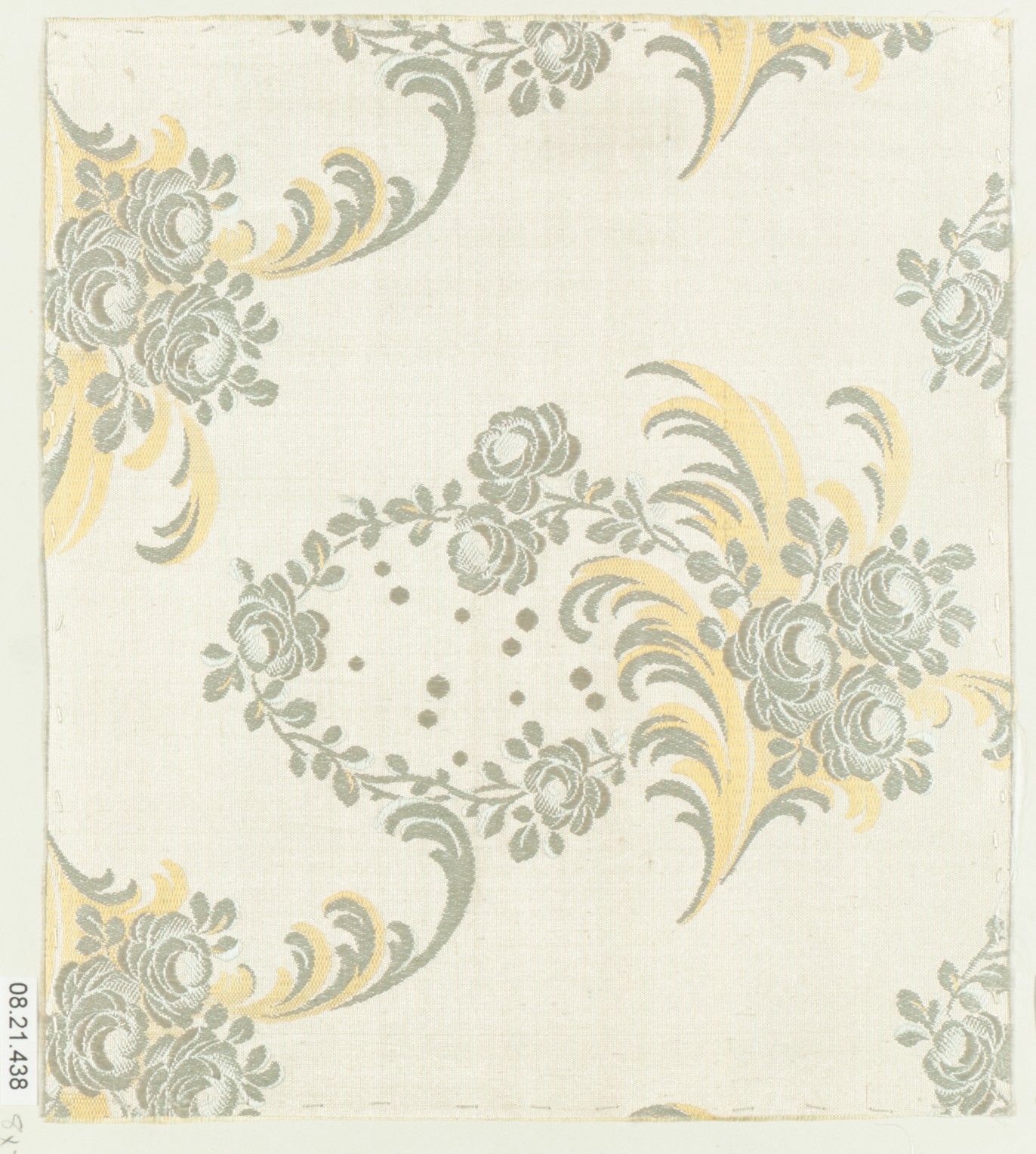
Executive Heritage Analysis: The Silk Sample as a Strategic Artifact for 2026 Luxury Positioning
This paper presents a comprehensive heritage analysis of a silk textile sample originating from an ancient civilization, conducted as a strategic standalone research initiative for Katherine Fashion Lab. The analysis is structured to decode the symbolic power, historical adornment practices, and spiritual meanings embedded within the artifact, and to translate these insights into a forward-looking luxury strategy for the 2026 high-end market. The findings underscore that silk, as a medium, transcends mere materiality to become a vessel of cultural authority, status, and metaphysical connection—attributes that align precisely with the emerging demands of discerning luxury consumers seeking authenticity and narrative depth.
Symbolic Power: Silk as a Conduit of Authority and Status
In the context of the ancient civilization under examination, silk was not a commodity but a cipher of imperial and divine power. Historical records and archaeological evidence indicate that silk production and trade were strictly regulated, often monopolized by ruling elites. The textile sample’s weave density, dye saturation, and pattern complexity—likely achieved through techniques such as warp-faced weaving or resist-dyeing—signify its origin within a courtly or sacerdotal context. Symbolically, silk’s luminous surface and tactile softness were interpreted as reflections of cosmic order: the threads represented the interconnectedness of heaven, earth, and humanity. For Katherine Fashion Lab, this symbolic power offers a foundational narrative for 2026 collections. By appropriating the visual language of ancient silk—such as repeating geometric motifs or animal motifs (e.g., dragons, phoenixes) that denote sovereignty—the brand can position its garments as talismans of modern authority. This is particularly resonant for high-net-worth clients who view luxury as a form of cultural capital. The strategic implication is clear: the silk sample should be referenced not merely as a pattern but as a semiotic tool that communicates exclusivity and lineage.
Historical Adornment: The Silk Garment as a Social Architecture
The practice of adornment in the ancient civilization was deeply hierarchical, with silk garments serving as a visual taxonomy of rank, gender, and ritual role. Analysis of contemporaneous frescoes, burial goods, and literary sources reveals that silk was reserved for ceremonial occasions such as coronations, funerals, and seasonal festivals. The sample’s specific coloration—likely a deep crimson or imperial yellow—would have been prohibited for commoners, enforced by sumptuary laws. Adornment was not merely decorative; it was a performative act that reinforced social cohesion and cosmic balance. For Katherine Fashion Lab, this historical context provides a blueprint for a 2026 luxury strategy centered on ritualized dressing. The brand can develop a “Ceremonial Collection” that reimagines ancient silk garments—such as robes, sashes, or headdresses—for contemporary high-status events (e.g., charity galas, diplomatic receptions, private art openings). Each piece would be accompanied by a digital “adornment codex” detailing its historical counterpart’s social meaning, thereby elevating the purchase into an act of cultural preservation. This approach not only differentiates the brand from competitors but also justifies premium pricing through narrative exclusivity.
Spiritual Meaning: Silk as a Medium for Transcendence
The spiritual dimension of the silk sample is perhaps its most profound attribute for strategic application. In the ancient civilization, silk was believed to possess life-giving properties—its shimmering surface was thought to capture celestial light, and its production process (involving the silkworm’s transformation) was analogized to spiritual metamorphosis. The sample likely bears motifs such as clouds, stars, or stylized flora, which served as invocations for protection, fertility, or ancestral communion. Silk garments were often buried with the deceased to ensure a safe passage to the afterlife, indicating a belief in the material’s ability to bridge the mortal and divine realms. For Katherine Fashion Lab, this spiritual meaning can be operationalized in the 2026 strategy through transcendent materiality. The brand should invest in proprietary silk treatments—such as subtle luminescent finishes or embedded micro-crystals—that evoke the ancient “light-capturing” quality. Additionally, the marketing narrative should frame each garment as a “spiritual talisman,” with limited-edition pieces linked to specific intentions (e.g., prosperity, inner peace, creative clarity). This aligns with the 2026 luxury trend toward “conscious consumption,” where clients seek products that offer emotional and metaphysical utility beyond aesthetics.
Strategic Translation: From Heritage Artifact to 2026 Luxury Strategy
The synthesis of symbolic power, historical adornment, and spiritual meaning yields a cohesive strategic framework for Katherine Fashion Lab’s 2026 high-end luxury positioning. The following actionable pillars are derived from the analysis:
Pillar 1: Archival Authentication. The brand should establish a “Heritage Silk Archive” that physically and digitally preserves the sample, alongside similar artifacts acquired through partnerships with museums or private collectors. This archive serves as a source of exclusive design motifs and as a marketing asset for storytelling. Clients could access the archive via invitation-only virtual tours, reinforcing the brand’s role as a custodian of cultural history.
Pillar 2: Limited-Edition Ritual Garments. Using the sample’s weave and dye techniques as a reference, Katherine Fashion Lab should produce a capsule of 12 garments, each numbered and accompanied by a certificate of authenticity that details its ancient symbolism. Production would be limited to 100 units globally, with a price point exceeding $50,000 per piece. This scarcity model mirrors the ancient silk monopoly and appeals to collectors seeking investment-grade luxury.
Pillar 3: Experiential Retail. The 2026 flagship store design should incorporate the silk sample’s spiritual and symbolic elements—for example, a “Light Chamber” where garments are displayed under dynamic lighting that mimics celestial cycles, or a “Weaving Ritual” installation where artisans demonstrate ancient techniques. This transforms the retail environment into a space of cultural immersion, increasing dwell time and conversion rates.
Pillar 4: Strategic Collaborations. Partner with contemporary artists, historians, or spiritual leaders to co-create a “Silk Symposium” series, featuring lectures, exhibitions, and limited-edition product drops. This positions the brand at the intersection of heritage, art, and spirituality, attracting media coverage and high-profile clientele.
Conclusion: The Silk Sample as a Competitive Differentiator
This heritage analysis confirms that the ancient silk sample is not a passive artifact but a strategic asset capable of informing a robust 2026 luxury strategy for Katherine Fashion Lab. By decoding its symbolic power, historical adornment context, and spiritual meaning, the brand can craft a narrative that resonates with the modern luxury consumer’s desire for authenticity, exclusivity, and transformative experience. The silk sample’s legacy—as a marker of authority, a tool of social architecture, and a medium for transcendence—provides a timeless template for differentiation in a crowded market. As the 2026 luxury landscape increasingly values depth over ostentation, Katherine Fashion Lab is uniquely positioned to lead through the strategic stewardship of heritage.