Deconstructing the Uçetek Entari: A Study in Global Heritage and Couture Craft
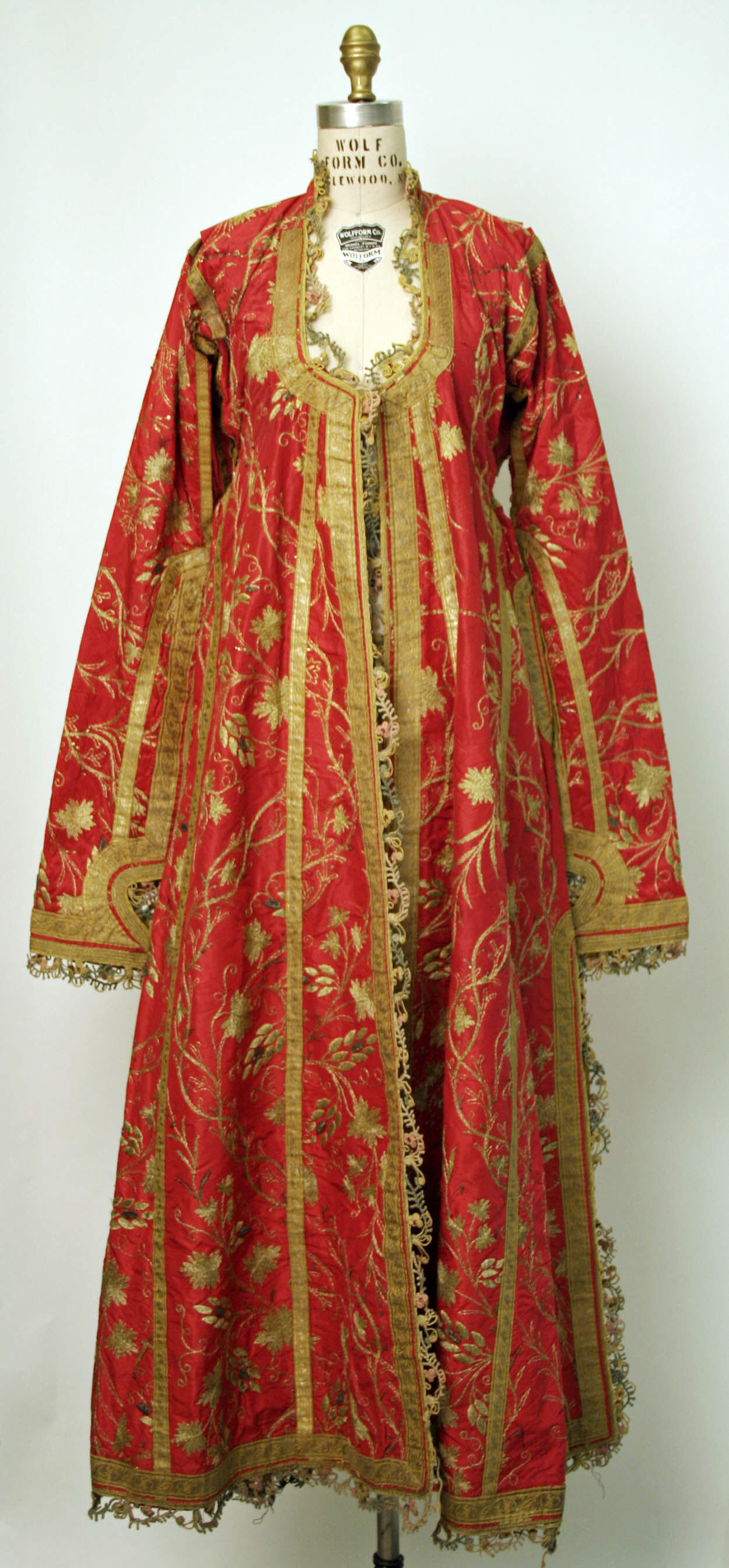
The Uçetek Entari, or Three-Skirt Robe, represents a fascinating convergence of sartorial history, material opulence, and cross-cultural exchange. As a standalone study within the Katherine Fashion Lab, this garment transcends its Ottoman-era origins to become a living document of global heritage. Its construction—a long, open-fronted robe featuring three distinct skirt panels—was traditionally a marker of status and sophistication in the 16th and 17th centuries, worn by elite women in the Ottoman Empire. However, the version under analysis here, rendered in luminous silk and heavily embroidered with couched metallic thread and sequins, elevates it from historical artifact to a masterclass in couture technique. This analysis will dissect the garment’s architectural silhouette, its material narrative, and the intricate embroidery that defines its place in the contemporary fashion canon.
Silhouette and Structural Innovation
The Uçetek Entari’s defining feature is its tripartite skirt, a design that ingeniously marries volume with controlled drape. Unlike the single-panel robes common in many cultures, the three-skirt construction allows for a dynamic interplay of fabric weight and movement. Each panel is typically cut from the waist or hip, falling in overlapping layers that create a cascading effect. In this specific example, the silk foundation is cut with a deep V-neckline and long, fitted sleeves that flare slightly at the cuff, providing a counterpoint to the expansive skirt. The front opening of the robe is unstitched, revealing the inner layers, which in historical contexts would have included a chemise or inner gown. This openness is not merely functional but aesthetic, drawing the eye to the intricate embroidery that adorns the edges and the interior panels.
From a structural perspective, the Uçetek Entari challenges the modern couturier to balance historical authenticity with contemporary wearability. The three panels are often cut on the bias to enhance fluidity, while the waist seam is carefully engineered to support the weight of the metallic embroidery without distorting the silhouette. The robe’s length—typically floor-grazing—demands precise hemming to ensure the panels hang evenly, a task complicated by the stiffness of the couched threads. The result is a garment that feels both regal and ethereal, a testament to the Ottoman tailor’s understanding of geometry and gravity.
The Silk Foundation: A Canvas of Light
Silk was the material of choice for the Ottoman elite, prized for its natural luster and ability to absorb dyes. In this Uçetek Entari, the silk base is likely a charmeuse or a lightweight satin weave, chosen for its smooth surface and reflective qualities. The fabric’s inherent sheen serves as a backdrop for the metallic embroidery, creating a dialogue between matte and glossy textures. Silk’s tensile strength is also crucial; it must support the weight of the couched metal threads without tearing, a challenge that underscores the garment’s couture-level construction. The color of the silk—perhaps a deep burgundy, ivory, or indigo—would have been chosen to complement the gold or silver threads, enhancing the overall luminosity. In the Katherine Fashion Lab context, this silk is not merely a base but an active participant in the garment’s visual impact, catching light in ways that animate the embroidered motifs.
The Embroidery: Couching as a Narrative Technique
The embroidery on this Uçetek Entari is the heart of its couture identity. The technique employed—couching of laid metallic thread wrapped around silk—is a labor-intensive process that requires exceptional skill. Unlike standard embroidery where thread passes through the fabric, couching involves laying a thicker thread (in this case, metallic) onto the surface and securing it with small, almost invisible stitches of a finer thread. This method allows for the creation of bold, continuous lines and intricate patterns without the metallic thread breaking or distorting the silk. The metallic threads themselves are often wrapped around a silk core, adding flexibility and preventing tarnishing. This hybrid material—metal and silk—symbolizes the union of strength and delicacy that defines Ottoman courtly aesthetics.
The motifs are typically botanical or geometric, drawing from the rich visual vocabulary of the Islamic world. Stylized tulips, carnations, and hyacinths—symbols of paradise and abundance—are rendered in sinuous curves, their petals outlined in gold. The metallic sequins, applied sparingly as accents, catch the light like dewdrops, adding a three-dimensional sparkle. The couching technique allows for precision in these complex designs; the laid threads can follow tight curves, creating a sense of movement that mimics the sway of the skirt. Each sequin is hand-sewn, its placement carefully considered to avoid overwhelming the composition. This level of detail is achievable only through hours of handwork, making each Uçetek Entari a unique piece of wearable art.
Global Heritage and Cultural Synthesis
While the Uçetek Entari is distinctly Ottoman, its DNA contains threads from across the globe. The use of metallic thread couching can be traced to Byzantine and Persian traditions, while the silk itself likely traveled along the Silk Road from China. The sequins, though modern in their current form, echo the gold coins and metal discs used in ancient Indian and Central Asian garments for both adornment and as a display of wealth. This synthesis is not accidental; the Ottoman Empire was a crossroads of cultures, and its fashion reflected this hybridity. The three-skirt silhouette itself may have been influenced by the layered robes of Central Asian Turkic peoples, adapted to the luxurious tastes of Istanbul’s court.
In the context of Katherine Fashion Lab, this Uçetek Entari is studied as a case in global heritage—a reminder that couture has always been a conversation between cultures. The robe’s construction techniques, materials, and motifs offer a blueprint for contemporary designers seeking to honor tradition while innovating. It challenges the notion of cultural appropriation versus appreciation, demonstrating how a garment can be both deeply rooted in one culture and universally admired. The Lab’s analysis emphasizes that the Uçetek Entari is not a relic but a living tradition, one that continues to inspire modern silhouettes and embroidery methods.
Conclusion: A Masterpiece of Couture Craft
The Uçetek Entari, as analyzed within Katherine Fashion Lab, stands as a pinnacle of couture craftsmanship. Its three-skirt silhouette is a feat of structural engineering, while the silk foundation provides a luminous canvas for the couched metallic embroidery. The use of laid metallic thread wrapped around silk, combined with hand-sewn sequins, elevates the garment beyond mere clothing into a narrative of cultural exchange and artistic mastery. For the modern fashion scholar, this robe offers lessons in materiality, technique, and the enduring power of global heritage. It is a garment that demands respect for its history and admiration for its art, a true testament to the skill of the artisans who created it and the vision of the curators who preserve its legacy. In a world of fast fashion, the Uçetek Entari reminds us that true couture is timeless, woven from threads of history, culture, and unparalleled craftsmanship.