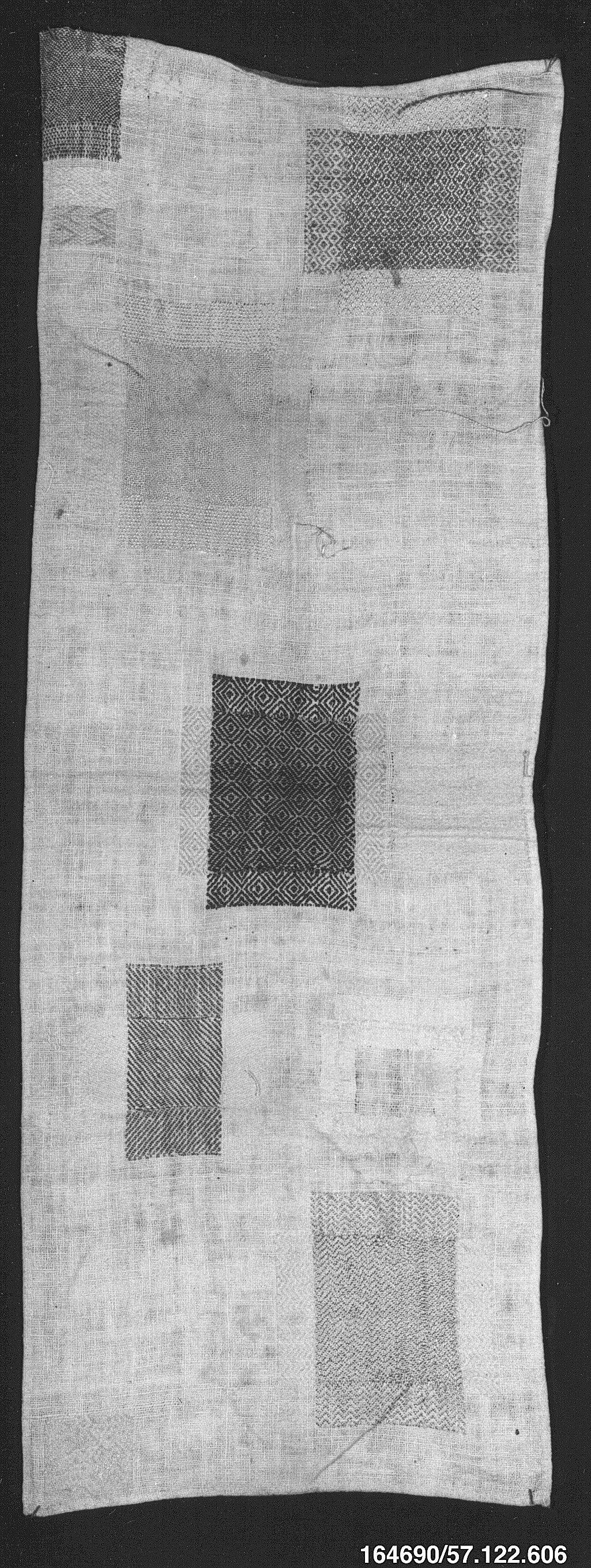
The Embroidered Darning Sampler: A Couture Analysis of Global Heritage Technique and Materiality
Introduction: The Sampler as a Couture Artifact
In the rarefied domain of haute couture, where technical mastery meets artistic expression, the embroidered darning sampler emerges as a profound artifact of global heritage. At Katherine Fashion Lab, we approach this piece not merely as a historical curiosity but as a living document of textile intelligence. The sampler, executed in silk on a linen foundation—with possible cotton elements—represents a standalone study in the intersection of utility, ornamentation, and cultural transmission. This analysis dissects the piece through the lens of couture craftsmanship, material provenance, and its potential to inform contemporary design narratives.
Technical Deconstruction: The Art of Darning as Couture Technique
Darning, often relegated to the realm of mending, is elevated here to a sophisticated embroidery discipline. The sampler showcases a repertoire of stitches that mimic woven structures—damask, twill, and satin weaves—executed with silk thread on a ground fabric that combines linen’s crispness with cotton’s suppleness. The tension control required for such precision is akin to the hand-finishing standards of a Parisian atelier. Each darned patch demonstrates a deliberate variation in density, thread count, and directional flow, transforming a repair technique into a compositional statement. The structural integrity of the silk thread, with its natural luster and resilience, contrasts with the matte absorbency of the linen-cotton base, creating a tactile dialogue that is both functional and aesthetic.
Material Provenance: Silk on Linen and the Global Heritage Matrix
The choice of materials anchors this sampler within a global heritage context. Silk, historically sourced from the sericulture traditions of China, India, and the Byzantine Empire, represents luxury and trade. Linen, derived from flax cultivated across Europe and the Mediterranean, embodies durability and domestic craft. The possible inclusion of cotton—a fiber with roots in India, Africa, and the Americas—adds a layer of colonial and post-colonial exchange. This tripartite materiality suggests a hybrid textile identity, where the sampler becomes a microcosm of global textile flows. The thread count and weave structure of the linen-cotton blend indicate a ground fabric intended for both strength and flexibility, essential for the repeated needle passes of darning. The silk’s sheen, when viewed under raking light, reveals a chromatic depth that underscores the sampler’s role as a pedagogical tool for color theory and pattern replication.
Cultural Semiotics: The Sampler as a Transnational Document
Beyond technique, the sampler encodes cultural narratives. In European traditions, darning samplers were educational instruments for young women, teaching thrift and needlework. In Asian contexts, similar techniques were employed for kimono repair and silk brocade restoration. The Global Heritage designation of this piece suggests a cross-pollination of motifs—perhaps geometric patterns echoing Islamic textile design, floral elements from Chinese embroidery, or geometric darns reminiscent of Andean weaving. The absence of a specific geographic origin invites interpretation as a universal textile language, where the act of darning transcends borders. The sampler’s standalone status—detached from a garment or household item—elevates it to an autonomous artwork, akin to a couture toile or study sketch.
Couture Implications: From Repair to High Art
In contemporary couture, the darning sampler challenges the dichotomy between high fashion and craft. Designers such as Maison Margiela and Bottega Veneta have explored visible mending and deconstruction, but this piece offers a precedent for intentional imperfection. The deliberate variations in stitch length and thread tension—visible under magnification—mirror the human hand’s signature, a quality prized in haute couture’s bespoke ethos. The sampler’s potential as a design resource is immense: it provides a lexicon of textures that can be scaled, rotated, or reinterpreted in digital embroidery or hand-sewn applications. For Katherine Fashion Lab, this piece informs a new collection that celebrates restoration as a form of innovation, where each darn is a narrative of preservation.
Standalone Study: Pedagogical and Curatorial Value
As a standalone study, this sampler functions as a master class in textile science and art history. The educational utility lies in its ability to demonstrate stitch geometry, thread behavior, and fabric interaction without the distraction of a garment silhouette. Curatorially, it occupies a space between decorative art and technical manual. The absence of wear or damage—common in utilitarian samplers—suggests it was created as a deliberate pedagogical tool, perhaps for a textile school or guild. The silk’s resistance to fading and the linen’s stability indicate careful storage, underscoring its value as a reference object. For students of couture, analyzing this sampler cultivates a deep understanding of how surface embellishment can alter a fabric’s drape, weight, and visual rhythm.
Materiality and Sustainability: Lessons for Modern Ateliers
The sampler’s material composition—silk on linen-cotton—offers insights into sustainable luxury. Both fibers are biodegradable, renewable, and historically produced with low environmental impact. The darning technique itself is a precursor to contemporary mending movements, such as visible mending and slow fashion. In an era of fast fashion, this piece advocates for longevity through repair, a principle that aligns with couture’s emphasis on enduring quality. The silk thread, while precious, is used sparingly, demonstrating resourcefulness. The linen-cotton ground, a blend of two natural fibers, challenges the notion that luxury requires synthetic reinforcement. This material philosophy resonates with Katherine Fashion Lab’s commitment to ethical sourcing and artisanal preservation.
Conclusion: The Sampler as a Couture Blueprint
The embroidered darning sampler, with its global heritage roots and technical sophistication, transcends its humble origins to become a couture blueprint. At Katherine Fashion Lab, we view this piece as a testament to the enduring power of handcraft in a digitized world. Its silk-on-linen-cotton construction, meticulous stitch variations, and standalone status offer a rich repository of design intelligence. For the discerning curator or designer, it is a reminder that the most profound innovations often arise from the most fundamental techniques. This sampler is not a relic but a living lexicon—a call to elevate repair to artistry and to honor the global lineage of textile mastery. In the hands of a couturier, it becomes a catalyst for collections that weave history, materiality, and innovation into a single, enduring fabric.