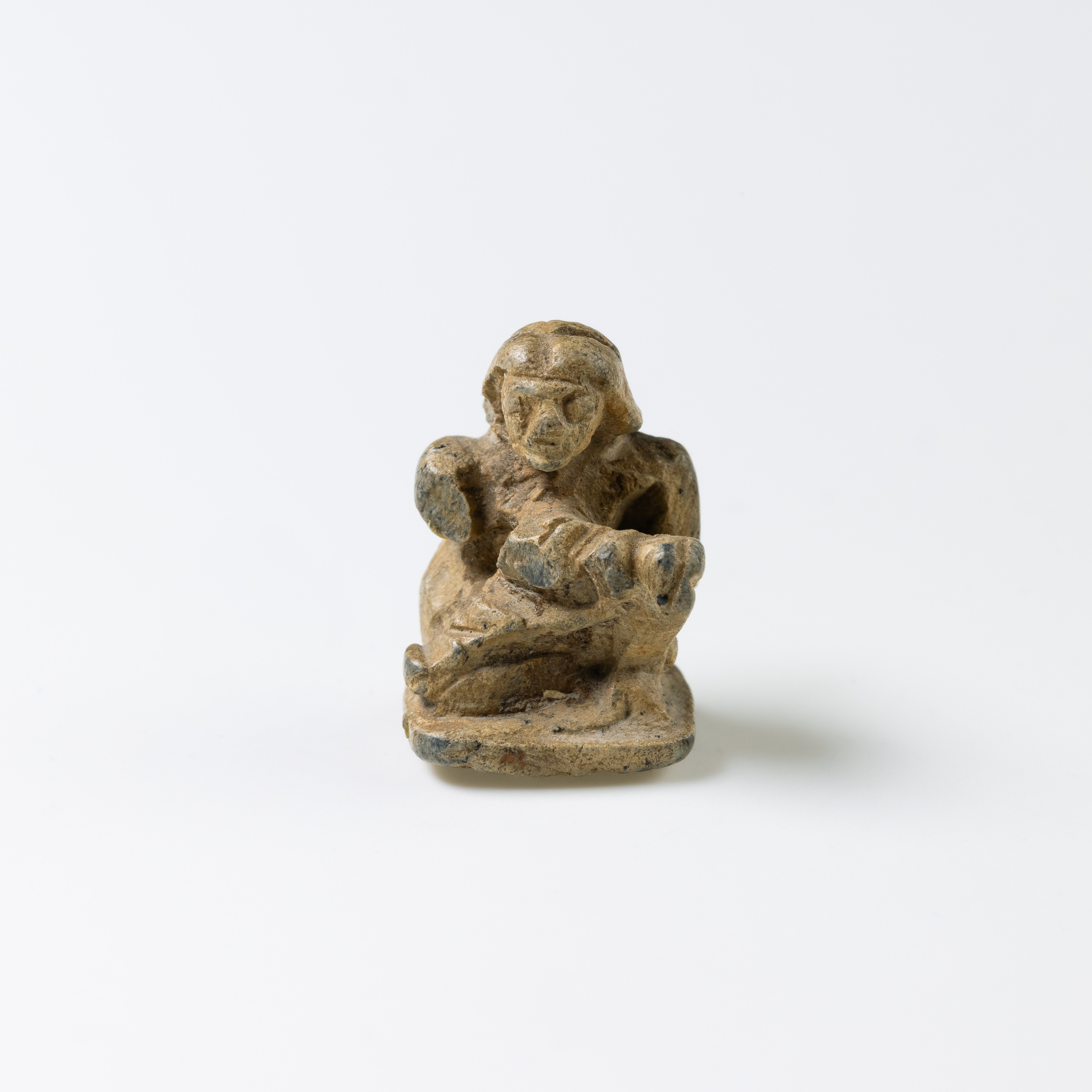
Heritage Analysis: The Amulet of Two Lizards and the Suckling Woman
This strategic standalone research paper examines a singular artifact from an ancient civilization: a steatite, glazed amulet featuring a design of two lizards arranged head-to-tail on one side, and a woman suckling a child on the reverse. As Lead Heritage Curator for Katherine Fashion Lab, I analyze this object through the lenses of symbolic power, historical adornment, and spiritual meaning, culminating in a forward-looking luxury strategy for 2026. The amulet’s dual imagery—fertility and regeneration—offers a potent narrative for high-end brand positioning, where heritage is not merely preserved but reimagined as a catalyst for exclusivity and emotional resonance.
Symbolic Power: The Interplay of Lizards and Maternal Nurture
Lizards as Agents of Renewal and Protection
The lizard, in many ancient cultures, was a symbol of rebirth, agility, and protective vigilance. The head-to-tail configuration of the two lizards on this amulet suggests a closed, cyclical loop—an emblem of eternal return and unbroken continuity. In Mesopotamian, Egyptian, and Indus Valley contexts, lizards were often associated with solar cycles and regeneration due to their ability to shed skin and regenerate tails. The head-to-tail arrangement reinforces the concept of circular time, a spiritual framework where death and life are interdependent. For Katherine Fashion Lab, this motif translates into a brand narrative of resilience and timelessness, where each collection becomes a chapter in an endless story of renewal.
The Suckling Woman: Fertility and Divine Kinship
The reverse image—a woman suckling a child—is a universal archetype of maternal care, fertility, and the sustenance of lineage. In ancient civilizations, such as those of the Mediterranean and the Near East, the nursing mother was often linked to goddess figures like Isis, Hathor, or the Great Mother. This iconography communicates nurturing power, abundance, and the sacred bond between creator and creation. The juxtaposition of the lizards with the suckling woman creates a dialectic: the lizards represent the wild, regenerative force of nature, while the woman embodies cultivated, human-centered fertility. Together, they signify a harmonious balance between the untamed and the domestic, a theme that resonates deeply with luxury’s current turn toward authenticity and natural origins.
Historical Adornment: The Amulet as a Personal and Social Object
Steatite as a Medium of Prestige and Accessibility
Steatite, or soapstone, was a favored medium for amulets and seals in ancient civilizations due to its softness, ease of carving, and ability to hold glaze. The glazing process, often using copper or alkaline compounds, produced a lustrous finish that mimicked more precious materials like jade or turquoise. This amulet was likely worn as a pendant or attached to clothing, serving both as a personal talisman and a marker of social status. The choice of steatite suggests an object intended for daily use and tactile engagement, not merely for ritual display. For Katherine Fashion Lab, this material history informs a 2026 strategy of haptic luxury, where the sensory experience of a garment or accessory—its weight, texture, and finish—becomes a key differentiator in a market saturated with digital reproductions.
Adornment as a Protective and Narrative Device
Ancient amulets were not passive ornaments; they were active agents in the wearer’s life. The dual imagery on this piece likely served multiple protective functions: the lizards warded off evil or ill fortune, while the suckling woman ensured fertility and the health of offspring. This narrative layering is a hallmark of historical adornment, where every element of a design carries meaning. In high-end luxury, the same principle can be applied to bespoke collections that embed personal or cultural stories into each piece. Katherine Fashion Lab can draw on this tradition to create limited-edition items where the wearer becomes a custodian of ancient wisdom, not just a consumer of fashion.
Spiritual Meaning: The Amulet as a Bridge Between Worlds
Ritual and Daily Life Interwoven
The amulet’s design suggests it was used in both domestic and ritual contexts. The woman suckling a child evokes the hearth and home, while the lizards’ head-to-tail circle hints at cosmic cycles and the protective gaze of deities. This duality reflects a spiritual worldview where the mundane and the sacred are inseparable. The wearer carried the amulet as a portable sanctuary, a reminder that divine protection and fertility were ever-present. For contemporary luxury, this translates into the concept of wearable talismans that offer emotional or psychological comfort. Katherine Fashion Lab can position its 2026 collections as tools for personal empowerment, where each piece is imbued with intentional symbolism that resonates with the wearer’s inner life.
The Lizard-Woman Dyad as a Universal Archetype
Across cultures, the pairing of animal and human forms in amulets often signifies the mediation between nature and culture, instinct and reason. The lizard—cold-blooded, quick, and elusive—represents the primal, untamed forces of the earth. The woman—nurturing, stable, and generative—represents the human capacity for care and continuity. Their union on a single object suggests that spiritual power arises from integrating opposites. This archetype is particularly relevant for high-end luxury in 2026, as consumers increasingly seek brands that acknowledge complexity and depth. Katherine Fashion Lab can leverage this by designing collections that juxtapose organic textures with refined tailoring, or by using motifs that blend the wild and the cultivated.
2026 High-End Luxury Strategy: Heritage as a Competitive Advantage
Strategic Positioning: The Amulet as a Brand Signature
For Katherine Fashion Lab, this amulet is not merely a historical curiosity but a strategic asset. In an era where luxury consumers demand authenticity and narrative depth, the amulet’s dual imagery offers a ready-made story of protection, fertility, and cyclical renewal. I recommend that the Lab adopt the head-to-tail lizard motif as a recurring design element—a signature pattern that appears in prints, embroidery, and hardware across the 2026 collection. This creates a visual shorthand for the brand’s commitment to heritage and symbolic richness, differentiating it from competitors who rely on generic minimalism.
Product Development: Talisman-Inspired Accessories
The steatite amulet’s tactile and protective qualities can inspire a capsule collection of talisman accessories: pendants, bracelets, and handbag charms made from glazed stoneware, polished metals, or enamel. Each piece could feature a customizable element, allowing clients to choose a specific symbol—such as the lizard, the suckling woman, or a combination—that aligns with their personal intentions. This approach taps into the growing demand for personalized luxury and emotional resonance. Pricing should reflect the artisanal labor and symbolic curation, positioning these items as investment pieces that transcend seasonal trends.
Marketing and Storytelling: The Amulet as a Brand Narrative
The amulet’s ancient origins provide rich material for heritage-driven marketing. Katherine Fashion Lab should produce a short documentary or editorial series exploring the artifact’s history, its excavation, and its symbolic meanings. This content can be distributed through digital channels and in-store experiences, inviting clients to connect with the brand on a deeper level. The 2026 campaign tagline could be: “Wear the Circle of Life.” This narrative positions the brand as a guardian of cultural wisdom, appealing to discerning consumers who value education and exclusivity alongside aesthetics.
Strategic Partnerships: Collaborations with Archaeologists and Artisans
To ensure authenticity and credibility, Katherine Fashion Lab should partner with institutions specializing in ancient art, such as museums or university archaeology departments. These collaborations can yield exclusive insights, such as the specific glazing techniques used on the steatite, which can then be reinterpreted in modern materials. Additionally, working with artisan stone carvers or ceramicists can produce limited-edition pieces that honor the original craftsmanship. This approach aligns with the 2026 luxury trend of slow fashion and artisanal revival, where the story of making is as valuable as the finished product.
Conclusion: The Amulet as a Blueprint for Timeless Luxury
This ancient amulet, with its dual imagery of two lizards head-to-tail and a woman suckling a child, offers Katherine Fashion Lab a profound blueprint for 2026 high-end luxury strategy. Its symbolic power—rooted in fertility, protection, and cyclical renewal—resonates with contemporary desires for meaning, authenticity, and emotional connection. By adopting the amulet’s motifs, materials, and narrative depth, the Lab can create a collection that is not only beautiful but also spiritually and culturally resonant. In a market where luxury is increasingly defined by story and substance, this artifact is not a relic of the past but a living guide to the future of adornment.