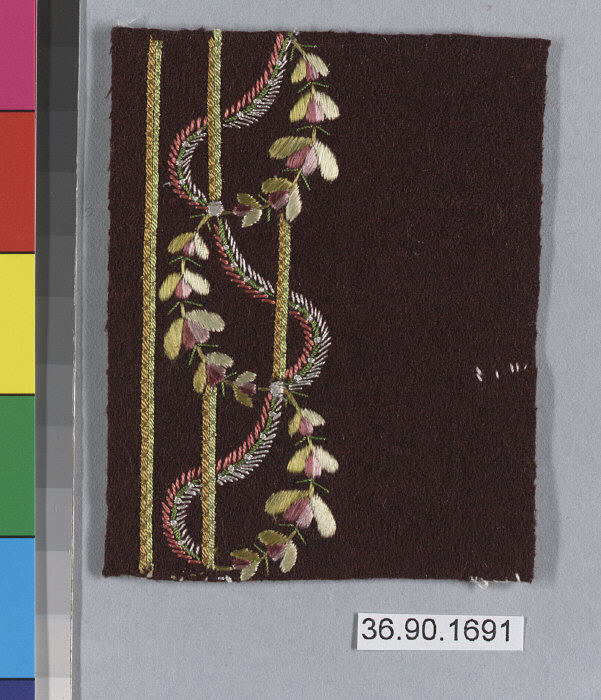
Deconstructing the Global Heritage Sample: A Study in Silk on Felt
In the rarefied world of couture, where each stitch is a narrative and every textile a testament to lineage, the Katherine Fashion Lab presents a standalone study that transcends mere garment construction. This analysis dissects a singular Sample, conceived from a foundation of Global Heritage and executed in the unlikely yet masterful marriage of silk on felt. This is not a piece for the runway of commerce, but for the runway of intellectual inquiry—a prototype that interrogates the very definitions of luxury, tradition, and materiality.
The Paradox of Material: Silk and Felt in Dialogue
Silk as Liquid Heritage
Silk, historically the thread of empires—from the Chinese dynasties to the Byzantine courts—represents an unbroken chain of artisanal mastery. In this Sample, the silk is not merely a fabric; it is a repository of global memory. The warp and weft carry the whispers of the Silk Road, the meticulous sericulture of Japan, and the opulent brocades of Renaissance Italy. Yet, the Katherine Fashion Lab does not deploy silk in its expected form—a smooth, lustrous surface demanding reverence. Instead, the silk is deconstructed, its fibers sometimes raw, sometimes frayed, suggesting a narrative of travel and wear. This is not a pristine artifact; it is a living document of global exchange, where the silk’s sheen is intentionally muted by its partner.
Felt as Earthly Anchor
Felt, in stark contrast, is the antithesis of aristocratic fiber. Born from nomadic cultures—the yurts of Mongolia, the steppes of Central Asia, the kilims of Anatolia—felt is democratic, tactile, and primal. It is made not by weaving, but by matting, compressing, and agitating fibers (often wool) under heat and moisture. In this Sample, the felt provides a structural and conceptual counterweight to the silk. Where silk is fluid and historical, felt is solid and immediate. The Katherine Fashion Lab uses a dense, charcoal-grey felt as the base—a canvas that absorbs rather than reflects light. This choice is deliberate: the felt grounds the silk’s ethereal narrative, preventing it from floating into mere decoration. The result is a tension between the ephemeral and the enduring, the global and the local.
Construction and Technique: A Study in Contrast
Layering as Cultural Cartography
The Sample is constructed through a process of strategic layering. The silk is not sewn onto the felt in a conventional appliqué; rather, it is embedded through a technique reminiscent of sashiko stitching—a Japanese method of functional reinforcement that has evolved into an aesthetic of humble beauty. Here, the stitches are not hidden; they are celebrated. Each running stitch of silk thread (dyed in deep indigo and saffron) pierces both the silk overlay and the felt base, creating a topography of connection. This stitching pattern mimics the routes of ancient caravans—linear, interrupted, and sometimes crossing. The Katherine Fashion Lab thus transforms a technical process into a cartographic metaphor, mapping the Silk Road onto a single garment panel.
Textile Collage and Negative Space
Furthering the analysis, the Sample employs a collage aesthetic. Patches of silk in varying weaves—charmeuse, organza, and dupioni—are arranged asymmetrically. Some are left raw-edged, allowing the silk filaments to fray into the felt, while others are precisely cut to reveal the felt beneath. This interplay of positive and negative space is critical. The felt is not merely a background; it is an active participant. Where the silk recedes, the felt’s matte surface asserts itself, offering a moment of visual rest. This dialogue between materials echoes the philosophical tension between heritage and modernity. The silk represents the weight of global tradition; the felt, the blank slate of contemporary creation. The Katherine Fashion Lab refuses to resolve this tension, instead leaving it as an open question for the viewer.
Color Palette and Symbolism
Earthy Neutrals and Jewel Accents
The color story is deliberately restrained, yet potent. The felt base is a deep charcoal, evoking the soil of multiple continents—the volcanic earth of the Andes, the loess of the Yellow River Valley. Over this, the silk introduces muted jewel tones: a faded vermilion, a tarnished gold, a dusty turquoise. These are not the bright, synthetic hues of fast fashion; they are colors that suggest age, travel, and exposure. The vermilion recalls the lacquer of Chinese furniture; the gold, the gilding of Byzantine icons; the turquoise, the lapis lazuli of Afghan mines. Each color is a geographic and historical marker, reinforcing the Global Heritage narrative without descending into cliché.
Monochromatic Felt as Unifying Force
The charcoal felt serves as a visual anchor in this chromatic journey. Without it, the silk colors might clash or compete. The felt’s neutrality allows the silk to speak individually, yet it also binds them into a cohesive whole. This is a masterful curatorial decision by the Katherine Fashion Lab: the felt functions like a museum wall, against which precious artifacts (the silk fragments) are displayed. The Sample becomes a portable exhibition of global textile heritage, curated for a single body.
Silhouette and Form: The Standalone Study
Architectural Draping on a Minimalist Frame
As a standalone study, the Sample is not constrained by commercial patterns or seasonal trends. Its silhouette is architectural yet soft. The felt provides structure—a stiff, almost sculptural base that holds its shape without boning. The silk, however, is draped in asymmetric folds that cascade over the felt, creating a sense of movement and fluidity. The overall form is a hybrid between a cape and a cuirass, covering the torso while leaving the arms and shoulders exposed. This silhouette references both the armor of medieval knights and the kimono’s linear grace, once again fusing global heritage into a single, coherent design.
Absence of Fastenings: A Meditation on Impermanence
Notably, the Sample has no visible closures. No buttons, zippers, or hooks. It is designed to be worn like a second skin, slipped over the head or wrapped around the body. This absence is a deliberate statement: the garment is not a possession to be fastened and unfastened, but a temporary inhabitation. It echoes the nomadic roots of felt and the ephemeral nature of silk. The Katherine Fashion Lab thus invites the wearer to consider impermanence and adaptability—core tenets of a globalized heritage that is constantly in flux.
Conclusion: A Blueprint for Future Couture
The Katherine Fashion Lab’s Sample in Silk on Felt is far more than a prototype; it is a manifesto in material form. By juxtaposing silk’s aristocratic history with felt’s democratic origins, the Lab challenges the fashion industry to redefine luxury not as opulence, but as meaningful dialogue. The Global Heritage origin is not a static reference; it is a living, breathing conversation between cultures, techniques, and epochs. This standalone study proves that couture can be a site of intellectual exploration, where each fiber tells a story of migration, adaptation, and resilience. For the discerning client, this Sample is not merely a garment—it is a curated artifact of our shared human journey, wearable yet profound, ancient yet urgently contemporary.