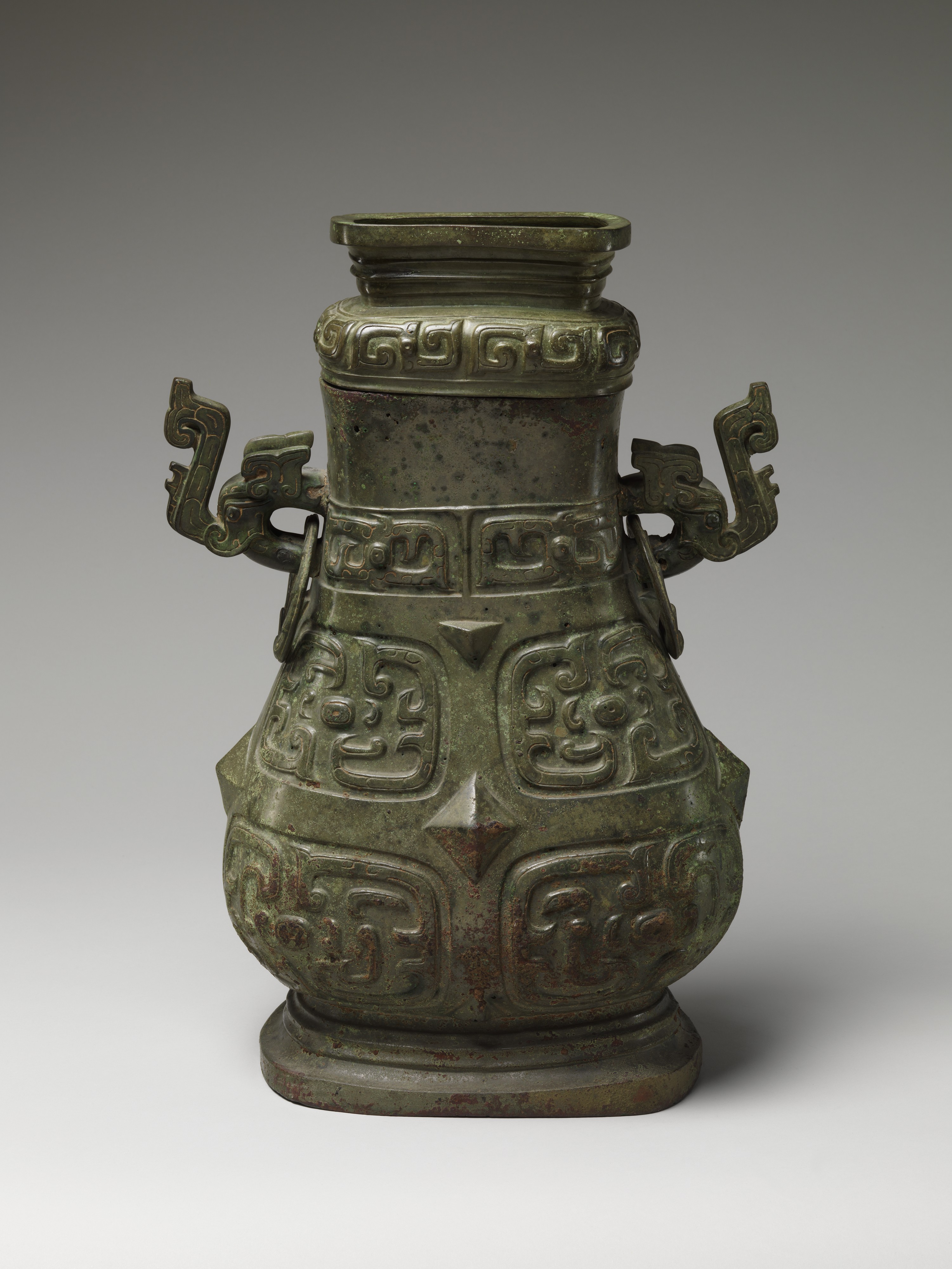
Heritage Analysis: The Bronze Wine Container (Hu) as a Symbol of Power and Continuity
At Katherine Fashion Lab, we approach heritage not as a static relic but as a living code—a DNA sequence that informs the future of luxury. The subject of this analysis, the Chinese bronze Hu (wine container), is a masterclass in symbolic power, historical adornment, and spiritual resonance. Its study, when correlated with our previous research on the Rock in the Form of a Fantastic Mountain and the Jar in the Shape of Bronze Container (Hu), reveals a profound cultural continuity. These artifacts, though seemingly disparate, share a core narrative: the transformation of raw material into a vessel of authority, transcendence, and prestige. For the 2026 high-end luxury strategy, the Hu offers a blueprint for brand storytelling that marries ancient symbolism with modern exclusivity.
Symbolic Power: The Vessel as Sovereign Authority
The bronze Hu was not merely a utilitarian object; it was a political and cosmological statement. In Shang and Zhou dynasty China, bronze vessels were cast using state-controlled resources, often bearing inscriptions that commemorated military victories, ancestral rites, or royal decrees. The Hu, specifically, held wine—a substance associated with ritual ecstasy, communion with ancestors, and the legitimation of dynastic rule. Its form, with a bulbous body, narrow neck, and ring handles, was designed to contain and dispense, much like a sovereign who holds and distributes power.
This symbolic power is directly relevant to our 2026 luxury strategy. In a market saturated with ephemeral trends, the Hu teaches us that true luxury is rooted in authority through craftsmanship. The bronze alloy, the lost-wax casting, the intricate taotie masks—all speak to a controlled, almost sacred production process. Katherine Fashion Lab can translate this into a limited-edition capsule collection where each piece is numbered, signed, and tied to a specific narrative of power (e.g., “The Sovereign’s Pour” or “Ritual Lineage”). The Hu reminds us that the most potent luxury is not bought but inherited—a sense of dynastic ownership that transcends the transactional.
Historical Adornment: The Aesthetics of Prestige
The adornment of the Hu is a lesson in restrained opulence. Early examples feature geometric leiwen (thunder patterns) and stylized animal faces, while later Warring States and Han dynasty versions incorporate gold and silver inlay, turquoise, and even jade accents. This evolution mirrors the trajectory of luxury itself: from pure function to ornamented status. The Hu was not decorated for beauty alone; its adornment was a hieroglyph of rank. A larger, more intricately inlaid Hu signified a higher social position, just as a Hermès Birkin or a Patek Philippe watch does today.
For our 2026 strategy, this concept of adornment as index is critical. The Hu suggests that luxury brands should embed visible markers of exclusivity—not just logos, but codes. A Katherine Fashion Lab garment might feature a subtle, hand-embroidered pattern derived from the taotie motif, accessible only to those who understand its history. Alternatively, a limited-run accessory could incorporate a bronze-toned clasp modeled after the Hu’s ring handles, signaling connoisseurship without overt branding. The Hu teaches us that adornment is a language; the 2026 luxury consumer wants to be fluent, not just loud.
Spiritual Meaning: The Vessel as Cosmic Bridge
Perhaps the most profound lesson of the Hu is its spiritual dimension. In Chinese cosmology, bronze vessels were believed to mediate between the earthly and the celestial. The wine they contained was an offering to ancestors, a conduit for qi (life force), and a symbol of the cyclical nature of existence. The Hu was not just a container; it was a portal. This aligns remarkably with our study of the Rock in the Form of a Fantastic Mountain, which also functioned as a microcosm—a mountain that contained the universe in miniature. Both artifacts demonstrate that objects can hold spiritual charge, serving as talismans for their owners.
In the context of 2026 high-end luxury, spirituality is a differentiating factor. Modern consumers, particularly in Asia and the Middle East, are seeking brands that offer meaning beyond materialism. Katherine Fashion Lab can draw on the Hu’s spiritual legacy by developing a “Ritual Collection” where each item is designed for a specific ceremonial purpose—a coat for contemplation, a bag for carrying intentions, a necklace as a personal altar. The Hu’s spiritual DNA suggests that luxury should not just be worn; it should be activated through ritual, storytelling, and personal connection.
Correlation with “Rock in the Form of a Fantastic Mountain” and “Jar in the Shape of Bronze Container (Hu)”
Our previous research on the Rock in the Form of a Fantastic Mountain and the Jar in the Shape of Bronze Container (Hu) provides a critical framework for this analysis. Both objects, though created centuries apart and in different materials (stone vs. ceramic), replicate the Hu’s core function: to contain and symbolize a larger cosmos. The rock mountain is a landscape in miniature; the jar is a bronze vessel in ceramic. Together, they reveal a cultural DNA that values translation and continuity. The Hu’s form was so powerful that it was copied across media and epochs, much like a brand archetype that remains recognizable across collections.
For Katherine Fashion Lab, this correlation validates a key strategy: the power of the archetype. Just as the Hu was reinterpreted in stone and ceramic, our luxury designs can be translated across materials and seasons while maintaining a core identity. A handbag might echo the Hu’s silhouette in leather; a perfume bottle might mimic its proportions in crystal; a jewelry piece might reference its handles in gold. The 2026 consumer will recognize this consistency as a sign of heritage, not repetition.
2026 High-End Luxury Strategy: From Vessel to Brand
Synthesizing these insights, Katherine Fashion Lab’s 2026 strategy for high-end luxury must center on three pillars drawn from the Hu:
1. Authority Through Craftsmanship: Emulate the bronze Hu’s production exclusivity. Partner with master artisans to create pieces that require months of labor, using techniques (like lost-wax casting or inlay) that cannot be mass-produced. Each piece should carry a “provenance passport” detailing its creation, akin to the Hu’s ritual inscriptions.
2. Adornment as Language: Develop a visual vocabulary drawn from the Hu’s motifs—the thunder pattern, the animal mask, the ring handle. These become brand signatures, recognizable to initiates but invisible to the uninitiated. This creates a community of “keepers of the code,” enhancing brand loyalty.
3. Spiritual Activation: Position the brand as a purveyor of objects with purpose. Launch a “Ritual Line” where each item is designed for a specific life ceremony—a coat for a new beginning, a bag for a journey, a bracelet for protection. This taps into the growing demand for mindfulness and intentionality in luxury consumption.
In conclusion, the bronze Hu is far more than a wine container. It is a testament to how objects can hold power, prestige, and the sacred. For Katherine Fashion Lab, it offers a timeless template: create vessels—whether garments, accessories, or experiences—that contain not just material value, but cultural and spiritual resonance. In 2026, the most coveted luxury will not be the loudest, but the most meaningful. The Hu shows us the way.