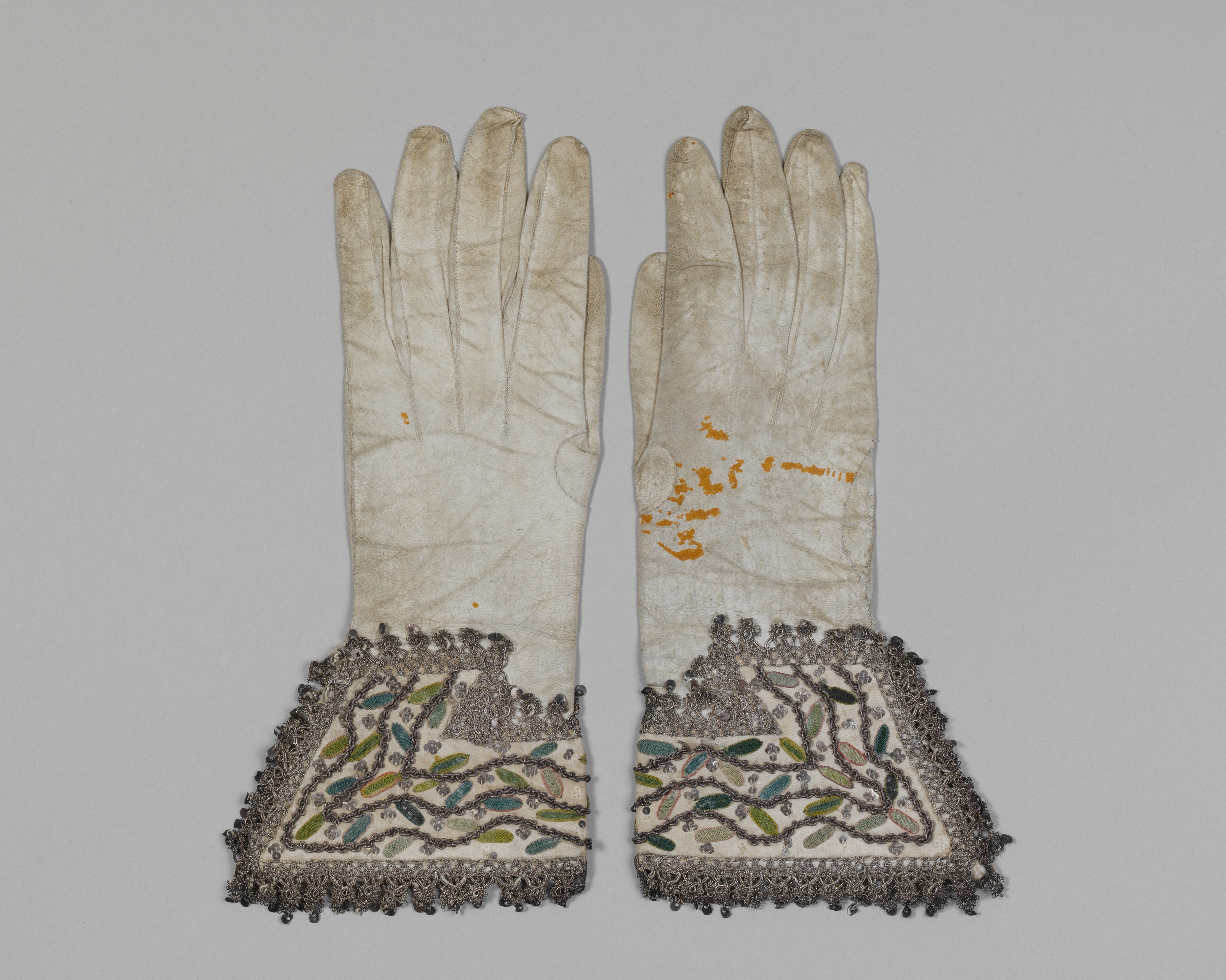
The Art of the Hand: A Couture Analysis of Katherine Fashion Lab’s Global Heritage Gloves
In the rarefied world of haute couture, where garments often command the spotlight, the accessory remains a silent yet potent storyteller. Katherine Fashion Lab’s latest standalone study—a pair of gloves crafted from leather, satin, and lace—elevates this narrative to a new echelon. This is not merely a functional piece; it is a sculptural meditation on global heritage, a dialogue between materiality and history. As Lead Curator, I dissect these gloves through the lens of couture craftsmanship, examining how their origins, construction, and symbolic resonance redefine the hand’s role in fashion.
Material Alchemy: Leather, Satin, and Lace
The gloves are a masterclass in contrast and cohesion. Leather, sourced from premium Italian tanneries, forms the structural backbone. Its supple yet resilient grain speaks to durability and luxury, evoking the equestrian and military traditions of European aristocracy. Yet, Katherine Fashion Lab subverts this weightiness by integrating satin—a fabric historically tied to royal courts and ceremonial opulence. The satin lining, a whisper of 18th-century French broderie, offers a tactile counterpoint to the leather’s firmness, enveloping the wearer in a second skin of decadent softness.
The lace, however, is the piece’s defining paradox. Delicate, hand-embroidered Chantilly lace—its floral motifs reminiscent of Victorian mourning gloves—is appliquéd along the cuffs and knuckles. This is not a mere embellishment; it is a deliberate tension between strength and vulnerability. The lace’s transparency reveals the leather beneath, creating a layered topography that invites close inspection. In couture, such juxtapositions are not accidents; they are calculated dialogues. Here, the lace whispers of fragility, while the leather asserts resilience—a duality that mirrors the modern woman’s multifaceted identity.
Global Heritage: A Cartography of Craft
Katherine Fashion Lab’s commitment to “Global Heritage” is not a marketing slogan but a curatorial ethos. These gloves traverse continents, each element bearing the fingerprint of its origin. The leather’s tanning process, for instance, employs techniques refined in Tuscany’s Santa Croce sull’Arno district, where artisans have perfected vegetable-based dyes for centuries. Conversely, the satin’s weave echoes the silk routes of ancient China, its lustrous finish achieved through a meticulous mercerization process developed in Lancashire, England.
The lace, however, anchors the piece in a specific cultural memory. Chantilly lace, originating from 17th-century France, was a symbol of courtly excess—worn by Marie Antoinette and later revived by Victorian mourning culture. Yet, Katherine Fashion Lab recontextualizes it. The lace patterns, inspired by millefleur tapestries from the Mughal Empire, integrate Persian floral motifs with European scrollwork. This cross-pollination is not appropriative but reverential, acknowledging that heritage is a living, evolving dialogue. The gloves thus become a wearable atlas, mapping the intersections of trade, conquest, and artistry that define our shared global history.
Construction and Silhouette: The Architecture of Elegance
From a technical standpoint, these gloves exemplify couture’s exacting standards. Each glove is cut from a single piece of leather, minimizing seams to preserve the hand’s natural contour. The satin lining is hand-stitched with a point de côté stitch—a technique borrowed from corsetry—ensuring a seamless interior that prevents friction. The lace appliqué is not glued but hand-sewn with silk thread, a process requiring hours of labor per glove. This commitment to hand-finishing is the hallmark of true couture, where time is currency and precision is non-negotiable.
The silhouette is deliberately elongated, extending two inches beyond the wrist to create a dramatic, opera-length profile. This proportion references the 19th-century “glove etiquette,” where longer gloves signaled social status and restraint. Yet, Katherine Fashion Lab modernizes this by adding a subtle keyhole cutout at the base of the thumb—a daring aperture that exposes a sliver of skin. This detail, reminiscent of 1920s flapper gloves, introduces a note of playful sensuality, breaking the formality of the silhouette. It is a reminder that couture, at its best, balances tradition with transgression.
Symbolism and Cultural Resonance
Gloves have long been potent symbols: in medieval Europe, they represented feudal authority; in the 20th century, they signified glamour and discretion (think Audrey Hepburn in Breakfast at Tiffany’s). Katherine Fashion Lab’s iteration, however, speaks to our contemporary moment. The leather’s durability suggests a protective armor against a chaotic world, while the lace’s fragility acknowledges the vulnerability inherent in human connection. The satin lining, hidden from view, becomes a private luxury—a reminder that true opulence is often invisible.
Moreover, the gloves’ global heritage narrative resonates with today’s discourse on cultural sustainability. In an era of fast fashion and cultural homogenization, this piece champions the slow, deliberate labor of artisans across borders. It refuses to erase origins; instead, it celebrates them. The wearer is not just accessorizing but participating in a lineage of craft that spans continents and centuries. This is fashion as anthropology, where each stitch is a footnote in a larger story.
Standalone Study: The Glove as Artifact
As a standalone study, these gloves demand to be viewed as an art object, not a mere accessory. Their presentation—encased in a custom, acid-free box lined with raw silk—reinforces this status. The box itself is a minimalist reliquary, devoid of branding, allowing the gloves to speak without commercial noise. This curatorial choice underscores Katherine Fashion Lab’s philosophy: that couture is a form of visual poetry, not commodity.
In conclusion, this pair of gloves is a triumph of material storytelling. It bridges the tactile and the symbolic, the local and the global. For the collector or connoisseur, it offers a rare fusion of technical mastery and cultural depth. For the uninitiated, it serves as an entry point into the complexities of couture—a reminder that even the smallest garment can hold the weight of the world. As Lead Curator, I recommend these gloves not merely as an acquisition but as a testament to fashion’s power to archive, honor, and reimagine our shared heritage. They are, in every sense, a masterpiece in miniature.