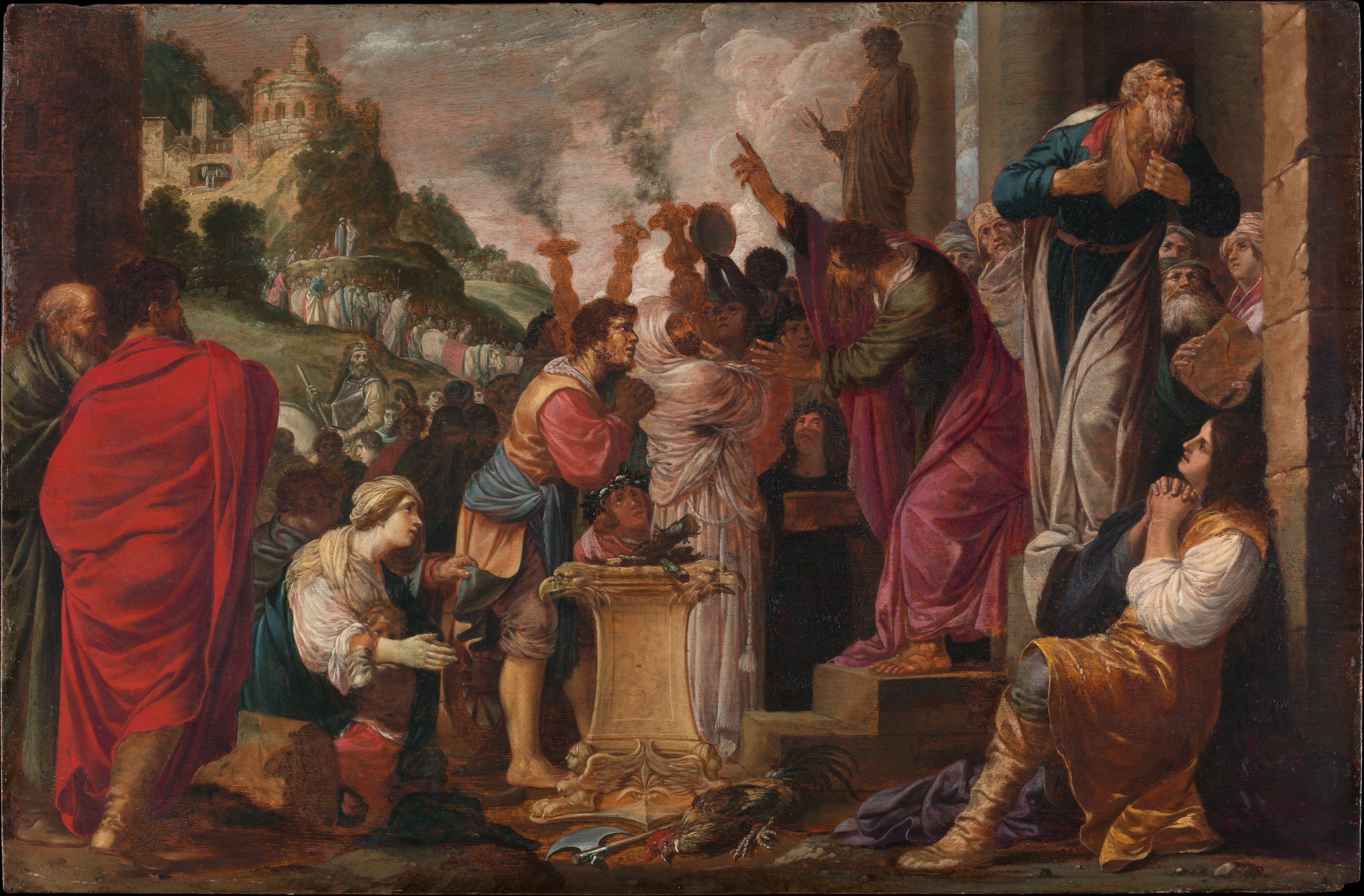
Paul and Barnabas at Lystra: A Couture Analysis of Divine Fabric and Mortal Perception
Within the curated archives of global heritage art, certain works transcend their immediate religious or historical narrative to speak a potent visual language of texture, drape, and constructed identity. The painting Paul and Barnabas at Lystra, executed in oil on wood, presents not merely a biblical episode but a profound case study in sartorial semiotics and the catastrophic failure of cultural translation. For Katherine Fashion Lab, this standalone study offers a rich tapestry to dissect the collision of two sartorial lexicons: the austere, itinerant fabric of apostolic authority versus the ornate, symbolic vestments of classical paganism. The scene is a fashion misreading of epic proportions, where cloth and cut become the primary text, and the body itself is a contested site of meaning.
The Apostolic Silhouette: Fabric as Doctrine
Our analysis must begin with the central figures, Paul and Barnabas. Their attire is not an absence of fashion but a deliberate, constructed statement. Rendered in oil, the texture of their garments is crucial. We envision heavy, undyed wool or coarse linen—materials that speak of practicality, endurance, and a conscious rejection of Hellenistic luxury. The drape is likely voluminous yet restrictive, with folds that are deep and angular rather than fluid, creating a silhouette that is grounded and vertical. This is the architecture of humility, a sartorial strategy that communicates asceticism and divine purpose.
The color palette, as interpreted through the medium's potential, would be earthy: ochres, umbers, and dusty blues. These are non-colors in the context of Lystra’s visual culture, refusing to engage in the chromatic rhetoric of status or deity. There are no clavi (the purple stripes denoting Roman rank), no intricate borders. The cut is fundamentally foreign—perhaps a simple tunic and pallium (a Roman mantle) worn in a manner distinct from local convention. This ensemble performs a narrative of journey and prophecy; it is wearable theology. The fabric, stained by travel and sun, tells a story of origin far removed from Lycaonia, making the apostles walking signifiers of the alien and the new.
The Lycaonian Catalogue: Vestments as Worldview
Contrast this with the sartorial ecosystem of Lystra. The citizens, upon witnessing a miraculous healing, immediately engage in a process of analogous dressing. They interpret the apostles’ power through their own entrenched vestimentary code. In the Greco-Roman pantheon, gods manifested in idealized human form, but their divinity was signaled through attribute, physique, and often, specific articles of clothing or lack thereof. Zeus was synonymous with authority and majesty, Hermes with speed and communication.
The painting would likely depict the priest of Zeus and the eager populace adorned in the sartorial vocabulary of pagan worship. We analyze this as a ceremonial collection: the priest possibly in a white, sacrificial linen tunic, perhaps a wreath upon his head. The crowd may wear their finest—soft, colored woolens, carefully arranged togas or himation for the elite, signaling their participation in a sacred civic event. The offering of bulls and garlands, elements of ritual pageantry, extends this language. The garlands are organic accessories, the bulls themselves almost living, sacrificial fabric. This is a world where divinity is appeased and accessed through a prescribed, material spectacle.
The Critical Misreading: A Breakdown in Sartorial Syntax
The dramatic core of the scene is a catastrophic error in interpretation. The Lycaonians do not see two Jewish missionaries; they see a walking capsule collection of divine power. Barnabas, perhaps as the more vocal or imposing figure, is mapped onto the archetype of Zeus: the father god, the chief. His coarse mantle is misread as a symbol of raw, untamed authority. Paul, the speaker, is mapped onto Hermes, the messenger god. His practical attire is misconstrued as the streamlined, efficient garb of the divine herald.
This is where oil on wood becomes a masterful medium for expressing this clash. The painter can use the lush, blendable quality of oil to render the soft sheen of Lycaonian linen and the rough, matte texture of apostolic wool in stark juxtaposition. The grain of the wood beneath might subtly influence the rendering of fabric, adding an underlying tension. The apostles’ horrified reactions—tearing their garments—is the ultimate deconstructive act. This is anti-fashion in its most violent form, a frantic, physical rejection of the assigned costume. Rending their clothes, they seek to destroy the false narrative woven around them, reasserting their humanity and the singularity of the God they serve. It is a performative, sartorial scream.
Enduring Relevance: The Lab's Perspective on Fabric and Meaning
For Katherine Fashion Lab, this episode is a timeless lesson in the inherent ambiguity of dressed communication. It underscores that garments are not stable texts; their meaning is contingent upon the cultural lexicon of the viewer. The apostles’ "collection" was avant-garde, so radically divorced from existing canons that it could only be understood through erroneous assimilation.
In a contemporary context, this analysis informs our understanding of cultural appropriation, the gulf between designer intent and public reception, and the risks of sartorial translation in a globalized market. The "Paul and Barnabas" silhouette—one of intentional simplicity, material integrity, and narrative depth—continues to inspire collections that speak of authenticity and disruption. Conversely, the Lycaonian response reminds us that audiences will always clothe the unfamiliar in the familiar, sometimes with profound consequences.
Ultimately, Paul and Barnabas at Lystra stands as a masterful study in the power and peril of dress. It reveals fashion as the first language of encounter, a language that, when misunderstood, can create idols just as easily as it can convey truth. The oil, layered on wood, captures that fleeting, fraught moment where cloth becomes a veil, and the act of tearing it apart becomes the first step toward clearer sight.