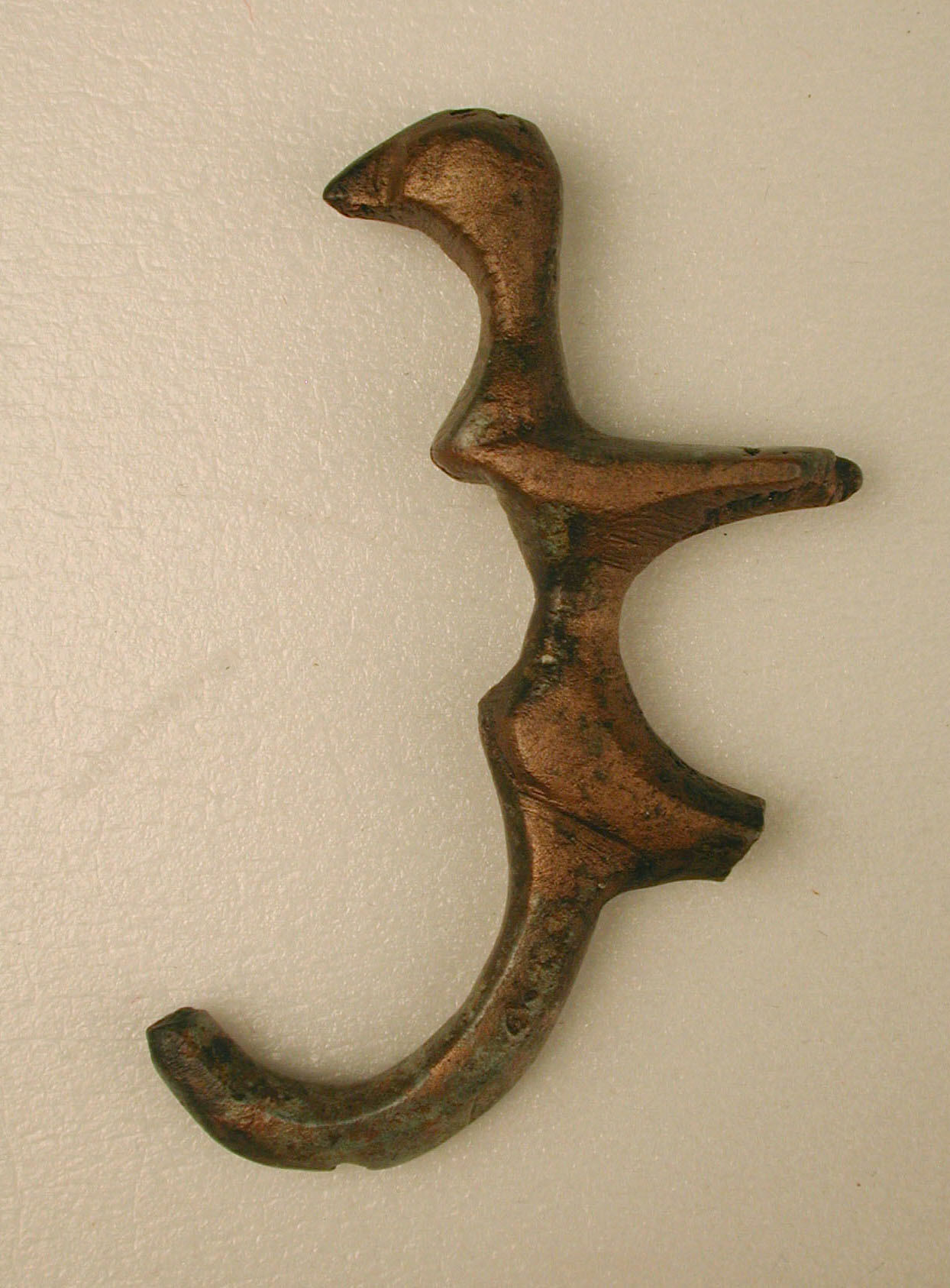
Heritage Analysis: The Bronze Hook in Ancient Civilization
Introduction: The Object as a Nexus of Power and Adornment
The bronze hook, a seemingly utilitarian object from ancient civilizations, emerges as a profound artifact when examined through the lens of heritage curation. Cast in bronze, this object transcends its functional origins as a tool for suspension or fastening, embodying a complex interplay of symbolic power, historical adornment, and spiritual meaning. For Katherine Fashion Lab, a luxury brand dedicated to weaving historical narratives into contemporary design, the bronze hook represents a strategic asset for 2026 positioning. This analysis explores the hook’s cultural resonance across ancient Mesopotamia, Egypt, and China, where bronze casting elevated it to a symbol of status, divine connection, and ritual authority. By decoding its heritage, we uncover a blueprint for high-end luxury strategy that leverages authenticity, scarcity, and transcendent storytelling.
Symbolic Power: The Hook as a Marker of Authority and Control
In ancient civilizations, the hook was not merely a mechanical device but a potent emblem of dominion. In Mesopotamia, bronze hooks were used in temple complexes to suspend votive offerings or animal carcasses during sacrificial rites. Their placement at sacred sites imbued them with the power to mediate between the mortal and divine realms. The act of hanging an offering from a hook signified the transfer of earthly wealth to celestial forces, positioning the hook as a conduit for spiritual transaction. Similarly, in ancient Egypt, bronze hooks appeared in funerary contexts, where they were employed to secure linen wrappings on mummies or to hang amulets within tombs. Here, the hook’s symbolic power lay in its ability to bind the physical body to the eternal soul, ensuring protection in the afterlife. For Katherine Fashion Lab, this duality—control and connection—offers a narrative of empowerment. A 2026 luxury collection could reinterpret the hook as a clasp or brooch, symbolizing the wearer’s mastery over their own destiny and their link to a lineage of authority.
Historical Adornment: Bronze as a Medium of Status and Craftsmanship
The medium of bronze, cast through lost-wax techniques, was a hallmark of technological sophistication in ancient societies. In China’s Shang dynasty (1600–1046 BCE), bronze hooks were often integrated into ceremonial garments or chariot fittings, their surfaces adorned with intricate taotie motifs—mythical creatures that warded off evil spirits. The casting process required immense skill, as bronze alloys had to be precisely heated to 1,000°C and poured into molds carved from clay or stone. The resulting hooks were not only functional but also aesthetic statements, their patina evolving over centuries to create unique textures. In the Mediterranean, Greek and Roman artisans produced bronze hooks for use in military regalia, such as belt fasteners or cloak pins. These objects were often gilded or inlaid with silver, signifying the wearer’s rank in the legion or court. For Katherine Fashion Lab, the bronze hook’s historical adornment value lies in its dual role as both a structural element and a canvas for artistry. A 2026 strategy could focus on limited-edition cast-bronze hooks, each with a distinct patina, as collectible luxury items that celebrate ancient craftsmanship while appealing to modern connoisseurs of rarity.
Spiritual Meaning: The Hook as a Ritual Artifact and Talisman
Beyond its physical form, the bronze hook carried deep spiritual significance across cultures. In ancient Anatolia, hooks were buried with the dead as grave goods, believed to “hook” the soul to the afterlife, preventing it from wandering. This practice echoes in Norse mythology, where the god Odin’s spear, Gungnir, was said to “hook” fate itself. In pre-Columbian Mesoamerica, bronze hooks were used in bloodletting rituals, where priests would pierce their own flesh and thread cords through the hooks as offerings to the sun god. The act of piercing and hanging transformed the hook into a symbol of sacrifice and renewal. For Katherine Fashion Lab, spiritual meaning offers a profound emotional resonance. A 2026 high-end luxury strategy could frame the hook as a talisman for the modern wearer—a piece that embodies resilience, transformation, and connection to ancestral wisdom. By partnering with historians or spiritual advisors, the brand could develop a narrative around each hook’s “blessing” or “purpose,” elevating it from a commodity to a sacred object.
2026 High-End Luxury Strategy: Integrating Heritage into Brand DNA
To position the bronze hook as a cornerstone of Katherine Fashion Lab’s 2026 collection, we must align its heritage with contemporary luxury values. The following strategic pillars emerge from this analysis:
1. Scarcity and Authenticity: Replicate the ancient casting process using artisanal foundries, limiting production to 100 pieces per design. Each hook should bear a unique serial number and a certificate of authenticity detailing its historical inspiration. This scarcity mirrors the original rarity of bronze objects in antiquity, where only elites could commission such items.
2. Narrative-Driven Design: Develop a collection titled “The Hooks of Eternity,” with sub-lines named after ancient civilizations (e.g., “Mesopotamian Gate,” “Egyptian Soul,” “Shang Dragon”). Each piece should incorporate symbolic motifs—such as the taotie or the ankh—cast in bronze and accented with ethically sourced gemstones. The design should emphasize the hook’s curvature, evoking both its functional origin and its spiritual curve toward the divine.
3. Experiential Retail: Launch the collection in flagship stores with immersive installations that recreate ancient temple or tomb environments. Use augmented reality to show customers how their chosen hook might have been used in a ritual or worn by a priestess. Offer private consultations with a “heritage curator” (a role you embody) who explains the object’s symbolic power, transforming the purchase into an educational and emotional experience.
4. Strategic Partnerships: Collaborate with museums or archaeological institutes to authenticate the designs and donate a portion of proceeds to preservation efforts. This not only reinforces the brand’s commitment to heritage but also aligns with the luxury consumer’s growing desire for purpose-driven acquisition.
5. Price Positioning: Set entry-level hooks at $5,000 for simpler designs and escalate to $50,000 for bespoke pieces with custom patinas or gemstone inlays. This pricing reflects the labor-intensive casting process and the historical value of bronze as a “noble metal” in antiquity, akin to gold in modern perception.
Conclusion: The Hook as a Timeless Luxury Archetype
The bronze hook, stripped of its ancient context, is a humble object. But through heritage analysis, it reveals itself as a vessel of symbolic power, historical adornment, and spiritual meaning. For Katherine Fashion Lab, this object is not merely a design reference but a strategic lever for 2026. By casting it in bronze—the medium of empires—and framing it within narratives of authority, craftsmanship, and transcendence, the brand can capture the imagination of discerning clients who seek more than fashion: they seek artifacts that anchor them in history while elevating their present. The hook, in this light, becomes a metaphor for the luxury experience itself—a tool that catches attention, suspends time, and connects the wearer to something eternal.