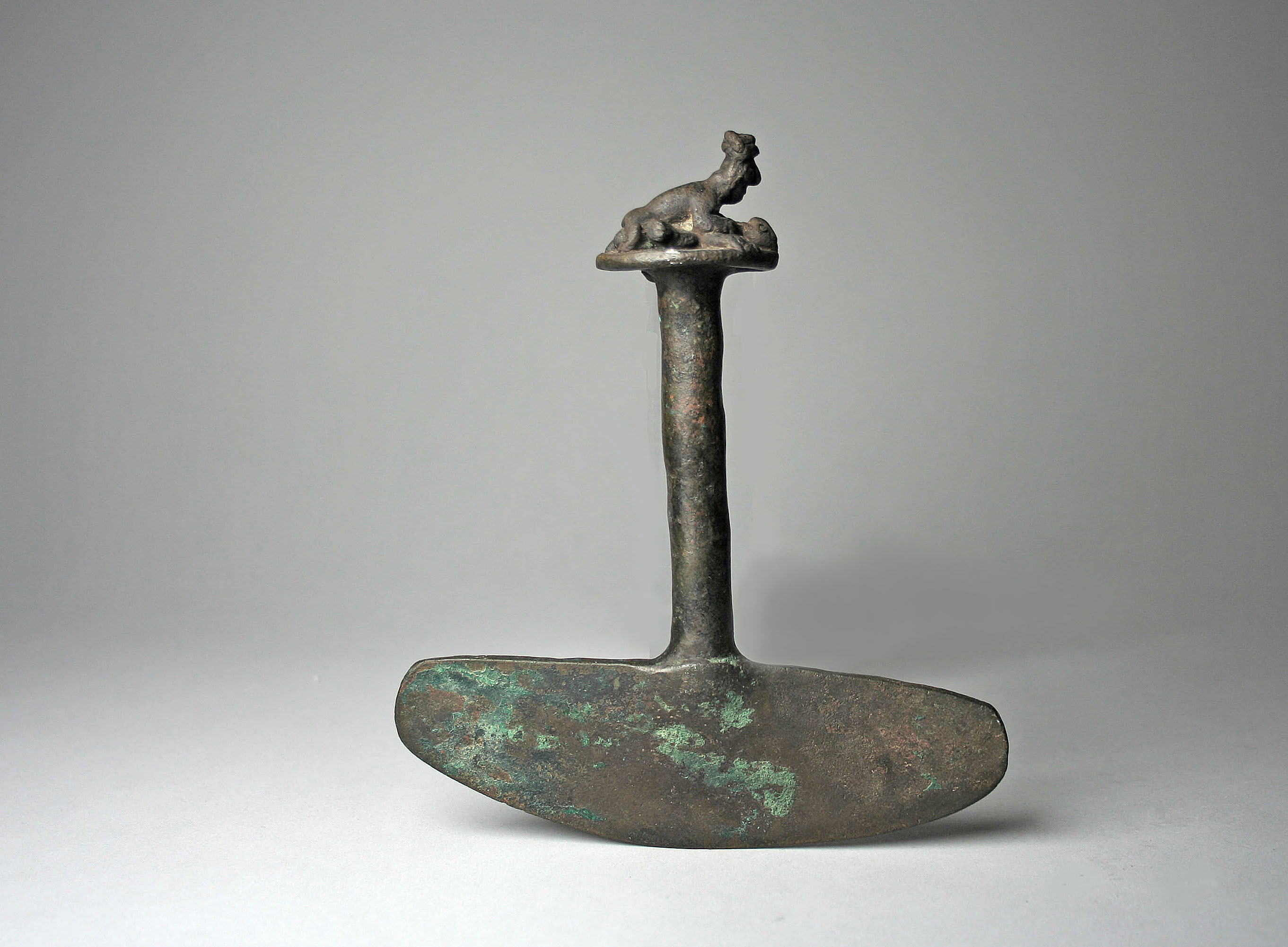
Executive Summary: The Tumi as a Strategic Heritage Asset
This strategic standalone research paper, prepared for the leadership of Katherine Fashion Lab, presents a heritage analysis of the Inca ceremonial knife, or Tumi. Cast in bronze, this object transcends its functional origins to embody a complex system of symbolic power, spiritual authority, and elite adornment. For a luxury house positioned at the intersection of laboratory innovation and cultural depth, the Tumi offers a profound archetype. This analysis deconstructs its historical and semiotic layers to propose a framework for its translation into a 2026 high-end luxury strategy. The objective is to move beyond superficial appropriation, instead leveraging the Tumi's intrinsic narrative to build brand equity, authenticate limited-edition collections, and establish a new paradigm of "ceremonial luxury."
Historical and Cultural Context: The Blade of Authority
The Tumi, characterized by its distinctive semi-circular blade and often featuring an intricate figurative handle, was a paramount symbol of status and ritual in the Inca Empire and preceding Andean cultures. Far more than a tool, its primary function was ceremonial, used in significant rites such as the Capacocha (sacrificial ceremonies) and in the ritual slaughter of llamas. The choice of bronze—an alloy of copper and tin—was itself a statement of technological sophistication and access to controlled resources. As a cast object, each Tumi represented a deliberate act of creation, requiring specialized knowledge and aligning it with the realm of crafted artistry rather than mere utility. Its possession was restricted to the elite: priests, nobility, and high-ranking military officials, making it a direct correlate to modern luxury's codes of exclusivity and access.
Semiotics of Form: Decoding the Adornment
The adornment of the Tumi is its primary text. The handle frequently depicted the head of Naymlap, a mythical Sicán/Lambayeque deity, or later, the Inca ruler Topa Yupanqui. This conflation of divine and royal imagery onto the instrument of ritual action is critical. It signifies that the wielder acts not with personal agency, but as a conduit for celestial or imperial will. The semi-circular blade, echoing the curve of the moon and the arc of the horizon, connects the act to cosmic cycles. Furthermore, many Tumis were inlaid with turquoise, gold, or spondylus shell—materials sacred in Andean cosmology, representing water, the sun, and fertility. Thus, the object served as a wearable, wieldable nexus of political power, spiritual mandate, and natural order. For Katherine Fashion Lab, this presents a masterclass in integrated symbolism: where material, form, and embellishment are inseparable from a deeper, authoritative narrative.
Core Symbolic Pillars for Luxury Transposition
To strategically harness the Tumi's heritage, we must distill its core symbolic pillars, which align seamlessly with enduring luxury desires.
Symbolic Power and Legitimacy
The Tumi was an instrument of sanctioned transformation—mediating between life and death, the human and the divine. In a luxury context, this translates to the power to transform identity and status. Wearing an object inspired by this archetype is not mere decoration; it is an alignment with a legacy of authority and intentional change. It confers a sense of legitimacy and earned privilege upon the wearer.
Spiritual Meaning and Connection
Its use in sacred ceremonies imbues the Tumi with a profound spiritual resonance. It speaks to a luxury consumer's growing desire for meaning, ritual, and connection beyond the material. This aligns with trends toward mindful consumption and objects that serve as talismans or markers of personal belief systems, offering a narrative of cosmic harmony and purpose.
Historical Adornment as Elite Code
The Tumi’s role as a non-vestimentary adornment for the elite is particularly compelling. It was a badge of office, worn or held. This informs a strategy focused on statement objects and ceremonial accessories—pieces that are not clothing but are integral to a composed, powerful silhouette. Think of it as the ultimate "power object" for a modern wardrobe, akin to a scepter or signet ring, but with a deeply rooted, pre-Columbian narrative.
Strategic Application: The 2026 High-End Luxury Strategy
For the 2026 horizon, Katherine Fashion Lab can deploy the Tumi archetype across a focused, high-value ecosystem, avoiding diffusion and ensuring cultural respect through collaboration and scholarly consultation.
Collection Archetype: "The Ceremonial Lab"
Launch a standalone, ultra-limited collection (e.g., 10-20 pieces per style) under the banner "Capacocha" or "Naymlap". This collection would focus on objects of transformation and arrival. Key pieces could include: Architectural Clasps & Brooches: Miniaturized, abstracted Tumi forms in cast bronze, re-interpreted in lab-grown platinum or gold, set with ethically sourced Andean opal or amazonite (modern proxies for turquoise). These would function as closures for cashmere mantles or wool coats, transforming the garment into a ritual robe. The Modern Scepter: A collaborative object with a fine jewelry house—a sculptural handbag handle or a minimalist, brutalist dagger-shaped pendant in bronze and gold, serving as a central, conversation-piece adornment. Textile Rituals: Integrate the semi-circular blade motif as a jacquard weave or laser-cut pattern into the hem or shoulder of a garment, visible only upon movement—a subtle, powerful code.
Brand Experience & Storytelling
The launch must be accompanied by a rigorous intellectual framework. This includes a commissioned white paper on Andean metallurgy and symbolism, co-authored with a respected anthropologist from the region. The collection should be presented in an immersive experience that emphasizes ritual silence, material texture, and cast light (echoing bronze's reflectivity). The narrative must consistently focus on legacy, sanctioned innovation, and transformative intent—positioning the wearer as part of a continuing lineage of authority, not as a passive consumer.
Market Positioning and Client Targeting
This strategy targets the Ultra-High-Net-Worth Intellectual Collector—clients who seek rarity with rigor, narrative depth, and cultural authenticity. It positions Katherine Fashion Lab not just as a fashion house, but as a cultural patron and research laboratory for heritage symbolism. The price point must reflect the research, limited nature, and collaborative artistry, placing these objects in the realm of collectible art.
Conclusion: From Ritual Artifact to Contemporary Talisman
The Inca Tumi, in its cast bronze form, provides Katherine Fashion Lab with a potent and untapped heritage code. Its intertwined narratives of spiritual ceremony, political power, and elite adornment offer a rich, coherent foundation for a serious luxury strategy. By focusing on its symbolic pillars—transformative power, spiritual connection, and coded adornment—the Lab can develop a 2026 initiative that transcends seasonal trends. The goal is to create modern heirlooms that function as ceremonial objects for contemporary life, granting the wearer a sense of legitimacy, connection, and purposeful authority. In doing so, Katherine Fashion Lab will demonstrate that true luxury innovation is not only about inventing the new, but about respectfully and intelligently recalibrating the profound symbols of the past for a discerning future.