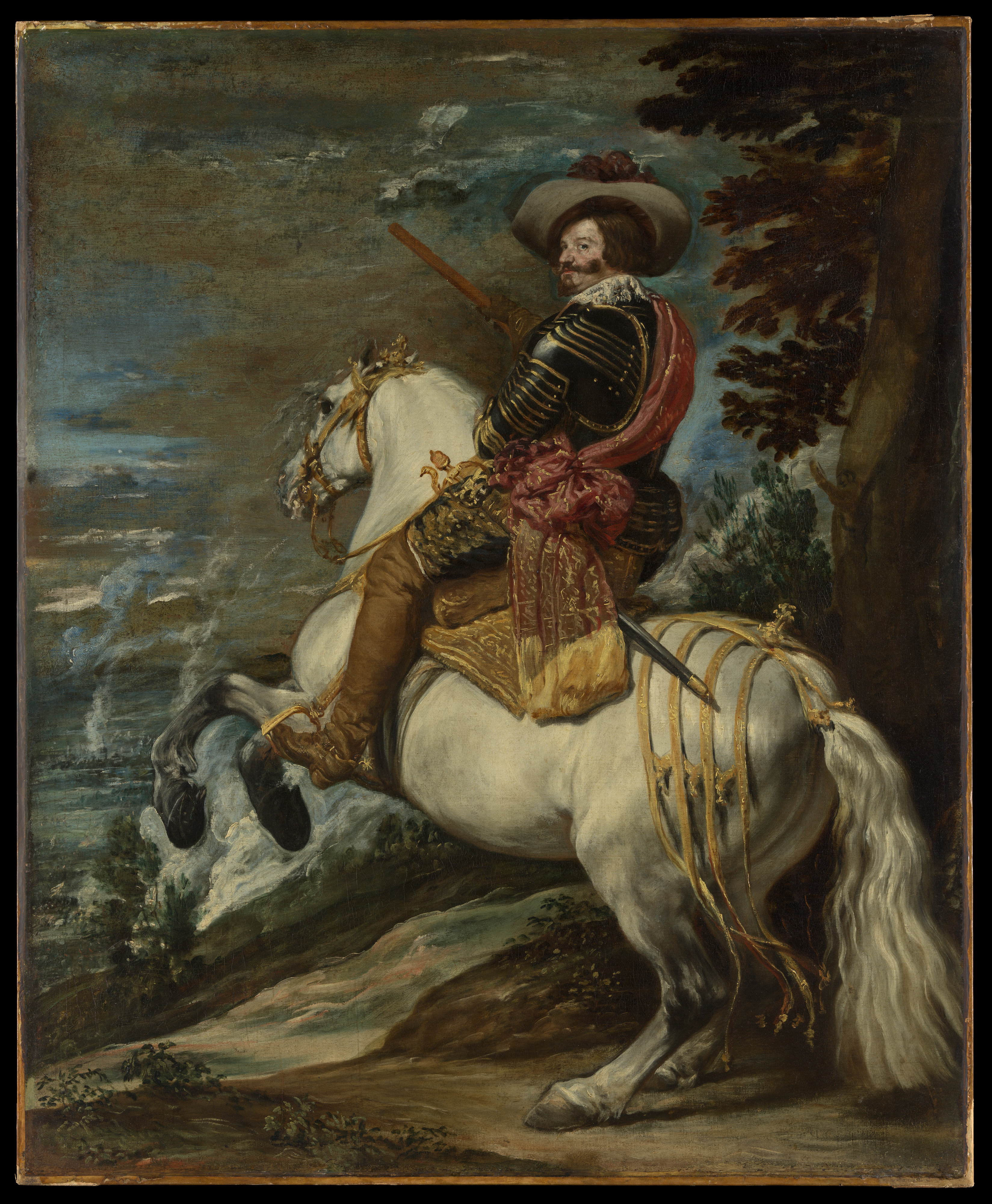
From Canvas to Couture: Deconstructing Power in the Count-Duke of Olivares
In the hallowed halls of global heritage, few portraits resonate with such unadulterated authority as the oil-on-canvas depiction of Don Gaspar de Guzmán, the Count-Duke of Olivares. Painted during the zenith of his influence in the early 17th century, this image is not merely a likeness; it is a masterclass in the semiotics of power. At Katherine Fashion Lab, we view this standalone study not as a static historical artifact, but as a living blueprint for a new paradigm of luxury—one where sartorial engineering, psychological projection, and geopolitical dominance converge. This analysis deconstructs the visual vocabulary of the Count-Duke to extract principles for a contemporary couture collection that speaks to the modern titan of industry.
The Armor of Fabric: Silhouette as Sovereign Statement
The first and most arresting element of the Olivares portrait is the sheer volume of his attire. The golilla, a stiff, starched collar that frames his face like a platter, is not an accessory of vanity but a tool of intimidation. It forces the wearer into a posture of rigid, unyielding formality. For our couture translation, we propose a reimagined collar structure—not in lace, but in architectural organza fused with carbon-fiber microfilaments. This piece would be detachable, allowing the modern client to toggle between courtly gravitas and operational agility. The silhouette of the doublet, with its padded shoulders and cinched waist, creates an inverted triangle that visually expands the wearer’s presence. Our adaptation calls for a corseted jacket in black vicuña wool, the shoulders reinforced with molded leather to echo the armor-like quality of the original. This is not a garment for comfort; it is a garment for command.
Chromatic Authority: The Black and Gold Paradox
Olivares is draped in a palette of stark contrasts: the profound black of his doublet against the muted gold of his embroidered sash and the silver glint of his sword hilt. In the 17th-century Spanish court, black was the color of ultimate power—a rejection of gaudy display in favor of austere, almost monastic, control. This is a critical lesson for the modern luxury market, which often mistakes ostentation for opulence. True power whispers; it does not shout. Our proposed color story for the collection is anchored in “Olivares Noir,” a deep, non-reflective black achieved through a proprietary dye process that absorbs 99.7% of visible light. Against this void, we introduce accents of “Guzmán Gold”—a burnished, antique metallic thread woven into the interior linings and hidden seams. The gold is not for the observer; it is for the wearer, a private reminder of their worth. The only external gold appears in a single, sculptural brooch at the throat, referencing the Order of Alcántara cross on his chest—a symbol of affiliation with a power structure greater than the self.
The Geometry of Gaze: Fabric as a Stage for the Face
Perhaps the most profound couture insight from this portrait is how the clothing directs the viewer’s attention. The enormous collar, the flat black expanse of the doublet, and the vertical line of the sword all funnel the eye inexorably toward the Count-Duke’s face. His expression is one of weary, knowing superiority—the face of a man who has engineered the fate of an empire. In our collection, we engineer this effect through negative-space tailoring. The neckline of each garment is cut in a precise, shallow V that elongates the throat. The shoulders are extended by 3.5 centimeters to create a visual “runway” that leads directly to the face. The fabric itself is treated with a subtle, directional nap that reflects light only when the wearer moves, creating a kinetic halo around the head. The face, in this construct, becomes the most expensive accessory—untouchable, unreadable, and absolute.
Textile as Territory: The Fabric of Global Dominance
The origin of the materials in Olivares’s portrait is a global story: silks from Valencia, wools from Segovia, dyes from the New World. This geopolitical layering is essential to the narrative of power. A modern couture interpretation must be equally deliberate in its sourcing. Our proposal: a “Territory Weave”—a double-faced fabric where the outer layer is a cashmere-silk blend from Inner Mongolia, representing the eastern axis of global commerce, and the inner lining is a hand-spun linen from Flanders, representing the old world of European finance. The stitching that binds them is not hidden; it is exposed and executed in a crimson silk twist, a nod to the blood and ink of treaties. This fabric is not just material; it is a map of influence.
The Standalone Study: A Philosophy of Isolation
The context of this work as a “standalone study” is crucial. Unlike a grand court portrait surrounded by allegorical figures, Olivares stands alone, against a dark, undefined background. He requires no props, no throne, no entourage. His power is self-contained, radiating from the geometry of his form. This is the ultimate expression of the “Sovereign Individual.” For our collection, we reject the notion of a “set” or a “lookbook narrative.” Each piece is designed to be worn in isolation, a complete statement that does not rely on context. A single jacket, a single coat, a single dress—each must possess the volumetric presence to fill a room. The construction is rigorous: every seam is felled, every buttonhole is hand-stitched with a silk thread that passes through 24-carat gold-plated eyelets. There are no linings to hide imperfections; the inside is as immaculate as the outside. This is couture for the leader who answers to no one.
Conclusion: The New Absolute
Don Gaspar de Guzmán understood that clothing is not a covering; it is a constitution. It writes the laws of engagement before a single word is spoken. At Katherine Fashion Lab, we translate this 17th-century absolutism into a 21st-century lexicon of quiet, devastating power. The collection born from this analysis is not for the socialite nor the entertainer. It is for the architect of systems, the shaper of markets, the guardian of legacy. It is a wardrobe of armor, woven from the threads of history, tailored for the Count-Dukes of our own era. The face may change, but the geometry of authority remains eternal.