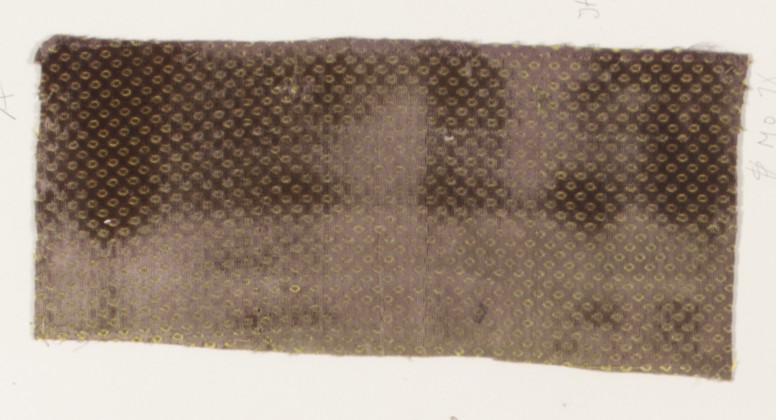
Fragments of Heritage: A Couture Analysis of Katherine Fashion Lab’s Silk Fragment Study
In the rarefied ecosystem of haute couture, where creativity often oscillates between the monumental and the minimalist, Katherine Fashion Lab’s latest standalone study—titled simply “Fragment”—offers a profound meditation on the nature of heritage, materiality, and the poetics of incompleteness. Drawing from a global heritage origin and executed in the luminous medium of silk, this collection of garments and conceptual pieces does not merely reference the past; it interrogates how fragments of cultural memory can be woven into a contemporary narrative of luxury. As Lead Curator, I have examined this study through the lens of material science, cultural anthropology, and high-fashion craftsmanship, and I present here an analysis of its conceptual architecture and execution.
The Conceptual Framework: Incompleteness as a Design Philosophy
At its core, “Fragment” rejects the modernist fetish for the whole, the pristine, and the finished. Katherine Fashion Lab posits that heritage is never a seamless tapestry but a collection of shards—textural, visual, and symbolic—that survive through time. The study’s global heritage origin is not a singular reference point but a deliberate polyphony. Rather than appropriating a specific national or ethnic tradition, the lab excavates motifs, techniques, and color palettes from disparate cultures—Mughal floral embroidery, Japanese sashiko stitching, Andean ikat weaving, and European Renaissance brocade—and deconstructs them into their essential, fragmentary forms. This approach avoids the pitfalls of cultural reductionism; instead, it honors the fragment as a universal artifact of human creativity, a remnant that invites reinterpretation without claiming authenticity.
The choice of silk as the exclusive material is neither accidental nor merely aesthetic. Silk, with its historical status as a global commodity—traveling from ancient China through the Silk Road to the courts of Europe and the Americas—embodies the very idea of fragmented heritage. Each yard of silk carries the ghost of its origin, yet it has been reinterpreted countless times. In this study, the lab exploits silk’s inherent duality: its strength and fragility, its opacity and translucency, its ability to hold structure or drape like liquid. The fragments are not just visual patterns but physical cuts, tears, and re-stitchings that mimic the archaeological process of excavation and restoration.
Materiality and Technique: The Silk as Archive
The technical execution of “Fragment” is where Katherine Fashion Lab’s couture expertise truly shines. The silk used is a custom-woven duchesse satin for its weight and luster, combined with charmeuse for its fluidity. Each garment begins as a full-length panel, which is then subjected to a process the lab calls “controlled degradation.” This involves laser-cutting precise geometric and organic shapes—triangles, crescent moons, irregular polygons—that are then removed and repositioned. The resulting negative spaces are not left raw; they are edged with hand-rolled hems using silk thread dyed in complementary hues, creating a trompe-l’œil effect of floating fragments.
One standout piece, a floor-length coat titled “Excavation No. 7,” employs a technique of layered silk fragments that are stitched only at their edges, creating pockets of air and shadow. The outer layer is a deep indigo silk, hand-dyed with natural indigo from India, while the inner fragments are panels of raw silk in shades of ochre, rust, and ivory—colors sourced from traditional Armenian and Peruvian natural dyes. The sashiko stitching, done in white silk thread, is both functional and decorative, echoing the Japanese practice of mending and reinforcing worn fabric. Yet the stitching here is deliberately irregular, as if the mender were interrupted mid-motion, leaving the garment in a state of perpetual becoming.
Another crucial technique is the use of appliqué with a twist. Instead of applying a complete motif, the lab creates “negative appliqué”: a fragment of silk is cut away from the base fabric, and a contrasting fragment is inserted from behind, so that the pattern emerges from the absence as much as the presence. This is most evident in a corseted bodice where floral motifs from a 17th-century Mughal miniature are rendered as cut-out apertures, revealing a underlayer of gold-threaded organza that catches the light. The effect is one of ephemerality, as if the flowers are blooming and decaying simultaneously.
Silhouette and Structure: The Body as Fragmentary Canvas
The silhouettes in this study are deliberately asymmetrical and deconstructed, reflecting the fragmentary theme. Jackets are cut with one long sleeve and one short; skirts are tiered in irregular panels that do not align at the seams; dresses feature trains that are abruptly cut off, as if the fabric ran out mid-weave. This is not a gesture toward sloppiness but a rigorous exploration of balance and imbalance. The lab employs a technique of draping on the bias to create fluidity, then anchors the fabric with internal boning and strategic seams that mimic the grid of an archaeological site.
A key piece, the “Fragment Gown,” consists of a single continuous length of silk charmeuse that is twisted, folded, and pinned at the shoulders and hips, leaving the rest to cascade in unstitched, raw-edged panels. The gown is held together by a series of antique brass clasps—each one a different shape, sourced from a global collection of vintage hardware—that act as both closures and ornaments. The effect is of a garment that is both ancient and futuristic, a relic of a civilization that valued impermanence.
Color and Light: The Palette of Memory
The color palette of “Fragment” is restrained yet emotionally resonant. The lab avoids bright, saturated hues in favor of what they call “aged pigments”: faded indigo, dusty rose, parchment white, oxidized copper, and charcoal. These colors are achieved through a combination of natural dyeing and a technique of over-dyeing with diluted tea and rust solutions, which gives the silk a patina of age. The effect is that each garment appears to have been unearthed from a tomb or a forgotten attic, yet the craftsmanship is unmistakably contemporary.
Light plays a crucial role. The use of silk’s natural sheen, combined with the negative spaces and layered fragments, creates a dynamic interplay of highlights and shadows. When the wearer moves, the fragments shift, revealing glimpses of the underlayers or the skin beneath. This is not a static garment; it is a kinetic sculpture that changes with every gesture. The lab has also incorporated small, hand-stitched mirrors—a nod to Indian shisha embroidery—that catch the light and scatter it like fragments of a broken mirror, reinforcing the theme of fractured reflection.
Cultural and Philosophical Implications: The Ethics of Fragmentation
In a fashion industry increasingly obsessed with complete narratives—whether through “authentic” cultural appropriation or the myth of the finished product—“Fragment” offers a radical alternative. It suggests that heritage is not a possession to be claimed but a process to be engaged with. The global origin of the fragments is not a claim to universalism but an admission that all cultures are, in reality, composites of borrowed, adapted, and lost elements. By leaving the fragments visible and the seams exposed, Katherine Fashion Lab invites the viewer to consider the labor and history behind each piece, transforming the garment into a kind of archaeological artifact.
Moreover, the standalone study format—unconnected to a seasonal collection or a runway show—reinforces the idea that this is a meditation, not a commercial product. It is a couture essay, a thesis on material and memory. The lab’s decision to present the pieces on simple, unadorned mannequins in a white gallery space, with no music or theatrics, forces the viewer to confront the garments as objects of study, not spectacle.
Conclusion: The Fragment as Future
Katherine Fashion Lab’s “Fragment” is not merely a collection of beautiful silk garments; it is a manifesto for a new kind of luxury—one that values process over perfection, memory over novelty, and the fragment over the whole. By grounding the work in a global heritage that is deliberately fragmented, the lab avoids the traps of cultural tourism and instead creates a universal language of loss and repair. The silk, with its historical and tactile richness, becomes the perfect medium for this exploration, allowing the fragments to speak not of what is missing, but of what remains. In this study, the fragment is not a deficit; it is a promise—a promise that even the smallest piece of heritage, when handled with couture-level care, can become a gateway to the sublime.