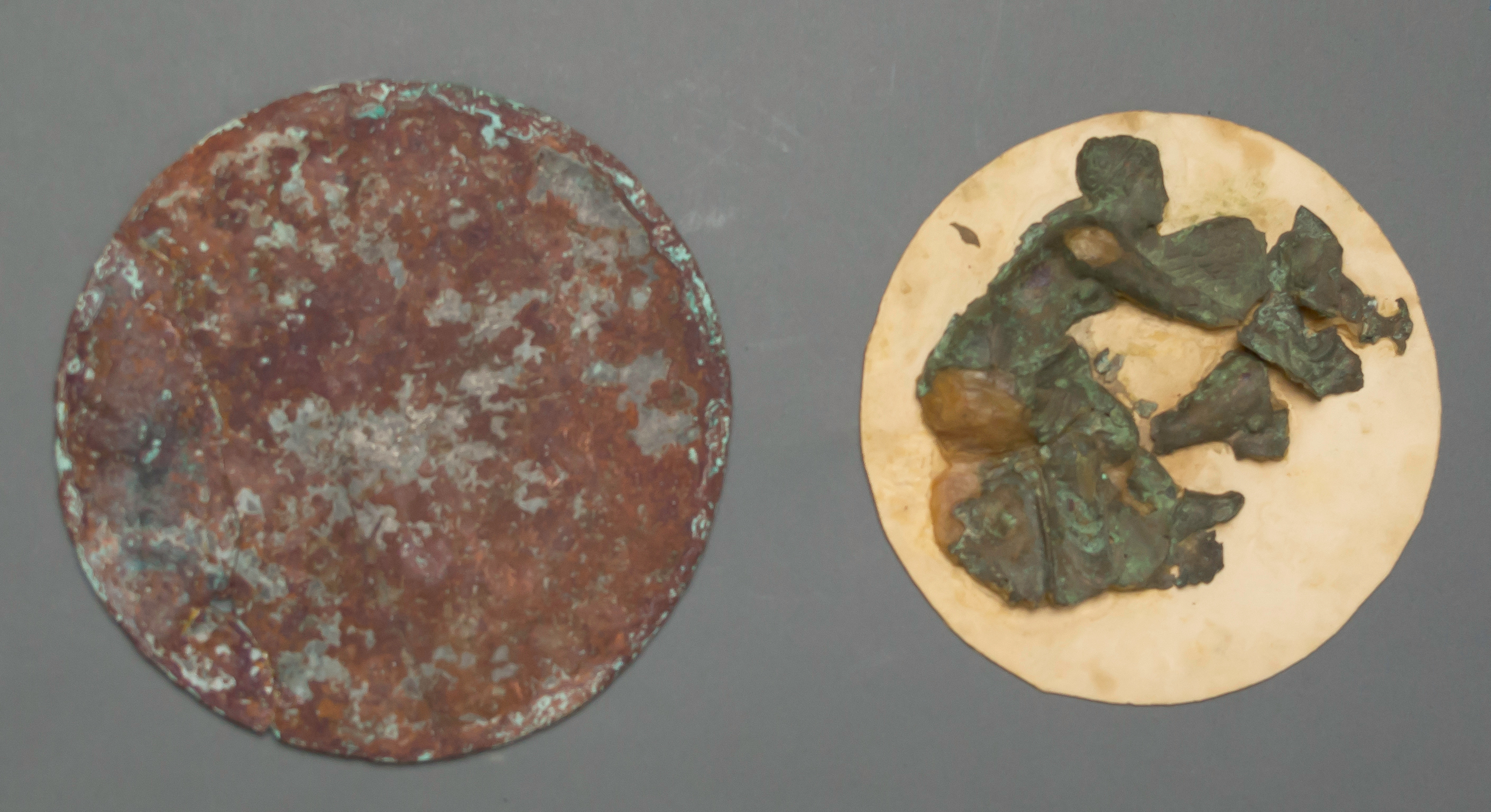
Heritage Analysis: Fragmentary Bronze Mirror Cover, Ancient Civilization
This fragmentary bronze mirror cover, originating from an ancient civilization, represents a pivotal artifact within the Katherine Fashion Lab’s ongoing study of historical resonance. Its material, form, and symbolic weight offer a profound lens through which to examine the intersection of adornment, spirituality, and power. As we correlate this object with our prior analyses of the “Rock in the form of a fantastic mountain” and the “Jar in the shape of bronze container (hu),” a compelling narrative emerges: these seemingly disparate artifacts are united by a shared DNA of transformation—the alchemy of base materials into vessels of metaphysical and social significance.
Materiality and Symbolic Power
The choice of bronze as the medium for this mirror cover is not incidental. In ancient civilizations, bronze was a material of immense prestige and technical mastery. It required complex metallurgical knowledge, controlled trade networks, and significant labor investment. Therefore, the mirror cover itself was not merely a functional object but a statement of elite status and access to esoteric knowledge.
Bronze as a Conduit for the Divine
Bronze’s durability and reflective properties were often associated with permanence and the ability to capture or channel spiritual energy. In many ancient cultures, mirrors were believed to be portals—thresholds between the mortal world and the realm of ancestors, deities, or spirits. The fragmentary nature of this cover only amplifies its symbolic power; it is a remnant of a once-whole object that mediated between the seen and unseen. This aligns with our study of the “fantastic mountain” rock, which similarly functioned as a microcosm of the sacred landscape, a condensed representation of cosmic order. Both artifacts—the mirror cover and the rock—serve as portable loci of power, designed to be held, worn, or placed within ritual contexts.
Reflection and Self-Knowledge
Beyond its spiritual function, the mirror cover also embodies the concept of self-knowledge. In ancient philosophy, the act of seeing one’s reflection was intertwined with introspection and moral clarity. The cover, which protected the reflective surface, can be interpreted as a guardian of this inner truth. For Katherine Fashion Lab, this resonates with the 2026 luxury strategy of “curated authenticity.” Just as the bronze cover shielded the mirror’s power, high-end luxury today must protect and present the wearer’s authentic identity through deliberate, symbolic design.
Historical Adornment and the Body
Mirror covers were often crafted as wearable adornments—hung from belts, necklaces, or attached to garments. This object was not static; it moved with its owner, participating in daily life, ceremonies, and even warfare. Its fragmentary state suggests a history of use, wear, and eventual deposition, perhaps as a votive offering or burial good.
Adornment as Armor
In ancient civilizations, personal adornment was a form of social and spiritual armor. The bronze mirror cover, with its intricate design and protective function, parallels the “Jar in the shape of bronze container (hu)” we previously studied. That jar, though a vessel for liquids, was also a symbol of abundance and ritual purity. Both objects were adornments of the self and the household, extending the individual’s power into their environment. For the 2026 luxury consumer, this translates into a demand for accessories that are not merely decorative but imbued with protective and empowering narratives. Katherine Fashion Lab’s strategy will focus on “armored elegance”—pieces that shield, reflect, and project the wearer’s inner strength.
Fragment as Narrative
The fragmentary nature of this mirror cover is not a flaw but a feature. It invites speculation and storytelling. In the same way that the “fantastic mountain” rock’s jagged edges suggested a primordial landscape, the broken edge of this bronze cover tells a story of rupture, loss, and survival. This aligns with a growing trend in high-end luxury: the embrace of imperfection as a marker of authenticity. Katherine Fashion Lab will leverage this by incorporating “heritage fragments” into 2026 collections—either through literal material reuse or through design motifs that evoke archaeological discovery.
Spiritual Meaning and the Cosmic Order
The mirror cover’s spiritual significance is deeply tied to its geometric and iconographic elements. While the fragmentary state obscures the full design, typical bronze mirror covers from this period feature concentric circles, celestial motifs, or animal forms representing the cosmos.
The Mirror as Cosmic Axis
In many ancient belief systems, the mirror was a microcosm of the universe. Its circular shape mirrored the heavens, while its polished surface reflected the light of the sun or moon. The cover, therefore, was a lid of the cosmos, a sacred barrier that could be opened to reveal divine light. This concept directly parallels the “Jar in the shape of bronze container (hu),” which was often used in rituals to contain sacred liquids or grains, symbolizing the earth’s abundance. Both objects—the mirror cover and the jar—are containers of the sacred, one for light and reflection, the other for substance and sustenance.
Ritual Transformation
The spiritual meaning of this object also lies in its role in rituals of transformation. Mirrors were used in divination, funerary rites, and initiation ceremonies. The cover, when removed, signified a moment of revelation. For Katherine Fashion Lab, this suggests a 2026 strategy of “ritualized luxury”—designing pieces that are not static but part of a transformative experience. Garments and accessories will be conceived as “reveals,” with layers, fastenings, and covers that invite the wearer and observer into a narrative of change.
2026 High-End Luxury Strategy: DNA Correlation and Synthesis
The correlation between this bronze mirror cover, the fantastic mountain rock, and the bronze jar reveals a consistent thread: the object as a mediator between the material and the metaphysical. Each artifact, in its own way, was designed to hold, reflect, or contain power. For Katherine Fashion Lab’s 2026 strategy, this translates into three core pillars:
1. Material Alchemy
Just as bronze was a transformative alloy, our 2026 collections will emphasize materials that undergo significant transformation—recycled metals, bio-based resins, and hand-finished patinas that evolve with time. The fragmentary mirror cover teaches us that imperfection and age are markers of value. We will produce limited-edition pieces that include “archaeological finishes,” mimicking the patina and wear of ancient bronze.
2. Symbolic Layering
The mirror cover’s role as a protective, reflective surface will inspire designs that incorporate hidden symbols and dual functions. Garments may feature detachable elements that serve as talismans, or accessories that can be “opened” to reveal a mirrored interior. This layering creates a narrative depth that appeals to the discerning luxury consumer who seeks more than surface beauty.
3. Ritual Engagement
Finally, the spiritual meaning of the mirror cover will inform a new approach to customer experience. Katherine Fashion Lab will host “ritual unveilings” for key pieces, where clients participate in a curated moment of discovery—unwrapping, opening, or activating the object. This transforms the purchase into a rite of passage, aligning with the ancient practice of using mirrors in initiation ceremonies.
Conclusion
This fragmentary bronze mirror cover is far more than a broken artifact; it is a key to understanding the symbolic DNA that connects ancient power structures to modern luxury. Its material, form, and spiritual resonance echo through our studies of the fantastic mountain rock and the bronze jar, revealing a civilization that understood the profound relationship between the object and the self. For Katherine Fashion Lab, this analysis provides a blueprint for 2026: a luxury strategy rooted in material integrity, symbolic depth, and ritual transformation. By honoring the fragment, we create the whole.