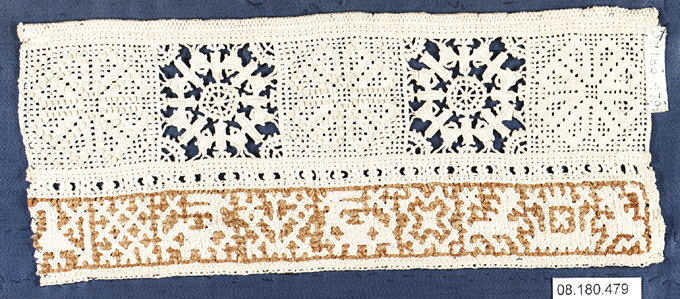
The Border as a Cartography of Craft: A Couture Analysis of Katherine Fashion Lab
In the lexicon of haute couture, the border has historically been a site of containment—a hem, a seam, a limit. Yet in Katherine Fashion Lab’s latest standalone study, the border is radically reimagined as a dynamic, generative force. Drawing from a Global Heritage that spans centuries and continents, this collection elevates the border from a passive edge to an active protagonist. The material palette—needle lace, punto avorio, reticella, and embroidery—serves not merely as decoration but as a structural and conceptual language. This analysis deconstructs how Katherine Fashion Lab transforms the border into a cartography of craft, where each stitch maps a dialogue between tradition and innovation, constraint and liberation.
Deconstructing the Border: From Periphery to Center
Traditionally, the border in fashion has been a liminal space—a threshold between the garment and the void, the finished and the unfinished. Katherine Fashion Lab subverts this hierarchy by making the border the collection’s central thesis. In this study, borders are not merely applied to fabric; they become the fabric. Needle lace, with its intricate loops and knots, is deployed to create entire panels where the edge is the structure. The punto avorio technique, a Venetian lace characterized by its raised, ivory-like threads, is used to build three-dimensional borders that protrude from the garment’s surface, challenging the flatness of conventional tailoring. These are not hems that finish a garment; they are sculptural elements that define its silhouette.
The conceptual shift is profound. By centering the border, Katherine Fashion Lab questions the very notion of territoriality in fashion. Each garment becomes a map of contested and celebrated boundaries—between cultures, between handcraft and machine, between the past and the present. The reticella technique, a geometric cutwork lace from Renaissance Italy, is especially telling. Its precise, grid-like patterns evoke the borders of ancient maps, yet here they are rendered in thread so fine that the fabric dissolves into a network of gaps. The border is no longer a solid line but a permeable membrane, inviting the viewer to look through rather than around.
Global Heritage as a Stitched Archive
Katherine Fashion Lab’s Global Heritage approach is not a superficial pastiche of motifs but a deep, scholarly engagement with the historical and cultural origins of each technique. Needle lace, for instance, traces its roots to 16th-century Italy, where it evolved from embroidery as a way to create lace without a ground fabric. Here, it is recontextualized through a contemporary lens: the lace is left raw at the edges, its threads unbound, suggesting a border that is always in the process of becoming. This is a deliberate act of decolonizing the border, stripping it of its rigid associations with nation-states and instead presenting it as a fluid, transnational craft tradition.
The punto avorio technique, named for its resemblance to carved ivory, carries echoes of trade routes between Europe and Asia. Katherine Fashion Lab honors this heritage by using the technique to create borders that mimic the intricate inlays of Mughal architecture or the filigree of Ottoman metalwork. Yet the materials remain resolutely European—linen and silk threads—creating a tension between origin and adaptation. This is a border that speaks to the hybridity of global fashion, where techniques migrate and morph, carrying the stories of their makers across time and space.
Embroidery, the most versatile of the techniques, is employed to stitch narratives directly onto the border. Rather than abstract patterns, the embroidery features motifs of migratory birds, winding rivers, and fragmented maps—symbols of passage and permeability. The thread colors shift from deep indigo to ochre, evoking the earth tones of ancient trade routes. This is not ornamentation for its own sake; it is a visual archive of movement, where each stitch records a crossing, a meeting, a transformation.
Materiality and Technique: The Craft of the Edge
The materiality of the collection is its most compelling argument. Needle lace, by its nature, is a technique of extreme precision and patience. Each loop is formed by hand, one stitch at a time, creating a fabric that is both fragile and resilient. Katherine Fashion Lab exploits this paradox by using needle lace to construct borders that are deliberately uneven—some sections dense and opaque, others open and airy. This variation mimics the irregularity of natural borders, like coastlines or mountain ridges, and challenges the industrial ideal of uniformity.
Reticella is pushed to its limits as well. Traditionally worked on a linen ground, here it is executed on a silk organza base, creating a stark contrast between the matte threads and the luminous fabric. The geometric patterns—squares, diamonds, and zigzags—are scaled up to monumental proportions, turning the border into a lattice that both frames and fragments the body. The effect is architectural, reminiscent of Gothic tracery or Islamic geometric art, yet the soft drape of the silk ensures that the garment remains fluid and wearable. This is a border that negotiates between rigidity and flow, between the structural and the organic.
The embroidery, meanwhile, introduces a tactile dimension that the other techniques lack. Using a combination of goldwork, silk floss, and metallic threads, the embroidered borders catch the light and shift in color as the wearer moves. The stitches themselves are varied—chain stitch, satin stitch, and French knots—creating a textural landscape that invites touch. This is a border that demands engagement, not just visual appreciation. It is a haptic boundary, one that connects the garment to the wearer through the sensation of thread against skin.
Conceptual Resonance: Borders as Liminal Space
Beyond its technical mastery, this collection resonates with contemporary cultural and political discourse. In an era of fortified borders and migration crises, Katherine Fashion Lab’s celebration of the border as a site of creativity is a powerful counter-narrative. The garments do not erase borders; they reimagine them as spaces of exchange. The needle lace borders, with their openwork and transparency, suggest that boundaries can be porous without being absent. The punto avorio borders, with their raised, tactile surfaces, imply that borders can be protective without being exclusionary.
The standalone study format is crucial here. Unburdened by the commercial constraints of a full collection, Katherine Fashion Lab can focus entirely on the conceptual and material exploration of the border. Each piece is a thesis, a proposition for how fashion can engage with the most pressing issues of our time. The garments are not meant to be worn in a conventional sense; they are artifacts of thought, designed to provoke and inspire.
Conclusion: The Border as Beginning
Katherine Fashion Lab’s couture analysis of the border, rooted in Global Heritage and executed through needle lace, punto avorio, reticella, and embroidery, is a masterclass in material storytelling. By elevating the border from a peripheral detail to a central subject, the collection challenges us to reconsider the edges of our own lives—the boundaries we draw, the limits we accept, and the thresholds we cross. This is not a fashion about finishing; it is a fashion about starting, about the endless possibilities that emerge when we treat the border not as an end but as a beginning. In every loop, every knot, every stitch, Katherine Fashion Lab reminds us that the most profound creativity often lies at the edge.