Executive Summary: The Guéridon as a Strategic Heritage Asset
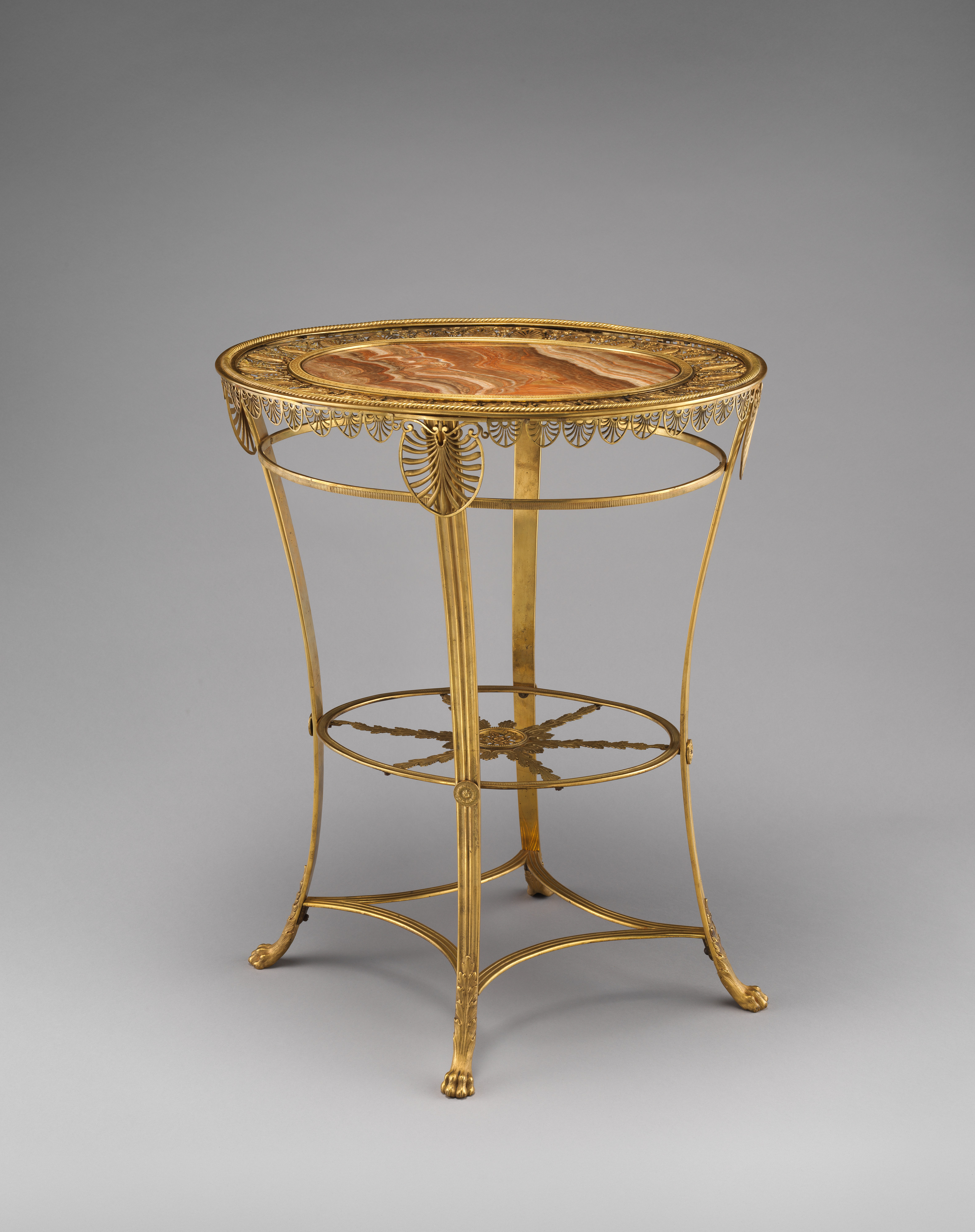
This strategic standalone research paper, prepared for the leadership of Katherine Fashion Lab, analyzes the Guéridon—a specific form of pedestal table—as a profound source of heritage inspiration. Originating in the ceremonial contexts of ancient civilizations and materially defined by gilt yellow metal and alabaster, the object transcends its utilitarian function to embody a complex language of symbolic power, historical adornment, and spiritual meaning. Our analysis deconstructs these elements to formulate a proprietary framework for the Lab’s 2026 high-end luxury strategy. We posit that the Guéridon is not merely an artifact but a heritage cipher, offering a unique vector for brand differentiation in an oversaturated market by anchoring future-facing design in authenticated, non-Western cosmologies of value and display.
Deconstructing the Artifact: Materiality and Origin
The specified materials—gilt yellow metal and alabaster—are not arbitrary selections but deliberate carriers of ancient civilizational codes. In contexts ranging from Mesopotamian to Egyptian to Greco-Roman societies, gilt metal (whether gold leaf applied to bronze or other alloys) served as a simulacrum of the divine solar body. It represented an immutable, incorruptible substance associated with deities and royalty, a materialization of light and eternal power. Alabaster, in contrast, with its luminous translucency and soft, vein-like patterning, was the stone of ritual and containment. Used for sacred vessels, cosmetic jars, and temple fittings, it symbolized purity, vesselhood, and a conduit between the earthly and the spiritual. The fusion of these materials in a Guéridon form creates a dialectic: the enduring, reflective brilliance of metal against the soft, glowing, organic body of stone. This is the foundational aesthetic and symbolic tension from which a new luxury syntax can be generated.
Symbolic Power and the Politics of Display
The Guéridon’s primary function was elevation and presentation. It existed to lift an object—a lamp, a vase, a precious offering—from the common plane, framing it within a dedicated aura. This act is inherently political. In ancient courtly settings, what was placed upon the Guéridon was deemed worthy of singular attention: it could be a symbol of office, a trophy of conquest, or a gift denoting alliance. The Guéridon itself, through its materials and craftsmanship, communicated the status of the owner and the gravity of the ritual. For Katherine Fashion Lab, this translates to a strategy of contextual elevation. The brand must ask: what are the "objects" we choose to elevate—a handbag, a garment, an experience? The Guéridon philosophy suggests treating each product not as a commodity, but as a consecrated artifact, presented through retail architecture, packaging, and storytelling that replicates this ancient principle of ritualized display.
Historical Adornment and the Bodily Architecture
Moving from the object that is displayed to the body that is adorned, the Guéridon offers a critical formal vocabulary. Its structure—a stable base, a central column (often intricately worked), and a culminating platform—mirrors the very architecture of adorned figures in ancient art. Consider the fluted columns of draped linen, the layered collars of gold and gemstones, the tiered headdresses. These are adornments that structure space around the body. For 2026, we advocate moving beyond surface pattern application to a design principle of architectural adornment. Silhouettes can be engineered to echo the tapering form of the pedestal; hardwear on bags and accessories can be conceived as miniature gilt-metal structural elements, fusing with alabaster-like resins or polished stones. The body becomes the living Guéridon, a mobile monument carrying its own preciousness.
Spiritual Meaning and the Luxury Aura
In the pre-modern worldview, luxury was seldom divorced from the sacred. The gleam of gilt metal captured and honored the light of the sun god; the alabaster vessel held precious unguents for anointment or burial rites. Luxury objects were intercessors, bridging the human and the divine. The modern luxury market faces a crisis of secular materialism, where value is perceived as solely economic or social. Katherine Fashion Lab can reclaim a deeper resonance by infusing its 2026 collections with a re-enchanted materiality. This is not about religion, but about spirituality in the sense of intentionality, connection, and aura. A bag clasp engineered to catch the light in a specific way, a fragrance case with the cool, translucent weight of alabaster, textiles that change character in different lights—these design choices can evoke the Guéridon’s role as a sacred interface. The product becomes a talisman of personal meaning, not just a logo.
Strategic Application: The 2026 High-End Luxury Framework
Integrating this research, we propose a three-pillar framework for Katherine Fashion Lab’s 2026 strategy, under the internal codename Project Guéridon.
Pillar 1: The Material Dialectic
Establish a signature material palette directly derived from the artifact. Develop proprietary composites: "Gilt Metal" not as plating but as a layered material with depth, perhaps combining recycled brass with resin infusions for lightness and modernity. Source and treat "Alabaster" elements—not necessarily the stone itself, but advanced ceramics, bio-acrylics, or treated minerals that capture its ethereal glow and tactile coolness. This creates an immediate, ownable sensory signature.
Pillar 2: The Architecture of Display
Re-imagine the entire consumer journey through the lens of the Guéridon. Flagship stores should feature monolithic alabaster-like plinths. Packaging should be multi-tiered, ritualizing unboxing. Digital content should frame products with the solemnity of artifacts in a museum, using light and shadow to highlight materiality. The goal is to make every touchpoint an act of elevation, transforming consumption into curation.
Pillar 3: The Narrative of Consecration
Develop a brand narrative that moves from "manufacturing" to "consecration." Each limited-edition piece in the 2026 collection should be accompanied by a "Certificate of Provenance" detailing its material inspiration, craft process, and symbolic attributes—drawing direct lineage to the ancient civilizational codes analyzed here. Marketing should focus on the product as a modern heirloom, an intercessor for personal values and identity in a fragmented world.
Conclusion: From Artifact to Algorithm
The Guéridon, in its ancient civilizational context, was an algorithm for generating meaning—a device that input a common object and output a symbol of power, spirituality, and beauty. For Katherine Fashion Lab, this deep heritage analysis provides more than a seasonal motif; it offers a complete strategic operating system. By decoding the symbolic power, historical adornment principles, and spiritual meaning embedded in gilt metal and alabaster, the Lab can architect a 2026 luxury position that is intellectually robust, emotionally resonant, and distinctively profound. In a market clamoring for the new, the most radical move is to rediscover the ancient, not through pastiche, but through the sophisticated translation of foundational human codes of value into the language of tomorrow's luxury.