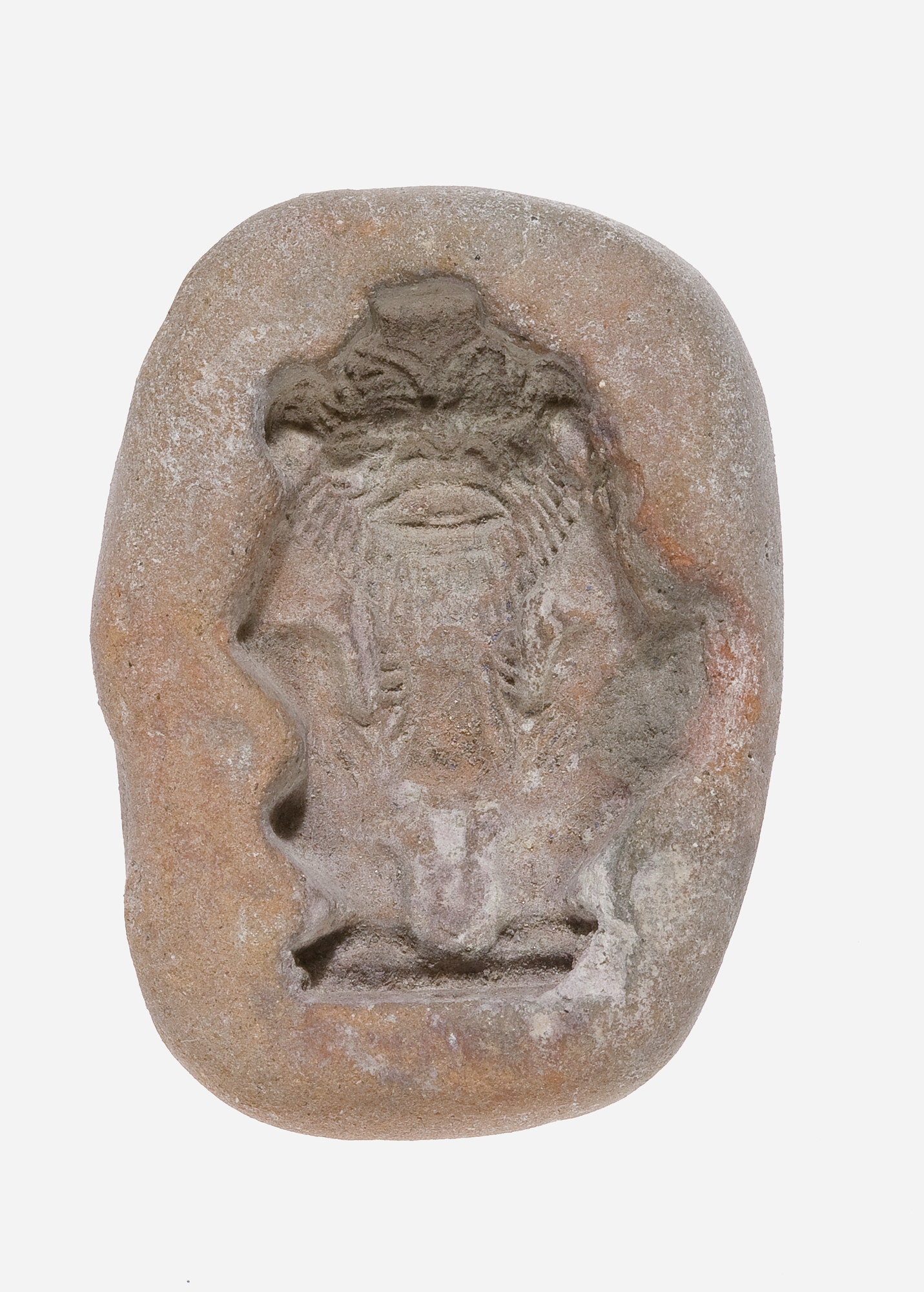
Executive Heritage Analysis: Mold for Bes-Image Amulet
This strategic standalone research paper examines the Mold for Bes-Image Amulet, an artifact from an ancient civilization, crafted in pottery. As Lead Heritage Curator for Katherine Fashion Lab, I analyze this object through the lenses of symbolic power, historical adornment, and spiritual meaning, culminating in a high-end luxury strategy for 2026. The Bes-image amulet, a talisman of protection and vitality, offers profound insights for contemporary luxury branding, where heritage authenticity meets aspirational desire.
Symbolic Power of the Bes-Image Amulet
The Bes-image amulet derives its symbolic power from the deity Bes, a protective figure in ancient civilizations, particularly in Egyptian and Near Eastern cultures. Bes was a dwarf-like god, often depicted with a lion’s mane, protruding tongue, and a fearsome yet jovial expression. This dichotomy—fierce guardian and benevolent entertainer—imbues the amulet with a unique spiritual resonance. The mold itself, a negative space for creation, symbolizes the potentiality of protection; it is not merely a tool but a conduit for ritualistic empowerment. In ancient contexts, amulets were believed to channel divine energy, warding off evil spirits, disease, and misfortune. The Bes-image specifically safeguarded households, mothers, and children, making it a democratized symbol of care and resilience.
For Katherine Fashion Lab, this symbolic power translates into a brand narrative of guardianship. In a 2026 luxury landscape, where consumers seek meaning beyond materiality, the Bes-image represents a shield against existential anxieties—be it societal instability or personal insecurity. By integrating this motif, the Lab can position its collections as talismanic, offering clients not just aesthetic beauty but spiritual armor. The mold’s pottery medium further emphasizes earthiness and authenticity, aligning with the growing demand for sustainable, grounded luxury.
Historical Adornment: From Amulet to Accessory
Historically, amulets like the Bes-image were integral to personal adornment, worn as pendants, rings, or sewn into garments. They served dual functions: decorative and apotropaic (evil-averting). The pottery mold suggests mass production for accessibility, yet the amulet’s value was not diminished by its medium. In ancient economies, amulets were traded as luxury goods, often crafted from precious materials like faience, gold, or semi-precious stones. However, the pottery mold indicates a humble origin, democratizing spiritual protection across social strata. This juxtaposition—common material, profound meaning—is a critical insight for luxury strategy.
Katherine Fashion Lab can reinterpret this historical adornment through material alchemy. For 2026, consider a capsule collection where the Bes-image is rendered in high-craft pottery, glazed with rare minerals, or set in precious metals. The mold’s archaeological authenticity becomes a design provenance, allowing the Lab to tell a story of artisan heritage. Historical adornment also emphasizes modularity: amulets were often combined with other talismans to create layered necklaces or bracelets. This inspires a modular luxury system—detachable charms, interchangeable pendants—that empowers clients to curate their own protective narratives. Such a strategy aligns with the 2026 trend of personalized, heirloom-quality accessories.
Spiritual Meaning: The Bes Deity and Contemporary Resonance
The spiritual meaning of the Bes-image amulet is rooted in its role as a household protector. Bes was not a temple deity but a domestic god, accessible to all. This spiritual accessibility is key: the amulet’s power was not hierarchical but intimate. In ancient rituals, amulets were consecrated through incantations and offerings, transforming inert clay into a living charm. The mold, as a tool of reproduction, underscores the cyclical nature of spiritual energy—each amulet created carried the same protective essence, irrespective of quantity. This challenges modern luxury’s exclusivity paradox: how can a brand offer spiritual meaning without diluting its elite cachet?
For Katherine Fashion Lab, the solution lies in ritualized luxury. In 2026, clients will seek experiences, not products. The Lab can develop a Bes-inspired collection where each amulet is accompanied by a consecration ceremony—a digital or in-person activation that imbues the object with personal intention. This spiritual meaning aligns with the broader wellness luxury trend, where brands like Gwyneth Paltrow’s Goop have normalized metaphysical practices. By positioning the Bes-image as a conduit for positive energy, the Lab taps into the $1.5 trillion wellness economy. The pottery medium’s tactile, unpretentious quality also appeals to the “quiet luxury” aesthetic, prioritizing substance over logos.
2026 High-End Luxury Strategy: The Bes-Image as Brand Archetype
Integrating the Mold for Bes-Image Amulet into a 2026 high-end luxury strategy requires a multi-tiered approach that leverages symbolic power, historical adornment, and spiritual meaning. Below, I outline a strategic framework for Katherine Fashion Lab.
1. Artisanal Heritage as Brand Currency
The pottery mold’s ancient craftsmanship offers a counter-narrative to mass-produced luxury. For 2026, the Lab should collaborate with contemporary ceramic artists to recreate the Bes-image using traditional techniques—hand-coiling, pit-firing, or glazing with natural pigments. Each amulet becomes a unique artifact, numbered and documented with provenance. This artisanal scarcity justifies premium pricing, while the mold’s archaeological origin provides a credible backstory. Marketing materials should emphasize the mold’s age, perhaps through a partnership with a museum or archaeologist, to authenticate the design lineage.
2. Modular Talismanic Collections
Drawing from historical adornment, the Lab can launch a “Bes Protection System”—a line of modular jewelry featuring the amulet as a central charm. Clients can attach it to necklaces, bracelets, or handbags, or integrate it into ready-to-wear via detachable brooches. This modularity addresses the 2026 demand for versatile luxury, where one investment piece serves multiple functions. The Bes-image’s protective symbolism also allows for gifting narratives: marketed as a protective gift for new mothers, graduates, or those facing life transitions. Limited-edition versions in gold or diamond-encrusted pottery cater to ultra-high-net-worth clients.
3. Ritualized Consumer Experience
Spiritual meaning is activated through ritual. The Lab should offer a “Bes Blessing” service, where clients can schedule a private consecration with a spiritual advisor (or a branded digital experience). This could include a personalized incantation, a guided meditation, or a virtual reality journey to the ancient civilization. For physical retail, create a “Sanctuary Room” within flagship stores, where the amulet is displayed alongside incense, sound baths, and educational content about Bes. This transforms a purchase into a transformative experience, building emotional loyalty and word-of-mouth advocacy.
4. Strategic Collaborations and Cultural Diplomacy
To elevate the Bes-image’s prestige, the Lab should partner with institutions like the British Museum or the Egyptian Ministry of Tourism. A co-branded exhibition, “The Art of Protection,” could showcase the original mold alongside the Lab’s reinterpretations. Proceeds from a capsule collection could fund archaeological preservation, aligning with corporate social responsibility (CSR). This positions Katherine Fashion Lab as a cultural steward, appealing to the conscious luxury consumer. Additionally, collaborations with contemporary artists (e.g., ceramicists like Magdalene Odundo or fashion designers like Rick Owens) can recontextualize the Bes-image for avant-garde audiences.
5. Digital Storytelling and NFT Integration
In 2026, digital assets will complement physical luxury. The Lab can issue NFTs tied to each amulet, containing a digital certificate of authenticity, a 3D scan of the original mold, and a video of the consecration ritual. These NFTs unlock exclusive content, such as virtual try-ons or access to private events. This hybrid approach appeals to tech-savvy luxury clients while preserving the amulet’s tactile, historical essence. The Bes-image’s protective symbolism also translates to digital spaces—imagine a “digital amulet” that users can embed in their social media avatars as a virtual talisman.
Conclusion: The Bes-Image as a Blueprint for Meaningful Luxury
The Mold for Bes-Image Amulet is not merely an archaeological curiosity but a strategic asset for Katherine Fashion Lab. Its symbolic power as a protector, historical role in adornment, and profound spiritual meaning offer a rich narrative for 2026 high-end luxury. By embracing artisanal heritage, modular design, ritualized experiences, and cultural collaborations, the Lab can create a collection that transcends fashion—a testament to the enduring human need for protection and meaning. In an era of digital saturation and existential uncertainty, the Bes-image reminds us that true luxury is not about possession but presence: a tangible connection to the sacred, crafted from the earth itself.