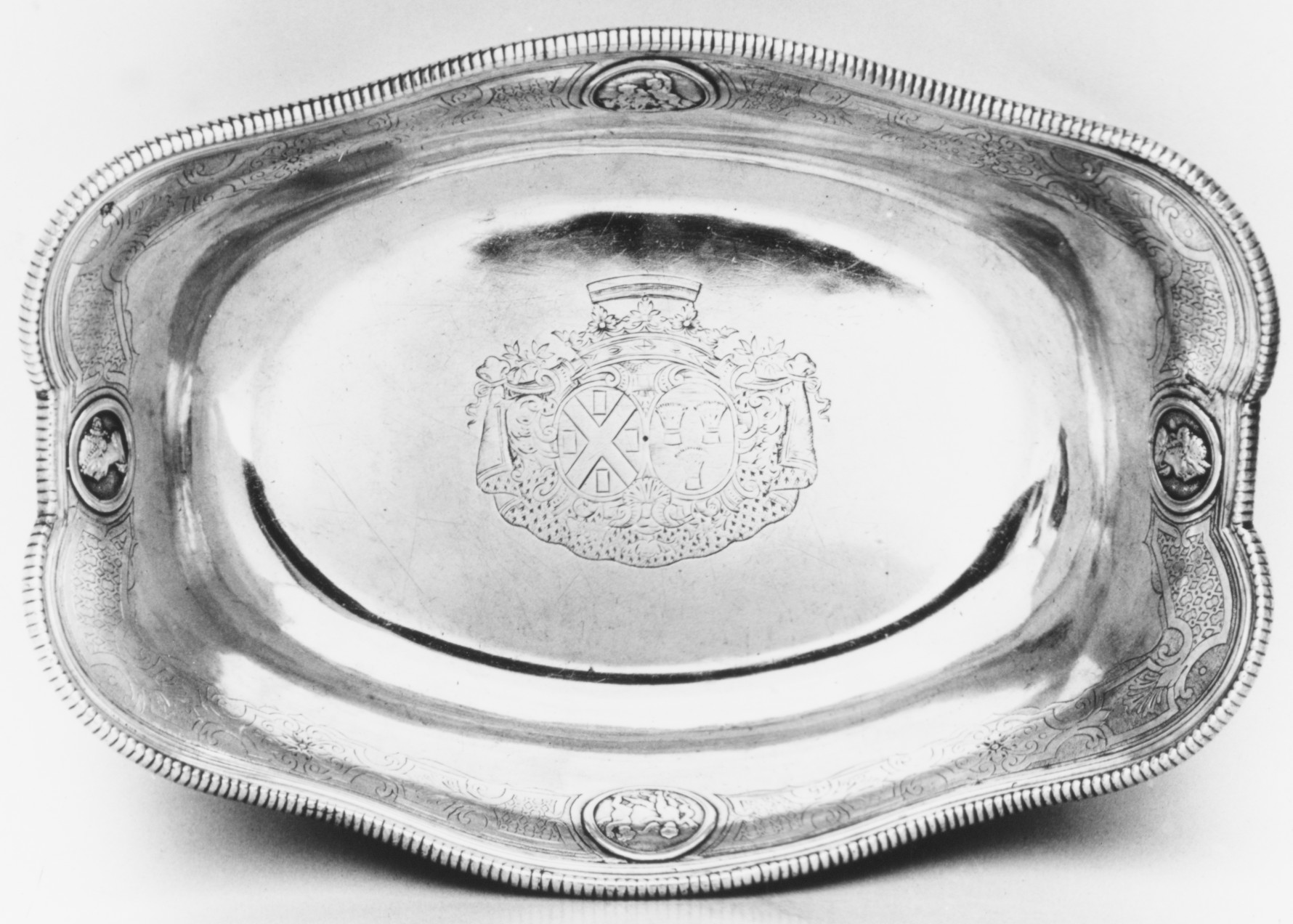
The Silver Basin: A Study in Global Heritage and Minimalist Opulence
In the rarefied world of haute couture, the intersection of utility and ornament often yields the most compelling narratives. Katherine Fashion Lab’s latest standalone study, titled “Basin,” redefines this intersection by elevating a humble, archetypal object—the basin—into a symbol of liquid heritage, material purity, and transcultural memory. Crafted entirely from silver, the piece eschews the ephemeral for the eternal, inviting a deep analysis of how a single material can anchor a global narrative of ritual, status, and artistry. This is not a garment in the traditional sense; it is a conceptual vessel, a wearable sculpture that interrogates the relationship between the human form and the elemental act of containment.
Materiality as Memory: The Silver Narrative
Silver, as a medium, carries a weight far beyond its physical density. In this study, Katherine Fashion Lab eschews the expected brilliance of polished silver, opting instead for a textured, patinated surface that evokes the touch of countless hands across centuries. The material’s global heritage is undeniable: from the ceremonial basins of ancient Mesopotamia to the ornate aguamaniles of Renaissance Europe, and the ritualistic lotas of the Indian subcontinent, silver has served as a universal repository for water, wine, and sacred oils. The lab’s choice of silver is not decorative but semantic—it speaks to a shared human history of cleansing, offering, and preserving. The piece’s surface is deliberately left unadorned by gemstones or enamels, forcing the viewer to confront the metal’s intrinsic dialogue with light and shadow. This austerity is a strategic move, positioning the basin as a primary text rather than a decorative footnote.
The craftsmanship involved is exacting. The basin’s form is achieved through a combination of hand-hammering and electrochemical etching, creating a topography that mimics the ripples of water—a subtle nod to the element it is meant to contain. The interior is burnished to a mirror-like finish, while the exterior retains a granular, almost geological texture. This duality—smooth within, rough without—mirrors the human condition: the private, reflective self versus the public, weathered persona. The lab’s artisans have achieved a tactile tension that invites both visual and haptic exploration, a hallmark of couture that transcends the visual.
Form and Function: The Architecture of Containment
As a standalone study, “Basin” rejects the constraints of wearable couture. It is designed to be held, displayed, or suspended—an object that demands interaction. Its silhouette is deceptively simple: a wide, shallow bowl with a gently flared rim, supported by a low, conical base. The proportions are deliberately ambiguous, neither purely functional nor purely sculptural. The diameter measures approximately 45 centimeters, a scale that references the human torso, suggesting an absent body. This anthropomorphic quality is central to the piece’s conceptual framework. The basin is not merely a container; it is a negative space that outlines a presence, a ghost of ritual action.
The lab’s design philosophy here draws from the Japanese concept of ma—the interval or pause that gives meaning to form. The empty interior of the silver basin is not void but potential. It awaits water, flowers, or the hands of a viewer. This interactive latency challenges the static nature of most couture objects. The piece is completed only when engaged, a performative dimension that elevates it from artifact to experience. The weight of the silver—approximately 3.2 kilograms—adds a gravitational presence that anchors the object in space, demanding a deliberate, slow interaction. This is not an object for the hurried; it is a meditation on the ceremony of care.
Global Heritage: Tracing the Cultural Threads
Katherine Fashion Lab’s research for this study spanned three continents, unearthing the basin’s role in disparate yet parallel traditions. In West Africa, silver basins were used in the courts of the Asantehene for presenting gold dust and ceremonial drinks, symbols of sovereignty and generosity. In pre-Columbian Andean cultures, silver vessels were buried with elites, intended to hold offerings for the afterlife. The lab synthesizes these references not through mimicry but through abstract distillation. The basin’s rim, for instance, is incised with a continuous spiral motif—a universal symbol of growth and eternity found in Celtic, Maori, and Hindu art. This motif is executed with a precision that respects its origins while asserting a contemporary, minimalist vocabulary.
The material’s global heritage also imposes a responsibility. The lab sources its silver from certified, ethically mined sources, with a provenance traceable to both South American and European mines. This transparency is part of a broader sustainable couture ethos, acknowledging that heritage is not only cultural but also ecological. The piece’s patina is achieved through natural oxidation, avoiding chemical lacquers, allowing the silver to evolve with time and handling. This living finish ensures that the basin will carry the marks of its own history, becoming a unique artifact with each interaction.
Contextualizing the Standalone Study
Within the broader landscape of contemporary fashion and design, “Basin” occupies a provocative space. It resists categorization as jewelry, accessory, or sculpture, instead existing as a hybrid object that questions the boundaries of couture. The lab’s decision to present it as a standalone study—unaccompanied by garments or models—forces a confrontation with the object itself. There is no human figure to distract; the basin is the protagonist. This curatorial choice echoes the work of early 20th-century modernists who sought to liberate objects from function, yet it retains a tactile, ritualistic purpose that grounds it in human experience.
In an era of digital saturation and fast fashion, the silver basin stands as a counterpoint—a slow, heavy, and silent object that demands contemplation. It is a study in restraint, a testament to the power of a single material and a single form to evoke a world of meaning. Katherine Fashion Lab has not merely designed a basin; they have created a locus of memory, a silver vessel that holds not water but time. For the discerning collector, it is an invitation to participate in a global heritage that is both ancient and urgently contemporary. The basin does not ask to be worn; it asks to be held, remembered, and passed on—a true artifact of our shared human story.