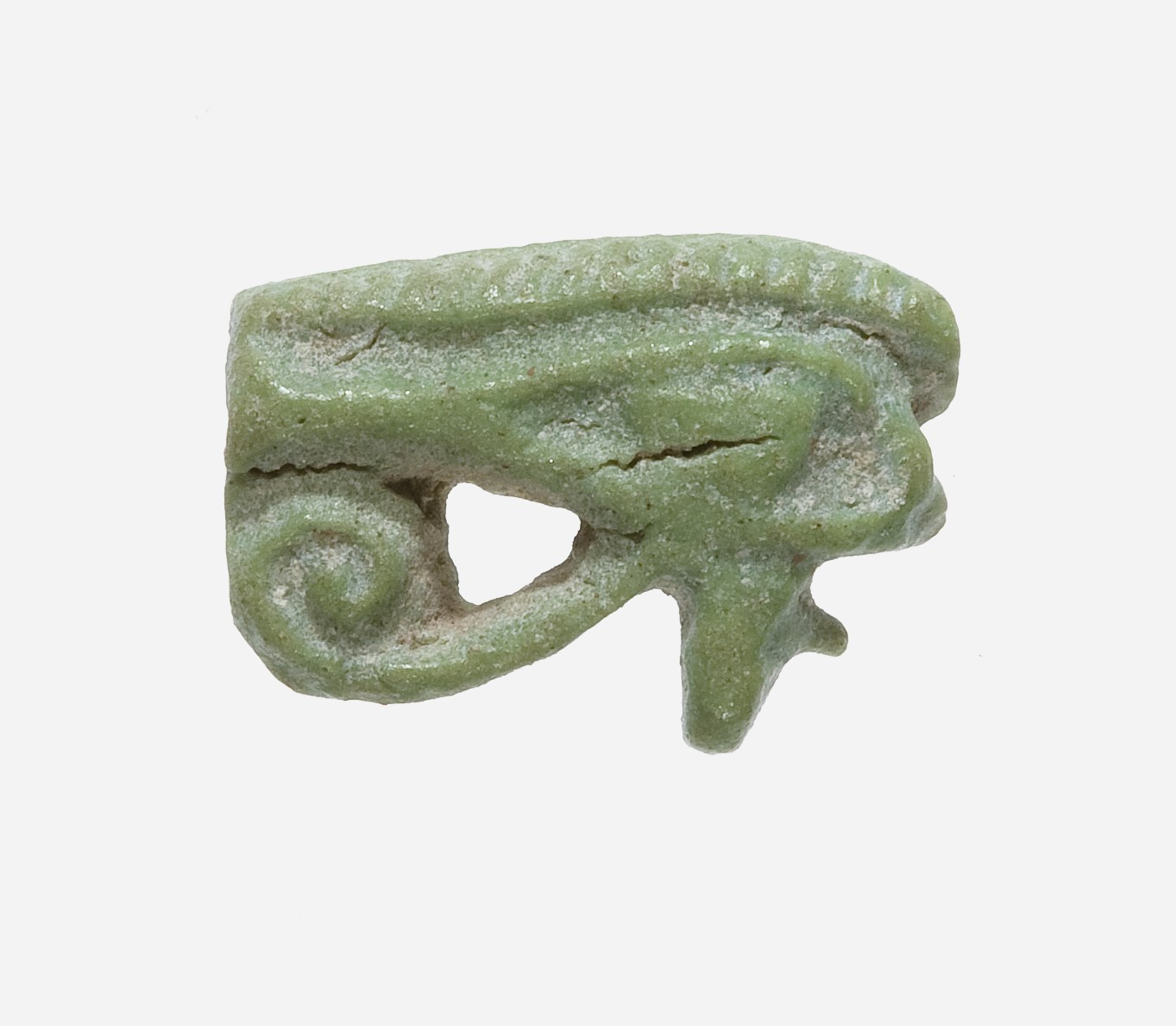
Heritage Analysis: The Wedjat Eye Amulet in Faience
Introduction: The Wedjat Eye as a Cultural and Symbolic Artifact
The Wedjat Eye, also known as the Eye of Horus, stands as one of the most potent and enduring symbols of ancient Egyptian civilization. This research paper, prepared for Katherine Fashion Lab, examines the Wedjat Eye amulet crafted from faience—a glazed non-clay ceramic material that was both accessible and sacred in antiquity. As a strategic standalone analysis, this document delves into the artifact’s symbolic power, its role in historical adornment, its profound spiritual meaning, and its potential for integration into a high-end luxury strategy for 2026. The Wedjat Eye is not merely a decorative motif; it is a repository of metaphysical protection, royal authority, and cosmic balance, making it an ideal candidate for modern luxury reinterpretation.
Symbolic Power: Protection, Healing, and Royal Authority
The Wedjat Eye’s symbolic power is rooted in the mythological narrative of Horus, the falcon-headed god, who lost his left eye in a battle with Seth, the god of chaos. The eye was subsequently restored by Thoth, the god of wisdom, or by Hathor, the goddess of love and healing. This act of restoration imbued the Wedjat Eye with meanings of wholeness, regeneration, and protection. In ancient Egyptian belief, the Wedjat Eye was a powerful talisman against evil, misfortune, and disease. It was often placed on amulets, jewelry, and funerary equipment to safeguard the wearer in life and in the afterlife.
From a strategic luxury perspective, the Wedjat Eye represents resilience and transformation—qualities that resonate deeply with contemporary high-end consumers seeking meaning beyond material wealth. The eye’s association with the sun and moon further elevates its status as a symbol of cosmic order, linking the wearer to divine forces. For Katherine Fashion Lab, the Wedjat Eye can be positioned as an emblem of inner strength and spiritual protection, appealing to a clientele that values authenticity and heritage.
Historical Adornment: Faience as a Medium of Status and Accessibility
The medium of faience is central to understanding the Wedjat Eye’s historical significance. Faience, a sintered-quartz ceramic glazed with vibrant blue-green hues, was one of the earliest synthetic materials developed by humans. In ancient Egypt, it was used to create scarabs, beads, amulets, and small figurines. The blue-green color, often associated with the Nile and fertility, symbolized rebirth and eternal life. The Wedjat Eye amulet in faience was not only a protective charm but also a marker of social status and religious devotion.
Archaeological evidence suggests that Wedjat Eye amulets were worn by both the elite and commoners, though the quality of faience and craftsmanship varied. For the nobility, faience amulets were often intricately detailed and glazed with precious cobalt or turquoise pigments, while mass-produced versions served as affordable talismans for the broader population. This dual accessibility and exclusivity make the Wedjat Eye an ideal motif for luxury strategy: it can be democratized in form but exalted in execution. Katherine Fashion Lab can leverage this historical precedent by offering limited-edition pieces that use premium materials—such as enamel, precious metals, or rare gemstones—while retaining the symbolic essence of faience.
Spiritual Meaning: The Eye as a Bridge Between Realms
The spiritual meaning of the Wedjat Eye extends beyond physical protection. In Egyptian cosmology, the eye was a portal between the mortal and divine, capable of seeing beyond the material world. It was also used in funerary rituals to ensure the deceased could see and navigate the afterlife. The left eye, associated with the moon and intuition, was considered particularly powerful for spiritual insight. For the living, wearing a Wedjat Eye amulet was an act of continuous communion with the gods, a reminder of the cosmic balance between order and chaos.
In a 2026 luxury context, this spiritual dimension offers a unique value proposition. Modern consumers increasingly seek products that foster mindfulness, connection, and transcendence. The Wedjat Eye can be marketed as a talisman for clarity and balance in an age of distraction and uncertainty. Katherine Fashion Lab can integrate this narrative into its brand storytelling, positioning the Wedjat Eye not merely as jewelry but as a wearable artifact of spiritual empowerment. Collaborations with contemporary artists or spiritual leaders could further deepen this resonance.
2026 High-End Luxury Strategy: Heritage, Exclusivity, and Innovation
To successfully integrate the Wedjat Eye amulet into a high-end luxury strategy for 2026, Katherine Fashion Lab must balance heritage with innovation. The following strategic pillars are recommended:
1. Heritage Reinterpretation: The Wedjat Eye should be reimagined through the lens of modern craftsmanship. While faience remains a viable medium for artisanal pieces, high-end versions could incorporate hand-painted enamel, 18-karat gold, or oxidized silver to evoke the ancient blue-green glaze. Limited-edition collections could feature exact replicas of museum-quality amulets, authenticated by Egyptologists, to appeal to collectors and connoisseurs.
2. Symbolic Storytelling: Each piece should be accompanied by a narrative card or digital experience explaining the Wedjat Eye’s mythology, spiritual meaning, and historical context. This educational luxury approach builds emotional attachment and justifies premium pricing. For example, a collection titled “Eyes of Eternity” could include amulets for protection, healing, and wisdom, each with a specific mythological reference.
3. Exclusivity and Scarcity: To maintain high-end positioning, the Wedjat Eye collection should be produced in limited runs with numbered certificates of authenticity. Collaborations with renowned jewelry designers or Egyptian heritage foundations could elevate the brand’s credibility. Pop-up exhibitions in luxury retail spaces—featuring curated artifacts alongside modern interpretations—would create immersive brand experiences.
4. Sustainability and Ethical Sourcing: Given the spiritual and cultural significance of the Wedjat Eye, ethical sourcing is paramount. Katherine Fashion Lab should partner with responsible mining and artisan cooperatives to ensure that materials are conflict-free and that production supports local communities. This aligns with the growing demand for conscious luxury among affluent millennials and Gen Z consumers.
5. Digital and Experiential Integration: In 2026, luxury is increasingly digital. Katherine Fashion Lab could launch an augmented reality (AR) app that allows customers to “activate” their Wedjat Eye amulet, revealing its mythological story or providing a daily affirmation. Virtual try-ons and blockchain-based ownership records would appeal to tech-savvy clients seeking phygital luxury—the seamless blend of physical and digital experiences.
Conclusion: The Wedjat Eye as a Strategic Asset for Katherine Fashion Lab
The Wedjat Eye amulet in faience is a masterpiece of ancient symbolism, craftsmanship, and spiritual significance. Its journey from a protective talisman in pharaonic Egypt to a potential luxury icon in 2026 is a testament to its timeless appeal. For Katherine Fashion Lab, this artifact offers a unique opportunity to bridge heritage and innovation, creating products that resonate on emotional, cultural, and aesthetic levels. By honoring the Wedjat Eye’s origins while reimagining its form for modern luxury, the brand can establish itself as a curator of meaning, not just a purveyor of fashion. This strategic approach will not only differentiate Katherine Fashion Lab in a competitive market but also cultivate a loyal clientele drawn to the power of symbols that endure across millennia.