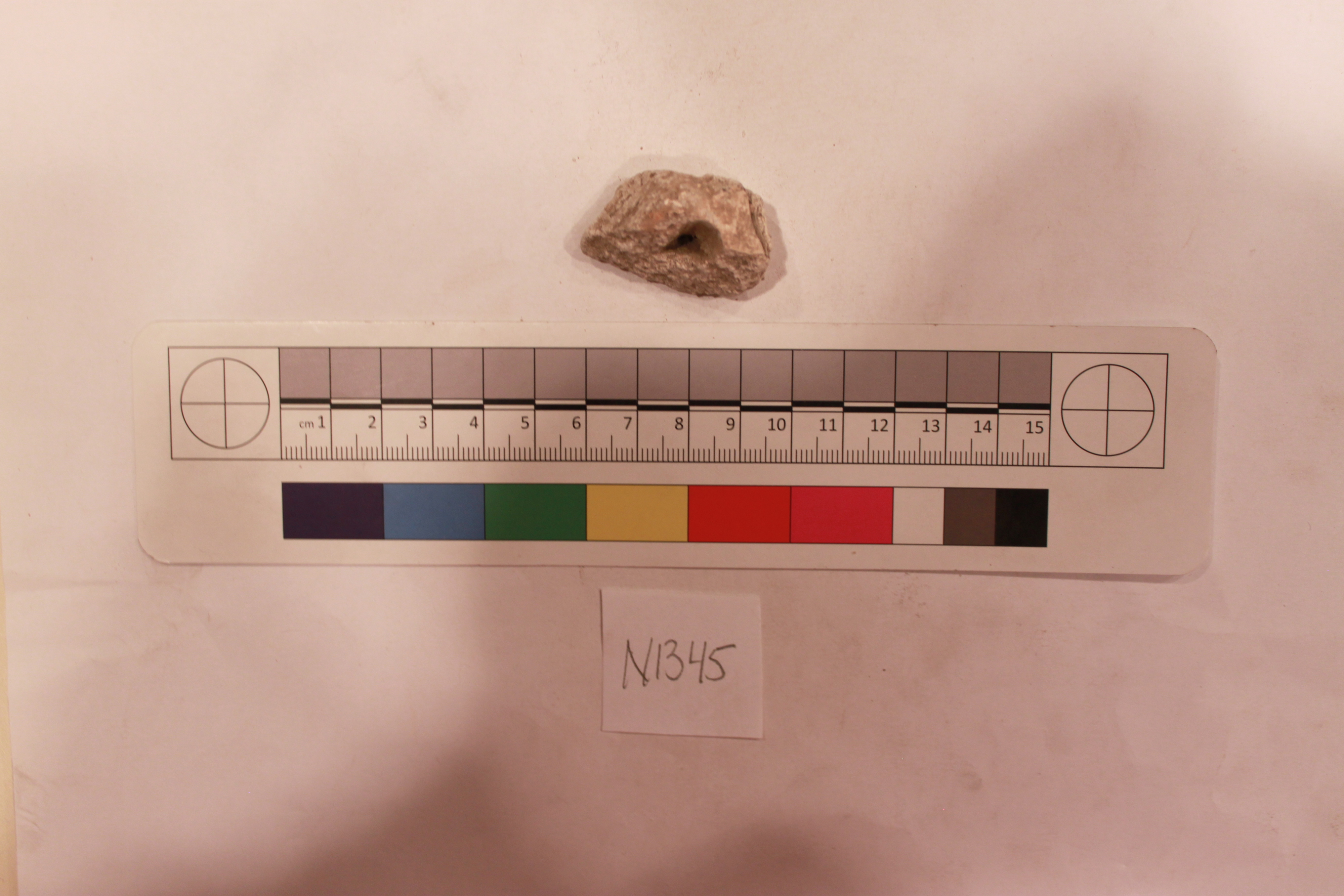
The Paradox of Permanence: A Couture Analysis of the Stucco Fragment
In the rarefied air of haute couture, where fabric is often revered for its pliability and ephemeral beauty, the inclusion of a Stucco Fragment as a subject of study presents a provocative challenge. At Katherine Fashion Lab, we approach this artifact—a carved and painted piece of mortar, sourced from a global heritage context and examined as a standalone object—not as a mere architectural remnant, but as a profound text on materiality, surface, and the very definition of luxury. This analysis deconstructs the fragment through the lens of couture craftsmanship, revealing how its apparent rigidity offers a masterclass in the tension between creation and decay, structure and ornament.
Materiality as Narrative: The Couture of Mortar
Stucco, at its core, is a humble composite: lime, sand, and water. Yet, in the hands of a master artisan, it transcends its utilitarian origins. The Stucco Fragment under examination is a testament to this transformation. Its surface, once a blank slate of wet mortar, has been carved with deliberate precision—a process analogous to the couturier’s moulage, where fabric is sculpted directly onto a mannequin. Each incision, each raised ridge, is a decision made in a medium that does not forgive hesitation. Unlike silk or tulle, which can be draped, pinned, and adjusted, stucco sets in a finite moment. The carver’s hand must commit, making the fragment a record of absolute intent.
From a couture perspective, the materiality of stucco challenges the conventional hierarchy of textiles. Where haute couture prizes the fluidity of cashmere or the sheen of satin, this fragment offers a different luxury: permanence through fragility. The painted surface, likely composed of mineral pigments, has flaked in places, revealing a layered history of application. This is not a flaw but a feature—a narrative of time that no new fabric can replicate. In the lab, we study how these layers interact: the base coat, the mid-tones, the highlights. They echo the haute couture technique of appliqué, where successive layers of material build depth and texture. Here, the stucco’s porous surface absorbs and reflects light differently depending on the angle, creating a dynamic visual experience that rivals the finest broderie anglaise.
Carved Construction: The Architecture of Ornament
The carving on this fragment is not arbitrary; it follows a logic of structural ornamentation. In couture, every seam, every dart serves both a functional and aesthetic purpose. Similarly, the stucco’s carved motifs—be they geometric, floral, or abstract—are not mere decoration. They are the result of a subtractive process, where material is removed to reveal form. This is the inverse of garment construction, where fabric is added and stitched. Yet, the principle is identical: the manipulation of a surface to create volume, shadow, and rhythm.
Consider the fragment’s relief. The raised areas, once painted in vivid hues, now show signs of wear, with the pigment settling into the recesses. This creates a natural chiaroscuro effect, a play of light and dark that a couturier might achieve through pleating or tucking. The stucco’s depth—perhaps only a few millimeters—mimics the three-dimensionality of a plissé skirt or a sculpted bodice. In the lab, we measure these contours, mapping them as one would a pattern. The fragment teaches us that ornament is not an afterthought but a structural dialogue with the base material. The carver understood that the mortar’s inherent brittleness could be harnessed to create delicate undercuts, much as a couturier uses a horsehair braid to stiffen a hem without sacrificing grace.
Surface as Time: The Patina of Heritage
The painted surface of the stucco fragment is where its global heritage becomes most palpable. Pigments—derived from lapis lazuli, ochre, or cinnabar—were once symbols of status and trade routes. Today, their fading and cracking constitute a patina that no modern dye can replicate. In couture, the concept of vintage or aged fabric is often sought after, but it is rarely authentic. Here, the fragment’s surface is a living document of environmental exposure, handling, and neglect. The flaking paint reveals the substrate beneath, creating a visual dialogue between intention and accident.
This is a critical lesson for the fashion industry: imperfection as identity. The stucco fragment does not aspire to the pristine. Its value lies in its evidence of use, of having been part of a larger whole—a wall, a frieze, a temple—that is now lost. In the lab, we analyze these traces under magnification. The micro-cracks, the salt efflorescence, the organic stains from centuries of touch. Each mark is a signature of a specific time and place. A couture garment, by contrast, is often designed to be preserved in a climate-controlled archive. The fragment challenges this notion, suggesting that true luxury is not immunity to decay but the grace with which it is endured.
Standalone Study: The Fragment as Garment
Examining this stucco fragment as a standalone object—removed from its architectural context—forces a redefinition of its purpose. It is no longer a part of a building; it is a garment for a wall, a skin that once clothed a structure. This perspective aligns with the couture tradition of déshabillé, where a garment is studied in isolation to appreciate its construction. Without the distraction of a full building, the fragment’s proportions, weight, and texture become the focus. Its edges are rough, suggesting it was torn or chiseled from its original setting. This abrupt termination is akin to a raw hem—a deliberate choice to leave the work unfinished, exposing the internal structure.
In the lab, we handle the fragment with gloved hands, noting its heft. It is denser than any fabric, yet it shares a similar relationship to the body—or, in this case, the wall. It was applied, smoothed, and shaped to conform to an underlying form. The curvature of the fragment, however slight, indicates it was part of a rounded surface, perhaps a column or an arch. This curvature is a lesson in bias cutting in couture, where fabric is cut on the diagonal to follow the body’s lines. The stucco’s carver intuitively understood this principle, adapting the rigid mortar to an organic contour.
Implications for Contemporary Couture
What, then, does this Stucco Fragment offer to the modern couturier? It is a manifesto for material honesty. In an era of synthetic blends and digital prints, the fragment reminds us of the power of a single, natural composite. Its carved and painted surface is a testament to the labor of the hand, a value that haute couture claims as its own. Yet, the fragment also challenges couture’s obsession with the new. It suggests that the most compelling narratives are those that bear the marks of time, that the imperfect can be more luxurious than the flawless.
For Katherine Fashion Lab, this analysis informs a new direction: the integration of architectural techniques into garment construction. We explore how stucco’s layering and carving can be translated into textile treatments—perhaps through resin casting or embossed leather. The fragment’s color palette, muted by age, inspires a collection of terre tones, where pigment is applied in washes rather than solid blocks. Most importantly, the fragment teaches us that a stand-alone object—whether a shard of mortar or a silk gown—carries the weight of its entire history. In couture, as in heritage, the true art lies not in creating something new, but in revealing what was always there.