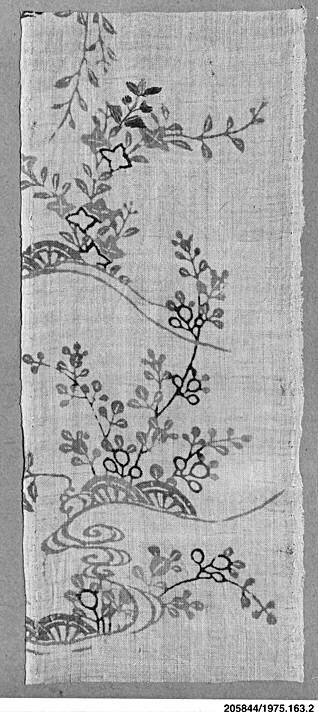
Heritage Analysis: Piece from a Summer Robe (Katabira)
Subject: Piece from a Summer Robe (Katabira) | Origin: Japan | Medium: Dye-patterned plain-weave ramie | Research Context: Strategic Standalone Research for Katherine Fashion Lab
Introduction: The Katabira as a Symbolic Artifact
The fragment of a Katabira—a summer robe worn by elite members of Japanese society during the Edo period—represents far more than a textile remnant. It is a concentrated archive of cultural symbolism, historical adornment, and spiritual meaning. For Katherine Fashion Lab, this piece offers a unique strategic lens through which to examine the intersection of heritage and high-end luxury. The ramie fiber, a plant-based bast fiber prized for its lightness and breathability, was the preferred medium for summer garments in Japan’s humid climate. Yet the Katabira’s significance transcends its materiality; it was a canvas for social status, seasonal awareness, and spiritual protection. This analysis deconstructs the symbolic power, historical adornment practices, and spiritual dimensions of the Katabira, culminating in a forward-looking luxury strategy for 2026.
Symbolic Power: The Language of Transparency and Restraint
The Katabira’s defining characteristic—its sheer, almost translucent weave—was not merely functional but deeply symbolic. In Edo-period Japan, transparency was a visual metaphor for honesty, purity, and refinement. The robe’s ability to reveal layers of undergarments while concealing the body itself created a delicate balance between exposure and modesty, a concept known as ma (the meaningful space between). This aesthetic principle resonates with contemporary luxury consumers who seek understated sophistication over overt display.
The dye-patterned designs, often featuring motifs such as cranes, pines, or flowing water, carried specific symbolic meanings. Cranes represented longevity and good fortune; pines symbolized resilience and eternal youth; water motifs evoked purification and the transient beauty of nature. For Katherine Fashion Lab, these symbols offer a rich vocabulary for brand storytelling. By integrating such motifs into a 2026 collection, the lab can position its offerings as repositories of cultural wisdom, appealing to clients who value heritage-driven narratives and meaningful craftsmanship.
Historical Adornment: The Katabira as a Status Marker
Historically, the Katabira was exclusive to the samurai class and high-ranking courtiers, who wore it during summer festivals, tea ceremonies, and informal gatherings. Its production required extraordinary skill: the ramie fibers were hand-spun, woven on narrow looms, and dyed using techniques such as yūzen (resist dyeing) or shibori (tie-dye). Each robe took months to complete, making it a marker of economic and social capital. The patterns were often commissioned to reflect the wearer’s clan crest or personal attributes, transforming the garment into a heraldic device.
This historical context underscores the Katabira’s role as a strategic tool for identity construction. In the 2026 luxury market, where exclusivity and personalization are paramount, Katherine Fashion Lab can draw on this precedent to develop bespoke services. Clients could commission garments that incorporate their own symbolic motifs—family crests, personal totems, or abstract representations of values—thereby creating a direct lineage to the Katabira’s tradition of adornment as identity.
Spiritual Meaning: The Robe as a Protective Talisman
Beyond its social function, the Katabira held profound spiritual meaning. In Shinto and Buddhist traditions, garments were believed to absorb spiritual energy and protect the wearer from malevolent forces. The sheer ramie fabric, when combined with specific patterns, was thought to ward off evil spirits and ensure a harmonious connection with nature. The process of dyeing itself was often accompanied by rituals, including prayers and offerings to the kami (spirits) of the fibers and dyes.
For Katherine Fashion Lab, this spiritual dimension offers a compelling entry point into emotional luxury. In a 2026 market increasingly driven by wellness and mindfulness, garments that are imbued with protective or meditative qualities can command premium positioning. The lab could collaborate with contemporary artisans to embed subtle spiritual symbols—such as mandalas, protective knots, or nature-inspired patterns—into its designs. Additionally, the act of wearing such a garment could be framed as a ritual of self-care, aligning with the growing demand for products that support mental and spiritual well-being.
2026 High-End Luxury Strategy: Translating Heritage into Modernity
To leverage the Katabira’s heritage for a 2026 luxury strategy, Katherine Fashion Lab must adopt a multifaceted approach that balances authenticity with innovation. The following strategic pillars are recommended:
1. Material Innovation with Heritage Integrity
The ramie fiber, while historically significant, may not meet the performance expectations of modern luxury consumers. The lab should invest in sustainable, high-tech alternatives that mimic the breathability and transparency of ramie while offering improved durability and comfort. For example, Tencel or organic linen blends could be treated to achieve a similar drape and sheen. The key is to maintain the visual and tactile essence of the Katabira while adapting to contemporary needs.
2. Symbolic Customization as a Brand Differentiator
Building on the Katabira’s heraldic tradition, the lab should offer a bespoke symbolic motif program. Clients would work with in-house heritage curators to select or design patterns that reflect their personal narratives, values, or aspirations. This service could be marketed as “The Katabira Code,” emphasizing the garment’s role as a wearable manifesto of identity. The exclusivity of this process would justify price points exceeding $10,000 per piece.
3. Ritual-Based Marketing and Experience Design
The spiritual dimension of the Katabira can be translated into a brand experience. Katherine Fashion Lab could host private salons where clients participate in a guided meditation or tea ceremony before selecting their garment. The packaging could include a ritual card explaining the protective symbolism of the chosen pattern. This approach transforms the purchase into a transformative experience, building deep emotional loyalty.
4. Limited-Edition Heritage Collections
To create scarcity and cultural cachet, the lab should release annual heritage collections that reinterpret historical Katabira motifs through a contemporary lens. Each collection could be tied to a specific theme—such as “The Four Seasons” or “The Elements”—and produced in limited quantities of 50 pieces. Collaborations with Japanese master dyers and textile conservators would add authenticity and generate press coverage.
5. Digital Storytelling and Transparency
In an era of conscious consumerism, the lab must communicate the provenance and craftsmanship of each piece. A digital passport system, using blockchain technology, could trace the garment from fiber sourcing to final stitching. Clients would receive a certificate of heritage that details the symbolic meaning of their chosen pattern and the artisan who created it. This transparency builds trust and justifies the premium pricing.
Conclusion: The Katabira as a Blueprint for Timeless Luxury
The piece from a Summer Robe (Katabira) is not merely a historical artifact; it is a strategic blueprint for the future of high-end luxury. Its symbolic power, rooted in transparency and restraint, offers a counterpoint to the excess of contemporary fashion. Its historical role as a status marker provides a template for bespoke personalization. Its spiritual meaning speaks to the modern desire for meaning and protection. By integrating these elements into a cohesive 2026 strategy, Katherine Fashion Lab can position itself as a custodian of heritage and a pioneer of emotional luxury. The Katabira’s legacy, translated with care and innovation, will resonate with a discerning clientele seeking not just garments, but artifacts of identity and spirit.