Heritage Analysis: The Amulet of the God Pataikos
Introduction: The Artifact as a Cultural and Commercial Nexus
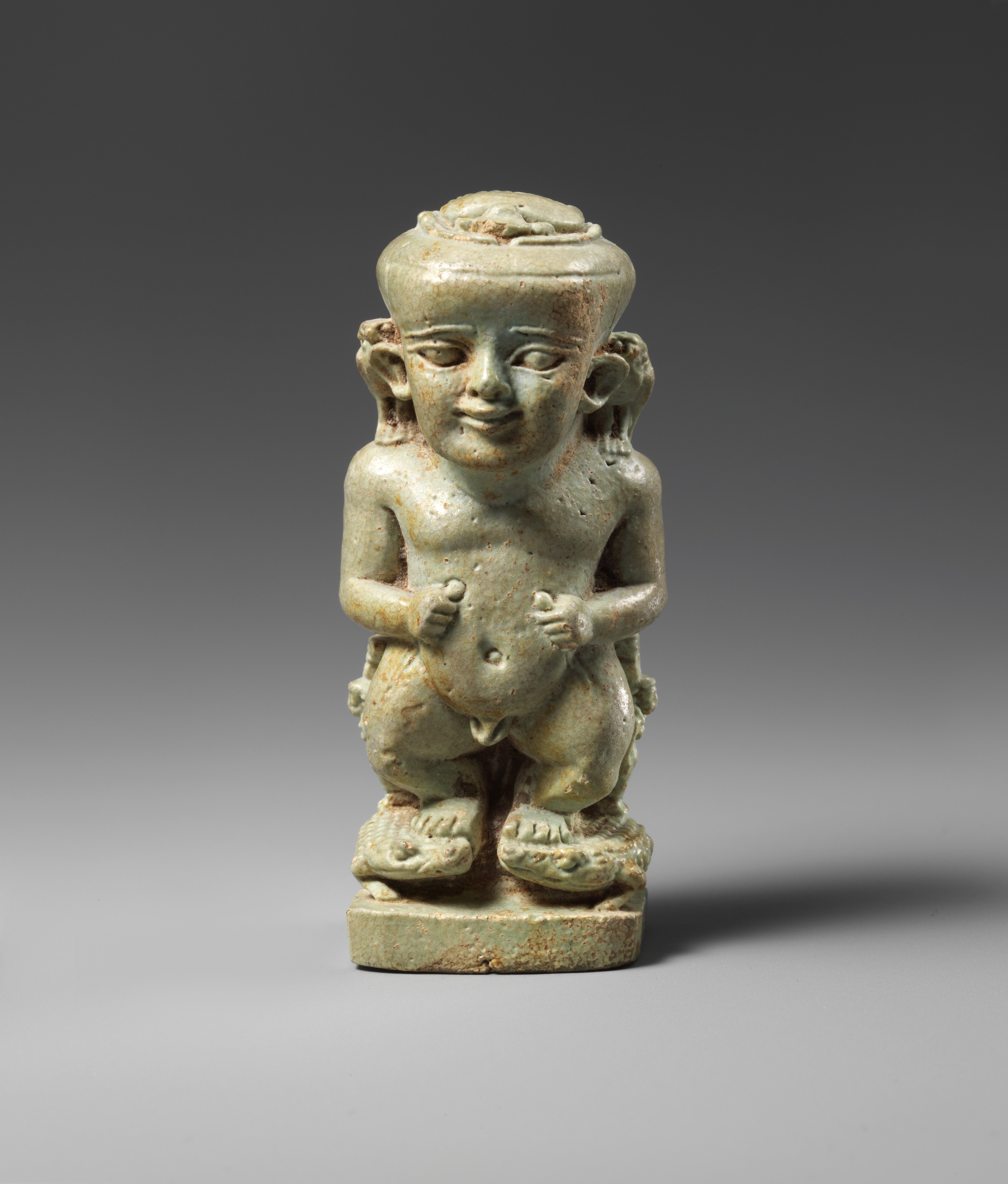
The Amulet of the God Pataikos, rendered in faience from the ancient Nile Valley, represents a convergence of spiritual protection, material artistry, and symbolic potency. As a Lead Heritage Curator for Katherine Fashion Lab, this analysis examines the amulet through the dual lenses of historical adornment and high-end luxury strategy. The Pataikos figure—a dwarf-like deity often associated with the god Ptah—was revered in ancient Egyptian culture for its apotropaic powers, guarding the wearer against malevolent forces, disease, and misfortune. Crafted from faience, a self-glazing ceramic material prized for its luminous blue-green hue, the amulet embodies both the sacred and the aesthetic. This report positions the Pataikos amulet not merely as a relic but as a strategic asset for a 2026 luxury collection, where heritage symbolism meets contemporary connoisseurship.
Symbolic Power: The Deity as a Guardian of Vitality
The symbolic power of the Pataikos amulet is rooted in its dual representation of vulnerability and strength. In ancient Egyptian cosmology, Pataikos was a protective deity, often depicted as a dwarf with a broad face, large ears, and a lion-headed serpent or scorpion underfoot. This imagery conveyed mastery over dangerous forces, while the dwarf form—a figure of marginality in society—paradoxically signified divine favor and resilience. The amulet’s primary function was to ward off evil, particularly for children and the infirm, making it a talisman of vitality and rebirth.
For Katherine Fashion Lab, this symbolic duality offers a potent narrative for high-end luxury. In an era where consumers seek meaning beyond materiality, the Pataikos amulet can be reinterpreted as a symbol of inner strength and protection against modern anxieties—stress, burnout, and societal pressures. The deity’s association with the god Ptah, a creator and craftsman, further aligns with the lab’s emphasis on artisanal excellence. By integrating this symbolism into jewelry or accessory designs, the brand can tap into the growing demand for “meaningful luxury,” where each piece carries a story of resilience and guardianship. The amulet’s power is not passive; it is an active force that empowers the wearer, a quality that resonates with the 2026 consumer’s desire for authenticity and personal empowerment.
Historical Adornment: Faience and the Aesthetics of Protection
Faience, the medium of the Pataikos amulet, was a technological marvel of the ancient world. Composed of crushed quartz or sand, mixed with alkaline salts and copper compounds, it was fired to produce a vitreous, lustrous surface. The resulting blue-green color—symbolizing the Nile, regeneration, and the heavens—was not merely decorative but deeply spiritual. Faience amulets were worn as pendants, sewn into clothing, or placed on mummies to ensure safe passage in the afterlife. The material’s durability and brilliance made it a premium choice for protective adornment, accessible to elites and commoners alike, though finer examples were reserved for the wealthy.
In historical context, the Pataikos amulet was part of a broader tradition of “amuletic jewelry” that blurred the line between ornament and ritual object. The act of wearing such an amulet was a daily affirmation of faith and a tangible connection to the divine. For Katherine Fashion Lab, this historical practice informs a 2026 luxury strategy centered on “wearable talismans.” The use of faience—or its contemporary equivalents such as high-fired porcelain, enamel, or luminescent ceramics—can evoke the same sense of ancient craftsmanship while appealing to modern aesthetics. The lab might consider limited-edition collections that mimic the amulet’s original form, perhaps with modernized motifs like abstracted dwarf figures or serpent motifs, rendered in precious metals and gemstones. The key is to preserve the amulet’s role as a protective adornment while elevating it through luxury materials and bespoke production.
Spiritual Meaning: The Amulet as a Bridge Between Worlds
The spiritual meaning of the Pataikos amulet transcends its physical form. In ancient Egyptian belief, amulets were not passive charms but active conduits for divine energy. The Pataikos, in particular, was associated with the sun god Ra and the concept of “heka” (magic), which was considered a natural force to be harnessed for protection. The amulet’s placement on the body—often at the neck or chest—positioned it as a guardian of the heart and breath, vital centers of life. This spiritual dimension imbued the object with a profound intimacy, as it was worn against the skin, absorbing the wearer’s energy and offering constant protection.
For a 2026 luxury strategy, this spiritual intimacy can be leveraged to create a deeper consumer-brand relationship. Katherine Fashion Lab can position the Pataikos-inspired collection as a “ritual object” for the modern individual—a piece that encourages mindfulness, self-care, and intentionality. The lab might collaborate with spiritual advisors or historians to develop a narrative around “activation rituals,” where each piece is blessed or imbued with intention before purchase. This approach aligns with the luxury sector’s shift toward experiential and transformative products, where the value lies not only in the object but in the emotional and spiritual journey it facilitates. The amulet’s role as a bridge between the material and the metaphysical offers a unique selling proposition in a market saturated with ephemeral trends.
2026 High-End Luxury Strategy: Heritage as a Competitive Advantage
To translate the Pataikos amulet into a 2026 luxury collection, Katherine Fashion Lab must adopt a strategy that balances heritage preservation with avant-garde innovation. The following pillars are critical:
Artisanal Revival: Partner with contemporary ceramicists and enamelers to revive faience techniques, using sustainable, locally sourced materials. Each piece should be handcrafted, with variations that underscore its uniqueness—a hallmark of high-end luxury. Limited runs of 50–100 units per design can create scarcity and exclusivity.
Narrative-Driven Marketing: Develop a campaign that tells the story of Pataikos as a guardian of vitality, using immersive media such as augmented reality (AR) to show the amulet’s protective symbolism in action. For example, an AR filter could visualize the amulet “activating” when the wearer encounters stress, offering a digital layer of meaning.
Collaborative Curation: Engage with Egyptologists, contemporary artists, and wellness experts to co-create the collection. This cross-disciplinary approach adds intellectual depth and credibility, appealing to the discerning clientele who value cultural literacy. A launch event at a museum or heritage site could further cement the collection’s prestige.
Price Positioning: Position the collection in the ultra-luxury segment ($5,000–$50,000 per piece), justified by the material rarity, artisanal labor, and spiritual narrative. The amulet’s historical association with protection can be marketed as a “lifetime investment” in personal well-being, resonating with the 2026 consumer’s focus on longevity and quality over quantity.
Digital and Physical Integration: Offer a “digital certificate of authenticity” that includes the amulet’s historical provenance and a personalized blessing from a cultural authority. This bridges the tangible and intangible, creating a holistic luxury experience.
Conclusion: The Pataikos Amulet as a Blueprint for Meaningful Luxury
The Amulet of the God Pataikos, in its faience form, is more than an ancient artifact; it is a blueprint for how heritage can inform contemporary luxury. Its symbolic power, historical adornment practices, and spiritual meaning offer a rich tapestry for Katherine Fashion Lab to weave into a 2026 collection that transcends mere ornamentation. By honoring the amulet’s origins while reimagining it for a modern audience, the lab can position itself at the forefront of a new luxury paradigm—one where value is measured not only in carats and craftsmanship but in cultural resonance and emotional impact. The Pataikos amulet reminds us that true luxury is, and has always been, a form of protection, a statement of identity, and a bridge to the sacred.