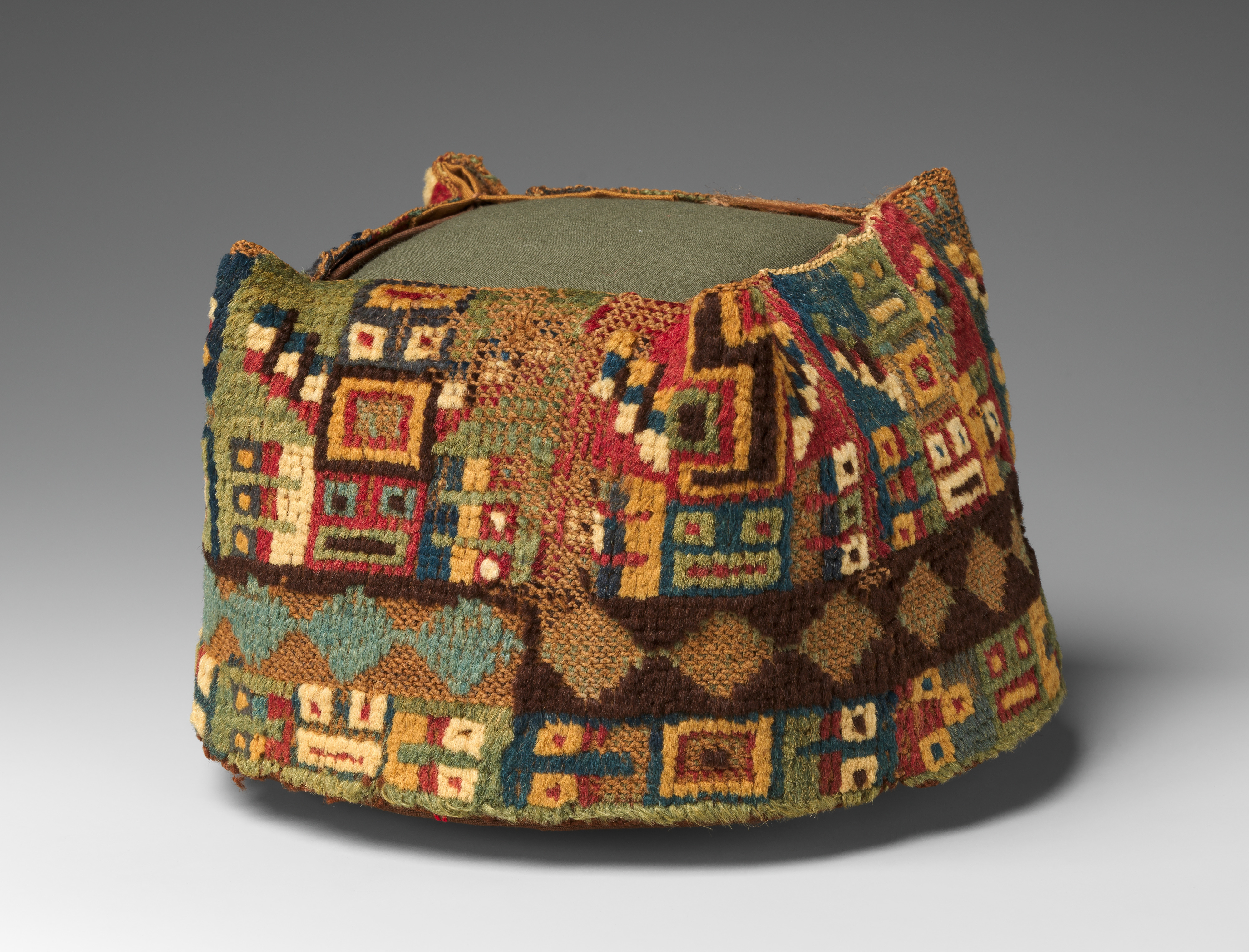
The Four-Cornered Hat: A Wari Masterpiece in Camelid Hair
In the vast tapestry of pre-Columbian Andean textiles, few artifacts encapsulate the intersection of artistry, social hierarchy, and spiritual cosmology as profoundly as the Four-Cornered Hat from the Wari civilization. Crafted from the finest camelid hair—likely sourced from alpaca or llama—this headdress is not merely an accessory but a sophisticated emblem of power, identity, and ritualistic purpose. As the Lead Curator of Katherine Fashion Lab, I present this standalone study to dissect the materiality, construction, and cultural resonance of this remarkable piece, offering a lens through which contemporary fashion scholars and enthusiasts can appreciate its enduring influence.
Materiality and Craftsmanship: The Significance of Camelid Hair
The choice of camelid hair as the primary material is no accident; it reflects the Wari’s profound understanding of textile engineering and environmental adaptation. Camelid fibers, particularly those from alpacas and llamas, possess exceptional thermal insulation, durability, and a natural luster that rivals modern synthetics. In the arid highlands of Peru, where temperatures fluctuate dramatically between day and night, such properties were indispensable. The Wari, who flourished from approximately 600 to 1000 CE, perfected the art of spinning these fibers into fine threads, often achieving a gauge that would challenge contemporary hand-spinners.
The Four-Cornered Hat, typically measuring around 15 to 20 centimeters in height, showcases a meticulous weaving technique known as tapestry weave. This method, executed on a backstrap loom, allowed artisans to create intricate geometric patterns and symbolic motifs within a single, unbroken fabric. The density of the weave—often exceeding 30 warp threads per centimeter—ensures structural integrity while permitting the hat to maintain its distinct, rigid shape. The corners, which give the hat its name, are not merely decorative; they are functional, likely designed to hold offerings or to anchor the headdress during ceremonial use. The fibers were dyed using natural pigments derived from plants, minerals, and insects, resulting in a palette of deep indigos, vibrant ochres, and muted earth tones that have retained their richness for over a millennium.
Symbolism and Social Stratification: The Hat as a Marker of Status
Within Wari society, the Four-Cornered Hat was far more than a fashion statement; it was a visual declaration of authority and lineage. Archaeological evidence suggests that these hats were reserved for elite individuals—priests, warriors, and administrators—who wore them during religious ceremonies, diplomatic meetings, and funerary rites. The hat’s four corners are often interpreted as representing the cardinal directions, a motif deeply embedded in Andean cosmology. This alignment with the natural world imbued the wearer with a sense of cosmic balance and divine sanction, reinforcing their role as intermediaries between the human and spiritual realms.
Moreover, the hat’s intricate patterns—frequently featuring stepped diamonds, zigzags, and stylized animal figures—served as a form of non-verbal communication. Each design element likely conveyed specific information about the wearer’s clan, rank, or geographic origin. For instance, the presence of bird motifs may have signified a connection to the sky deity, while serpentine forms could denote earthbound power. The use of camelid hair itself carried symbolic weight; these animals were integral to Wari economy and spirituality, often sacrificed in rituals to ensure fertility and prosperity. By wearing a hat made from their fibers, the elite literally embodied the community’s collective wealth and spiritual devotion.
Construction Techniques: A Technical Analysis
To fully appreciate the Four-Cornered Hat, one must examine its construction through a lens of textile engineering. The hat is typically formed from a single rectangular piece of woven fabric, which is then folded and seamed to create a four-sided structure. The corners are reinforced with additional layers of camelid hair, often using a technique akin to needle felting to achieve rigidity. This method ensures that the hat retains its shape even after centuries of burial or handling.
The warp and weft threads are spun in an S-twist direction, a hallmark of Andean textile traditions that imparts strength and elasticity. The weft threads, often thicker than the warp, are packed tightly to create a dense, almost armor-like surface. This density not only provides durability but also allows for the precise execution of complex patterns. In some examples, fringe or tassels are attached to the corners, possibly serving as talismans or markers of rank. The absence of any metal or organic fastenings suggests that the hat was secured to the head using a chin strap or by tucking long hair beneath it—a practice that aligns with Wari iconography depicting figures with elongated, covered heads.
Cultural Context and Ritual Use
The Four-Cornered Hat’s role in Wari ritual life cannot be overstated. Excavations in sites such as Huari and Conchopata have uncovered these hats in elite burial contexts, often placed near the head of the deceased. This positioning suggests that the hat was considered essential for the journey into the afterlife, serving as a marker of the individual’s earthly status and a protector in the spiritual realm. In some cases, the hats were found with traces of coca leaves or maize, indicating that they were used in ceremonies involving psychoactive substances or offerings to the gods.
The Wari civilization, often considered the precursor to the Inca, established a vast network of trade and cultural exchange across the Andes. The Four-Cornered Hat, with its standardized form yet regional variations in pattern and color, exemplifies this interconnectedness. While the core design remained consistent, local artisans adapted motifs to reflect their specific traditions, creating a shared visual language that transcended political boundaries. This adaptability underscores the hat’s role as a tool of unification, allowing the Wari elite to project authority over diverse ethnic groups.
Contemporary Relevance: Lessons for Modern Fashion
From the vantage point of Katherine Fashion Lab, the Four-Cornered Hat offers a wealth of inspiration for contemporary couture. Its emphasis on sustainable materials—camelid hair is a renewable, biodegradable resource that requires minimal processing—aligns with modern movements toward eco-conscious fashion. The hat’s geometric precision and use of natural dyes challenge designers to explore non-toxic, locally sourced alternatives to synthetic textiles. Additionally, the hat’s multifunctionality—as a status symbol, ritual object, and protective garment—echoes the current trend toward versatile, meaningful accessories that transcend mere aesthetics.
In an era where fashion often prioritizes disposability, the Wari Four-Cornered Hat stands as a testament to the power of intentional design. Its construction required months of labor, a deep understanding of material science, and a profound connection to cultural identity. For the modern couturier, studying this artifact is not an exercise in nostalgia but a call to action: to create pieces that are as enduring in their craftsmanship as they are resonant in their symbolism. As we continue to explore the intersections of history and fashion, the Four-Cornered Hat remains a beacon of what is possible when artistry, technology, and spirituality converge.
In conclusion, this standalone analysis reaffirms that the Wari Four-Cornered Hat is not merely an archaeological curiosity but a masterclass in textile innovation and cultural expression. Its legacy, woven in camelid hair, invites us to reconsider the role of clothing as a vessel for meaning—a lesson that Katherine Fashion Lab is committed to preserving and reimagining for future generations.