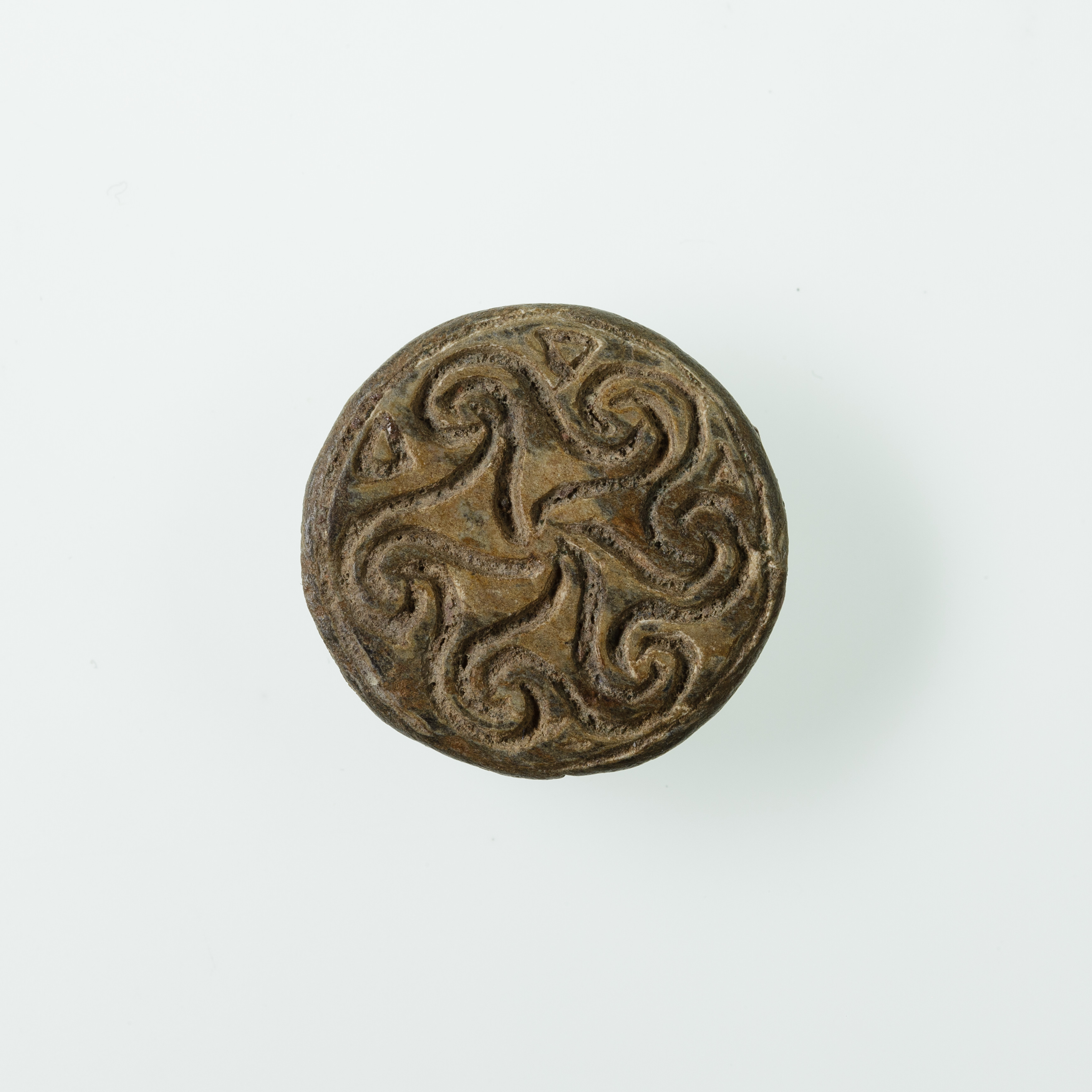
Heritage Analysis: The Button Seal of Ancient Civilization
This heritage analysis, conducted for Katherine Fashion Lab, examines the button seal from an ancient civilization, specifically focusing on a glazed steatite specimen. As a Lead Heritage Curator, I approach this artifact not merely as a decorative object but as a strategic repository of symbolic power, historical adornment, and spiritual meaning. The button seal, often overlooked in favor of larger ceremonial items, represents a microcosm of ancient authority and identity. This analysis will deconstruct its cultural significance and propose a 2026 high-end luxury strategy that leverages its enduring resonance.
Symbolic Power: The Seal as Authority and Identity
The button seal, typically worn as a personal ornament, functioned as a miniature emblem of authority in ancient civilizations, particularly in the Indus Valley and Mesopotamian contexts. Crafted from glazed steatite, a soft stone that hardens upon firing, the seal was often engraved with intricate motifs—animals, deities, or geometric patterns. This symbolic power derived from its dual function: as a tool for stamping ownership onto goods and as a talisman of personal identity. The act of pressing the seal into clay or wax was a ritual of validation, transforming a mundane transaction into a sacred covenant. For Katherine Fashion Lab, this concept of the seal as a marker of authenticity is directly translatable to modern luxury branding. In 2026, high-end consumers seek products that confer not just status but a sense of provenance and exclusivity. The button seal teaches us that small, wearable objects can carry immense symbolic weight, serving as a tangible link between the wearer and a lineage of power.
Iconography and Hierarchical Signaling
The iconography on these seals was not arbitrary. Common motifs, such as the unicorn or bull in Indus Valley seals, signified fertility, strength, or divine protection. The choice of glazed steatite—often in hues of blue, green, or white—enhanced the visual impact, mimicking precious stones like lapis lazuli or turquoise. This deliberate use of color and form was a form of hierarchical signaling, distinguishing elites from commoners. For a 2026 luxury strategy, Katherine Fashion Lab can draw from this principle by employing subtle, iconographic details in button-inspired accessories. A seal-shaped pendant or cufflink, engraved with a bespoke emblem, becomes a silent communicator of the wearer’s values—whether that be heritage, innovation, or spiritual alignment. The symbolic power of the button seal lies in its ability to convey meaning without words, a quality that resonates deeply in an era of minimalist luxury and silent branding.
Historical Adornment: The Button Seal as Personal Ornament
Historically, the button seal was a hybrid object—part functional tool, part personal adornment. Unlike modern buttons, which are primarily utilitarian, these ancient seals were sewn onto garments or worn as pendants, often at the neck or waist. This placement was strategic, positioning the seal at the center of the body’s energetic and social focal points. In ancient civilizations, adornment was not merely decorative; it was a form of non-verbal communication, signaling wealth, occupation, and social standing. The glazed steatite button seal, with its smooth surface and vibrant finish, would have caught light and eye, drawing attention to the wearer’s status. For Katherine Fashion Lab, this historical context offers a blueprint for reimagining the button as a luxury accessory. In 2026, the trend toward "quiet luxury" favors pieces that are understated yet rich in story. A collection inspired by the button seal could include detachable brooches, toggles, or clasps that double as seals, allowing wearers to imprint their identity onto their attire.
Craftsmanship and Material Legacy
The medium of glazed steatite is particularly instructive. Steatite, or soapstone, is easily carved yet durable after glazing, making it ideal for intricate designs. The glazing process, which involved applying a silica-based coating and firing the piece, created a glass-like surface that resisted wear. This technical sophistication underscores the ancient civilization’s mastery of material science, a quality that modern luxury consumers demand. For Katherine Fashion Lab, replicating this material legacy through contemporary equivalents—such as ceramic, enamel, or high-fired porcelain—can evoke the same sense of timelessness. A 2026 luxury strategy should emphasize artisanal craftsmanship, limited production runs, and the use of sustainable, durable materials. The button seal’s historical role as a personal ornament that outlasts its wearer positions it as a powerful metaphor for enduring value in a fast-fashion world.
Spiritual Meaning: The Seal as Talisman and Ritual Object
Beyond its social functions, the button seal held profound spiritual meaning in ancient civilizations. In many cultures, seals were believed to possess apotropaic properties—warding off evil spirits or bringing good fortune. The act of stamping a seal was a ritual of protection, embedding the wearer’s essence into the impression. This spiritual dimension elevates the button seal from a mere artifact to a sacred object, bridging the material and immaterial worlds. The glazed steatite material, with its reflective surface, was thought to capture and deflect negative energies, while the engraved symbols served as invocations to deities. For Katherine Fashion Lab, this spiritual layer offers a unique value proposition for the 2026 market, where consumers increasingly seek products that align with their wellness and mindfulness practices. A button seal-inspired accessory could be marketed as a "personal totem," imbued with intention through design and ritualized use.
Ritualized Use in Modern Luxury
The spiritual meaning of the button seal can be integrated into a 2026 luxury strategy through storytelling and experiential marketing. For example, Katherine Fashion Lab could offer a "Seal Ceremony" experience, where clients commission a custom-designed button seal, engraved with a personal symbol or mantra. This process—from selecting the glaze color to final stamping—becomes a ritual of self-empowerment. By framing the accessory as a talisman for the modern age, the brand taps into the growing demand for meaningful consumption. The spiritual dimension also justifies a premium price point, as the object is positioned not just as fashion but as a tool for personal transformation. In an era of uncertainty, the button seal’s ancient promise of protection and identity offers a compelling narrative for high-end consumers.
2026 High-End Luxury Strategy: Translating Ancient Wisdom into Modern Design
Based on this heritage analysis, I propose a 2026 high-end luxury strategy for Katherine Fashion Lab centered on the "Seal Collection." This collection would reinterpret the ancient button seal through a contemporary lens, focusing on three pillars: symbolic resonance, material authenticity, and spiritual engagement. The strategy begins with product design: button seals reimagined as detachable brooches, cufflinks, or bag charms, crafted from glazed ceramic or enamel over metal. Each piece would feature a customizable engraving, allowing clients to imprint their own symbol—a monogram, a geometric pattern, or a natural motif. The glazing technique would be a signature element, with colors inspired by ancient palettes: lapis blue, jade green, and ivory white.
Brand Positioning and Consumer Engagement
The Seal Collection would be positioned as "heirlooms of the future," emphasizing durability and timelessness. Marketing materials would highlight the historical and spiritual context, using immersive storytelling to connect modern consumers with ancient practices. A limited-edition launch, perhaps in collaboration with a museum or archaeological institute, would lend credibility and exclusivity. For 2026, the strategy also leverages digital innovation: each seal could include a microchip or QR code that unlocks a digital "seal impression," telling the story of its ancient counterpart. This blend of heritage and technology appeals to the luxury consumer’s desire for authenticity and novelty. Pricing would reflect the artisanal craftsmanship, with items ranging from $800 for a simple pendant to $5,000 for a bespoke, engraved set.
Strategic Implications for Katherine Fashion Lab
In conclusion, the button seal of ancient civilization offers Katherine Fashion Lab a rich heritage asset for 2026. Its symbolic power as a marker of authority, its historical role as a form of personal adornment, and its spiritual meaning as a talisman all align with current luxury trends toward meaningful, crafted, and identity-driven products. By translating these ancient principles into a modern design language, the brand can create a collection that is both commercially viable and culturally resonant. The button seal reminds us that luxury is not about excess but about significance—a lesson that will define high-end fashion in the coming years. This strategic standalone research paper serves as a foundation for product development, branding, and consumer engagement, ensuring that Katherine Fashion Lab remains at the forefront of heritage-informed luxury.