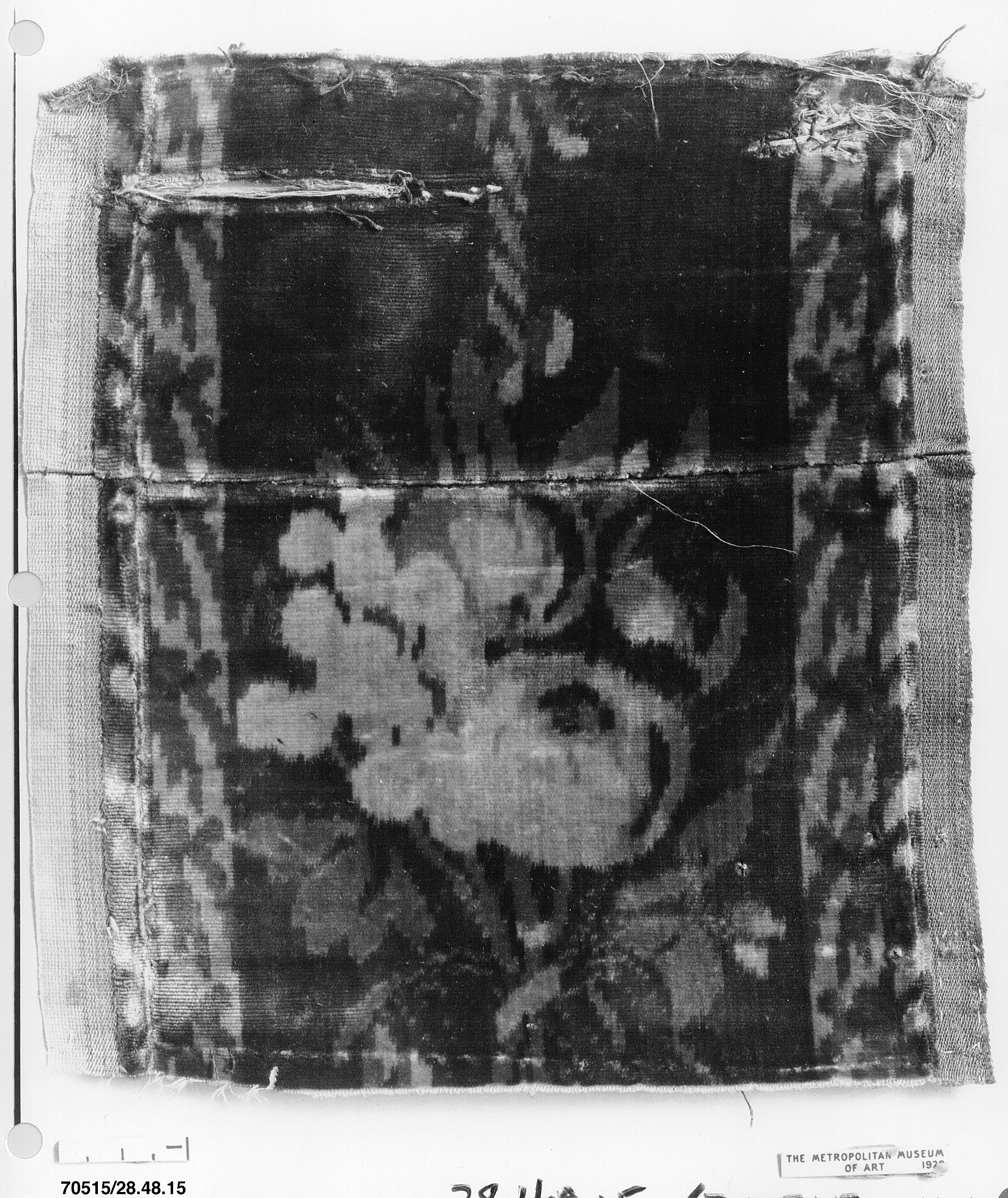
Fragment as Form: The Couture Rationale of Silk and Global Heritage
In the rarefied sphere of haute couture, where every stitch is a statement and every silhouette a narrative, Katherine Fashion Lab has introduced a collection that redefines the very architecture of luxury. The subject of this analysis—Fragment—is not merely a garment but a conceptual exploration of incompleteness as a design principle. Drawing from a deep well of Global Heritage and executed in the most demanding of materials—Silk—this standalone study challenges conventional notions of finish, wholeness, and the linear progression of fashion history. As Lead Curator, I examine how Fragment operates as both a material object and a philosophical treatise, leveraging silk’s inherent paradoxes to articulate a new couture vocabulary.
The Conceptual Foundation: Incompleteness as a Design Virtue
Fragment does not seek to hide its seams; it celebrates them. The collection’s core thesis posits that the most compelling narratives are often those left partially untold. In an industry obsessed with perfection—flawless draping, invisible zippers, and seamless finishes—Katherine Fashion Lab inverts this paradigm. The Fragment silhouette is intentionally disjointed: a sleeve that ends in raw, unhemmed silk; a bodice that appears to be a mosaic of disparate panels; a train that trails off into frayed, unspooling threads. This is not a sign of poor craftsmanship but a deliberate, MBA-level strategic move to create scarcity and intellectual cachet. By presenting incompleteness as a luxury, the Lab positions itself as a purveyor of unfinished narratives, inviting the wearer to complete the story through their own movement and context.
The origin of this concept is rooted in Global Heritage, specifically the Japanese aesthetic of wabi-sabi—the beauty of imperfection and transience—and the European tradition of the non finito in sculpture, where the artist leaves parts of the marble raw to emphasize the creative process. Fragment synthesizes these traditions into a single, cohesive couture language. The garment becomes a palimpsest, layered with references to ancient silk routes, colonial trade textiles, and the intangible heritage of hand-weaving communities. This global lens ensures that Fragment is not a derivative of any single culture but a hybrid, a true product of the 21st-century luxury marketplace where authenticity is measured by depth of reference, not purity of origin.
Materiality of Silk: The Paradox of Strength and Fragility
To execute Fragment’s vision, the choice of Silk is both daring and necessary. Silk is a material of contradictions: it is simultaneously the strongest natural fiber and the most delicate, a fabric that drapes with liquid grace yet can tear with a single snag. Katherine Fashion Lab exploits this duality to its fullest. The raw, unhemmed edges of Fragment are not accidental; they are engineered to fray in controlled, predictable ways, creating a texture that mimics the delicate, spider-web-like quality of aged silk found in museum archives. This is a material narrative of decay and preservation, where the garment is designed to evolve over time—a living artifact that bears the marks of its own history.
The Lab’s technical approach is extraordinary. Each Fragment piece begins with a single, continuous length of silk—often a rare, hand-dyed variety sourced from a specific heritage region, such as Banarasi brocade from India or Habutai from Japan. The silk is then cut into geometric shards, which are reassembled using a technique the Lab calls “suture stitching.” This involves visible, hand-stitched seams that use contrasting threads—sometimes metallic, sometimes silk itself—to emphasize the fragmentation. The result is a garment that appears to be in a state of perpetual deconstruction, yet is structurally sound. The paradox is intentional: Fragment challenges the viewer to reconcile the visual chaos with the tactile integrity of the silk.
Global Heritage as a Curatorial Strategy
Fragment’s reference to Global Heritage is not merely decorative; it is a curatorial strategy that elevates the collection from fashion to art. The Lab has collaborated with textile archivists, anthropologists, and master weavers from five continents to source fragments of traditional garments—a snippet of a 19th-century Ottoman caftan, a piece of a Chinese Qing dynasty robe, a fragment of a West African kente cloth. These are not reproduced but recontextualized within the new silk matrix. The original fragments are preserved in their original state, often with visible wear, fading, or repair marks, and are integrated into the new design as historical anchors. This creates a dialogue between past and present, where the wearer becomes a custodian of multiple heritages simultaneously.
From an MBA perspective, this is a masterclass in brand differentiation. In a market saturated with fast fashion and heritage-referencing luxury houses, Fragment offers a unique value proposition: ownership of a piece of history that is both tangible and conceptual. The garment is not just a product but an investment in cultural memory. The Lab’s pricing strategy reflects this: each Fragment piece is priced as a unique artifact, with a certificate of provenance that details the origin of each historical fragment used. This creates a scarcity model that appeals to the ultra-high-net-worth collector, for whom exclusivity is paramount.
Standalone Study: The Singular Object in a Serial World
The designation of Fragment as a standalone study is critical. Unlike a seasonal collection, which relies on repetition and commercial viability, a standalone study operates outside the constraints of the fashion calendar. It is a thesis, a manifesto, a proof of concept. Katherine Fashion Lab has positioned Fragment as an isolated, non-replicable experiment—a single garment, or a very limited series, that exists to test the boundaries of couture. This liberates the design from the pressures of mass production and allows for extreme technical and conceptual risk-taking.
In practice, the standalone study manifests as a single, monumental piece: a floor-length gown constructed from over 200 individual silk fragments, each measuring no more than 10 centimeters square. The fragments are arranged in a mosaic that evokes the scattered shards of a broken vase, yet the overall silhouette is that of a classical Grecian chiton—a nod to the Western canon of draped garments. The effect is simultaneously chaotic and harmonious, a visual representation of entropy held in check by masterful construction. The garment is designed to be worn only once, in a carefully curated performance or exhibition, after which it will be preserved as a permanent archive piece. This aligns with the Lab’s broader strategy of creating experiential luxury, where the value is generated not through ownership but through the memory of the event.
Conclusion: Fragment as a New Couture Paradigm
Katherine Fashion Lab’s Fragment is more than a garment; it is a provocation. By embracing incompleteness, leveraging the material paradoxes of silk, and curating a global heritage narrative, the Lab has created a work that exists at the intersection of fashion, art, and anthropology. For the discerning collector, Fragment offers not just a dress but a philosophy—a reminder that the most beautiful stories are often those that remain unfinished, waiting for the next chapter to be written. As a standalone study, it sets a new benchmark for what couture can achieve when it dares to fragment the very idea of perfection.