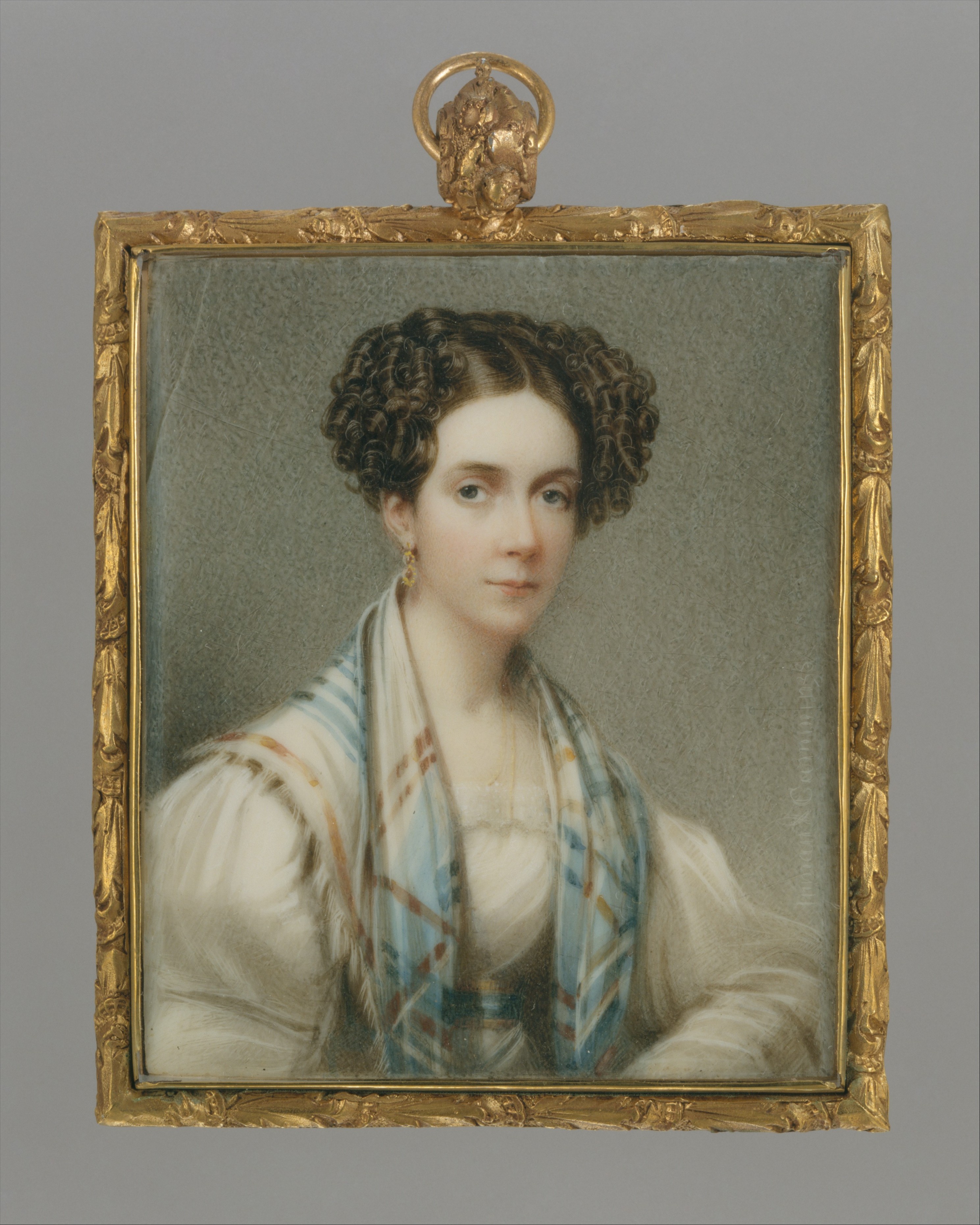
Heritage Analysis: Portrait of a Lady (American, Watercolor on Ivory)
Introduction: The Convergence of Intimacy and Status
The Portrait of a Lady, rendered in watercolor on ivory, represents a quintessential artifact of early American portraiture, particularly from the Federalist and Antebellum periods. This medium, prized for its delicacy and permanence, was not merely a technical choice but a deliberate assertion of symbolic power. For Katherine Fashion Lab, this artifact offers a strategic blueprint for infusing 2026 high-end luxury collections with narratives of quiet authority, spiritual resonance, and historical depth. The portrait’s intimate scale—typically worn as a locket or displayed in a private parlor—transforms personal adornment into a statement of legacy, a concept that aligns directly with the Lab’s mission to redefine luxury as a form of curated heritage.
Symbolic Power: The Language of Restraint and Presence
In this American watercolor, the sitter’s posture, gaze, and attire are encoded with symbolic power. The lady is often depicted in a three-quarter profile, her eyes meeting the viewer with a composed, unflinching directness that conveys both self-possession and social standing. The watercolor-on-ivory medium itself—a material that requires meticulous handiwork and rare pigments—signals exclusivity. Unlike oil on canvas, which was reserved for public display, this miniature format was a luxury object for private contemplation, a talisman of familial or romantic allegiance.
For Katherine Fashion Lab, this translates into a 2026 strategy where symbolic power is embedded in the smallest details: a single, hand-painted enamel brooch, a silk ribbon tied in a specific knot, or a garment’s subtle asymmetry that suggests a narrative of independence. The Lab can leverage this heritage by designing pieces that function as “portable portraits”—garments or accessories that encode the wearer’s social and spiritual identity through bespoke insignia, monograms, or motifs drawn from historical American iconography, such as the eagle, the sheaf of wheat, or the classical urn.
Historical Adornment: The Ivory Miniature as a Cultural Artifact
The choice of ivory as a support for watercolor is a critical study in historical adornment. Ivory, sourced from elephant tusks or marine mammals, was a luxury import that underscored the sitter’s access to global trade networks. The watercolor technique on this non-porous surface required extraordinary skill, as the paint could not be easily corrected. This permanence mirrors the social expectations of the period: a lady’s reputation, once painted, was fixed.
The sitter’s adornment in such portraits typically includes a high-waisted gown, a lace fichu, or a simple strand of pearls—elements that appear restrained but are, in fact, laden with meaning. The absence of ostentation was itself a form of wealth, signaling that the family did not need to display riches publicly. For Katherine Fashion Lab, this principle is directly applicable to a 2026 luxury strategy that prioritizes quiet luxury over branding. The Lab can reinterpret historical adornments—such as the cameo, the chatelaine, or the mourning brooch—as modular, customizable elements that allow clients to build a personal narrative through their wardrobe. Each piece becomes a historical artifact in its own right, with provenance tied to the wearer’s story.
Spiritual Meaning: The Portrait as a Vessel for the Soul
In American Protestant culture, the miniature portrait held profound spiritual meaning. It was often commissioned to commemorate a life passage—marriage, a child’s coming of age, or as a keepsake for a loved one traveling or deceased. The watercolor on ivory was believed to capture not just the likeness but the essence, the “inner light” of the sitter. This belief echoes the Puritan and Quaker emphasis on introspection and moral integrity. The portrait thus served as a devotional object, a reminder of virtue and the transient nature of earthly beauty.
For the 2026 high-end luxury market, Katherine Fashion Lab can channel this spiritual meaning by creating collections that function as modern-day reliquaries. Garments could incorporate hidden pockets for heirloom objects, or be designed with symbolic embroidery that references personal mantras, astrological signs, or family crests. The Lab might also collaborate with contemporary artists to produce limited-edition “portrait garments” that use digital watercolor prints on sustainable silks, bridging the historical medium with modern ethics. This approach aligns with the growing consumer demand for mindful luxury—products that offer not just aesthetic pleasure but emotional and spiritual anchoring.
2026 High-End Luxury Strategy: Synthesis and Aspiration
To translate this heritage analysis into a viable 2026 strategy, Katherine Fashion Lab must adopt a curatorial approach to design. The watercolor-on-ivory portrait teaches us that luxury is not about volume but about resonance. The following strategic pillars emerge from this research:
Pillar I: The Narrative of Restraint. Just as the American lady’s portrait used simplicity to convey status, the Lab’s 2026 collections should emphasize understated silhouettes, rare materials (such as organic linen, hand-dyed cashmere, or lab-grown pearls), and meticulous craftsmanship. Each piece should be accompanied by a “provenance card” detailing its inspiration from a specific historical artifact, thereby creating a direct lineage to American heritage.
Pillar II: The Art of the Personalized Talisman. The miniature portrait was a deeply personal object. The Lab can offer a bespoke service where clients commission a “portrait” of their own values—a garment embroidered with symbolic motifs chosen from a curated archive of American iconography. This service would be marketed as an investment in identity, not just fashion.
Pillar III: Spiritual and Environmental Stewardship. The original ivory medium is now ethically untenable. The Lab can lead the luxury sector by using innovative, sustainable alternatives, such as bio-resin or recycled precious metals, that mimic the translucency and warmth of ivory. This positions the brand as both a guardian of heritage and a pioneer of responsible luxury, appealing to the 2026 consumer’s desire for conscious opulence.
Pillar IV: Experiential Retail as a Portrait Studio. The Lab’s flagship stores could be redesigned as “portrait studios,” where clients are photographed in their chosen ensemble, with the image rendered as a watercolor-style digital keepsake. This bridges the historical practice of memorializing a moment with the modern need for shareable, experiential luxury.
Conclusion: A Living Legacy
The Portrait of a Lady in watercolor on ivory is far more than a historical curiosity; it is a masterclass in the economy of meaning. For Katherine Fashion Lab, this artifact illuminates a path forward where luxury is measured not by excess but by the depth of its symbolic, historical, and spiritual resonance. By adopting a strategy rooted in the principles of restraint, personalization, and ethical innovation, the Lab can position itself at the vanguard of 2026 high-end fashion—a brand that does not merely sell clothing but curates heirlooms for the modern soul. The portrait’s silent, steady gaze challenges us to see luxury as a form of legacy, and it is this vision that will define Katherine Fashion Lab’s enduring relevance.