The Architectural Alchemy of Iron: Deconstructing the Italian Brigandine Plate
In the rarefied domain of haute couture, where fabric is often exalted as the sole narrative vehicle, the reintroduction of structural armor presents a provocative dialectic. At Katherine Fashion Lab, our Standalone Study of the Italian Brigandine Plate—forged from a bespoke iron alloy—represents a deliberate departure from textile-centric design. This is not a costume piece nor a historical reproduction; it is a rigorous exploration of how metallic exoskeletons can redefine the silhouette, the weight, and the very psychology of modern luxury. The brigandine, historically a garment of pragmatic warfare, is here transmuted into a statement of sovereign elegance.
Materiality and Metallurgy: The Iron Alloy as Couture Fabric
Beyond the Forge: A New Lexicon of Texture
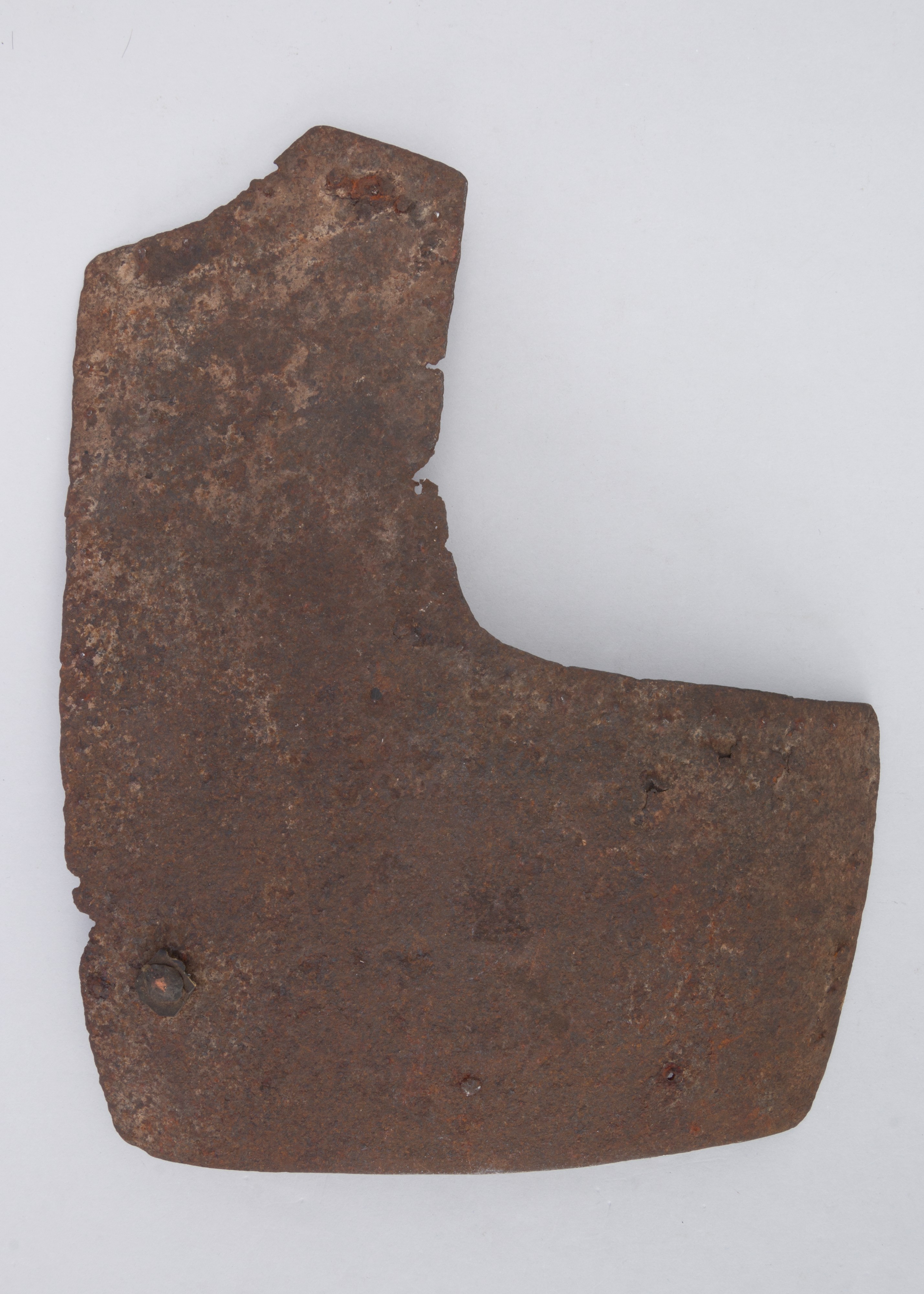
The foundational element of this study is the iron alloy itself. Unlike the brittle, rust-prone iron of the 15th century, our laboratory has engineered a composite that honors historical integrity while embracing contemporary performance. The alloy is treated with a patinated finish that mimics the organic, lunar surface of aged steel—a deliberate choice to avoid the sterile glare of modern stainless steel. This surface is not merely protective; it is a tactile landscape. When examined under macro-lens, the metal reveals micro-fissures and subtle chromatic variations, ranging from charcoal grey to deep anthracite, with whispers of ochre in the underlayers. This is the language of earth and fire, rendered through precision casting.
The weight of the plate is a critical design parameter. At approximately 1.8 kilograms per panel, the brigandine is neither cumbersome nor trivial. It imposes a gravitational presence on the wearer, demanding a recalibration of posture and movement. This is not a garment for passive consumption; it is an active dialogue between the body and its armor. The iron alloy’s density creates a sonic signature—a muted, resonant clink when panels articulate—that adds an auditory dimension to the couture experience. In a silent atelier, this sound becomes a percussive heartbeat, a reminder of the object’s kinetic potential.
Structural Deconstruction: The Anatomical Logic of the Brigandine
Panels as Propositions: Reimagining the Bodice
The Italian brigandine of the Quattrocento was a composite of overlapping metal plates riveted to a leather or velvet backing. Our Standalone Study liberates the plates from their textile substrate, presenting them as discrete, modular elements that articulate directly against the skin. Each plate is hand-finished with a contoured edge that mirrors the curvature of the human torso. The plates are not uniform; they are individually sculpted to correspond to the pectorals, the obliques, and the scapulae. This is a cartography of the body, where metal becomes a second skeleton.
The articulation system employs concealed titanium rivets and micro-hinges that allow for a remarkable range of motion. The wearer can raise their arms, twist their torso, and even sit with minimal resistance—a feat of engineering that would have astonished the medieval armorer. The plates are arranged in a graduated scale: larger, heavier plates protect the chest and upper back, while smaller, lighter scales cover the lower ribs and waist. This gradation creates a natural visual rhythm, a crescendo of density that draws the eye upward to the collarbone and neckline.
The Void as Volume: Negative Space in Armor
Perhaps the most radical aspect of this study is the deliberate incorporation of negative space. Unlike traditional brigandines that sought total coverage, our design leaves strategic gaps between plates—fingertip-width intervals where the skin is exposed. These voids are not weaknesses; they are architectural apertures. They allow light to pass through the structure, creating a lattice of shadow and gleam that changes with every movement. The interplay of solid metal and open air generates a visual tension that is both sensual and intimidating. It is a couture statement that celebrates the vulnerability of the flesh even as it armors it.
Contextual Resonance: The Brigandine in the Modern Wardrobe
From Battlefield to Runway: A Reclamation of Power Dressing
The historical brigandine was a garment of the mercenary and the knight—a practical solution to the lethality of crossbows and lances. In the 21st century, its recontextualization speaks to a different kind of warfare: the social and psychological battles of identity, status, and self-presentation. The iron alloy brigandine is a manifesto of resilience. It rejects the soft, disposable nature of fast fashion in favor of permanence and heft. To wear this piece is to declare that one’s exterior is as formidable as one’s interior.
Stylistically, the brigandine plate operates in a liminal space between architectural couture and industrial minimalism. It pairs naturally with raw silk, matte leather, or even shredded denim, creating a juxtaposition of the organic and the metallic. The patinated finish ensures it does not compete with gemstones or embroidery; instead, it serves as a foundational text, a dark canvas against which other elements can be composed. For the modern collector, this is not a garment for the timid. It is a piece for the boardroom, the gallery opening, or the private dinner where one’s presence must be felt before a word is spoken.
Ergonomics and Wearability: The Luxury of Constraint
A critical dimension of this study is the wearer experience. The iron alloy brigandine is not designed for all-day comfort in the conventional sense. Instead, it offers a different kind of luxury: the luxury of constraint. The weight of the plates grounds the wearer, encouraging deliberate, measured gestures. The cool metal against the skin provides a constant sensory feedback, a reminder of the garment’s presence. This is a couture object that demands attention, both from the wearer and the observer. It is a meditation on the relationship between protection and expression, between the self and the shell.
To mitigate discomfort, the interior of each plate is lined with a hand-stitched cashmere and silk blend, a whisper of softness against the iron. The rivets are countersunk to prevent snagging on delicate fabrics. The entire structure is balanced to distribute weight evenly across the shoulders and hips, preventing strain on any single point. These are the details that elevate this study from a conceptual exercise to a wearable work of art.
Conclusion: The Future of Armored Couture
The Standalone Study of the Italian Brigandine Plate at Katherine Fashion Lab is not a nostalgic glance backward. It is a forward-looking inquiry into what couture can become when it embraces the language of engineering, material science, and historical rigor. The iron alloy brigandine challenges the very definition of clothing—its weight, its sound, its relationship to the body. It is a piece that asks the wearer to stand taller, move slower, and inhabit space with intention. In an era of digital ephemera and synthetic textures, this is a return to the elemental. It is iron. It is architecture. It is couture reimagined through the lens of the armorer’s art.